Qatar has managed to grow amidst the market volatility, with room for growth in new markets.
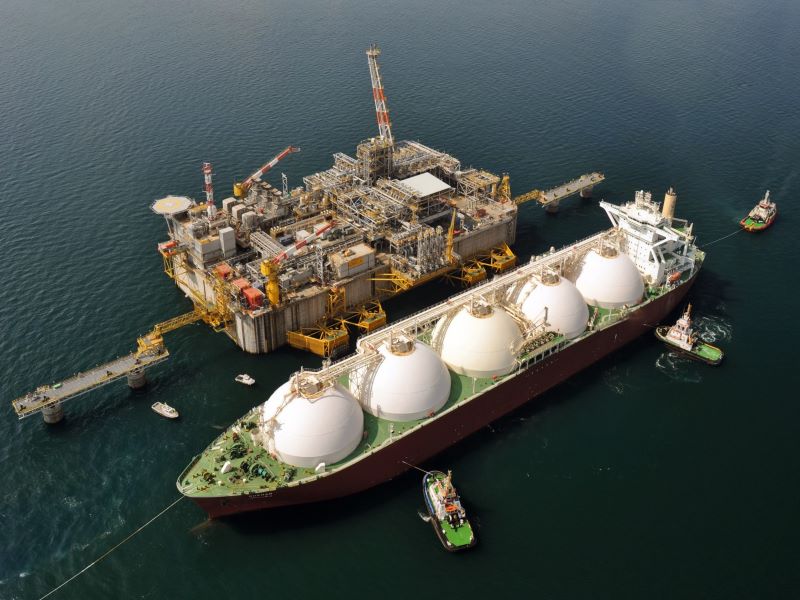
Qatar continues to be the third-largest exporter of liquefied natural gas, despite volatility in the global trade system rippling due to the introduction of hefty U.S. tariffs, according to a new report.
Recent analysis by the Doha-based intergovernmental organisation Gas Exporting Countries Forum (GECF) put Qatar as one of the leading exporters for July, a month it said had witnessed the strongest annual growth rate since the same period in 2019.
Qatar managed to dispatch 22 more LNG cargoes in the first seven months of the year compared to the same period in 2024, remaining the top exporter among GECF countries. U.S. and Australia, the two leading exporters, are not part of the 20-nation organisation.
“Qatar’s LNG export growth was supported by production exceeding the nameplate capacity at the Ras Laffan liquefaction complex,” the report explained.
The 8.7% year-on-year growth in July among the member and observer countries was led by Qatar, among others, it added. The growth from January to July stood at 1.8%.
While Algeria, Equatorial Guinea, Malaysia, Mauritania, Nigeria, Peru, Qatar, Senegal, and Trinidad and Tobago also saw increases, planned maintenance at the Das Island facilities caused a slump in the United Arab Emirates’ export figures.
Qatar, LNG trade, and U.S. tariffs
The analysis pinpointed that the figures are particularly significant given the U.S. tariff announcements.
“The year 2025 has marked a seismic shift in the global trade system toward protectionism, with the US introducing hefty new tariffs to shield domestic industries from foreign competition and to realign international trade in favour of US economic interests,” it added.
While the implementation of the higher tariffs has been repeatedly suspended, suggesting its use as a “leverage rather than as a permanent trade measure”, its resultant trade tensions could open up new opportunities to other exporters.
For Qatar, this could mean an opening to expand its sales to markets such as China, according to Qatar-based financial analytical platform Sahmik.
Qatar had stepped in as a significant alternative for Europe in the aftermath of the Russian invasion of Ukraine and now provides between 12% and 14% of the continent’s LNG.
The tariffs will have minimal direct impact, but they will slow the global growth, keeping the revenue pressure despite potential market share gains. “Qatar’s direct exposure to the new U.S. tariffs is limited,” Sahmik added. “The standard 10% tariff applies, but LNG exports — Qatar’s primary revenue driver — remain exempt.”
Qatar’s expansions
Similarly, the July growth shown in the GECF report is indicative of Qatar’s ongoing expansion of production and exporting capabilities.
In February 2024, QatarEnergy, the state-owned company, announced its ambitious expansion project, the North Field West, aiming to boost local production to 142 mtpa by 2030, an 85% increase in production compared to the current 77 mtpa.
It came after the discovery of a further 240 cubic feet of gas in the North Field, raising the nation’s gas reserves from 1,760 to more than 2,000 trillion cubic feet.
The Gulf nation is expected to surpass Iran, with which it shares the world’s largest non-associated natural gas field, by the early 2030s, a report published by consultancy firm Rystad Energy in July hinted.