This year marks the 58th anniversary of the establishment of the Association of Southeast Asian Nations (ASEAN), which comprises ten Member States – Brunei Darussalam, Cambodia, Indonesia, Laos PDR, Malaysia, Myanmar, Philippines, Singapore, Thailand and Viet Nam.
Under Malaysia’s Chairmanship of ASEAN in 2025, the theme “ASEAN: Inclusivity and Sustainability” highlights ASEAN’s commitment to narrowing development gaps, fostering equitable growth, and promoting long-term resilience.
It also reflects ASEAN’s outward-looking orientation as it continues to deepen cooperation with trusted external partners such as Qatar, which acceded to ASEAN’s Treaty of Amity and Cooperation in Southeast Asia in 2022.
Qatar and ASEAN have continued to engage at the highest political level over the past year. In October 2024, Prime Minister Paetongtarn Shinawatra of Thailand visited Qatar for the 3rd Asia Cooperation Dialogue Summit. That same month, Prime Minister Pham Minh Chinh of Viet Nam made a historic visit to Doha.
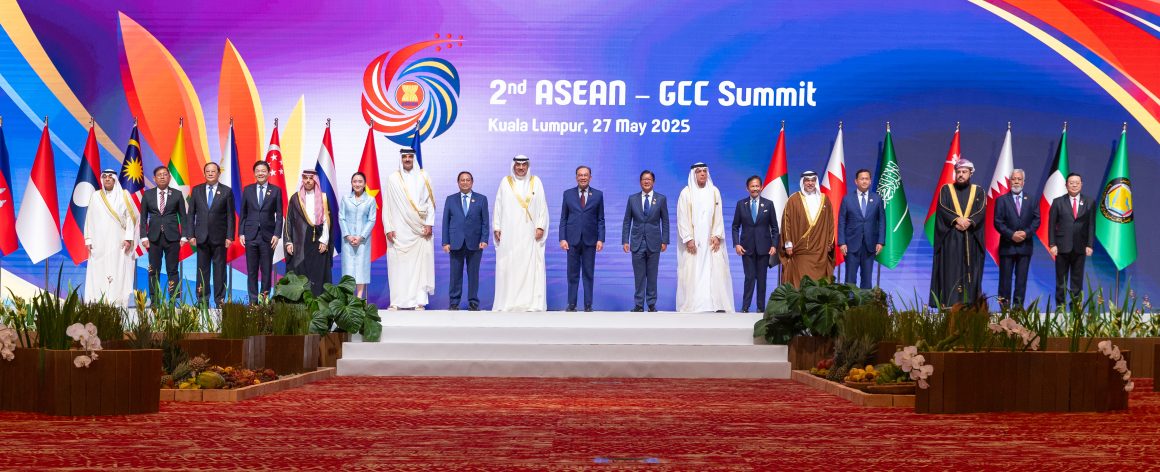
In April 2025, President Prabowo Subianto of Indonesia also made an official visit to Qatar. In May 2025, Qatar’s Amir Sheikh Tamim bin Hamad Al Thani demonstrated the nation’s strong commitment to enhancing ties with its strategic regional partner, ASEAN, by attending the 2nd ASEAN-GCC Summit in Malaysia.
During the Summit, Sheikh Tamim solidified these relationships further by engaging in high-level meetings with key leaders, including Prime Minister Anwar Ibrahim of Malaysia and Prime Minister Lawrence Wong of Singapore.
ASEAN is a dynamic and diverse region comprising more than 670 million people, of whom approximately 60 percent are below the age of 35 years. It has continued to evolve, integrate, and collaborate across economic, political, security, and social-cultural dimensions, putting it in a strong position to seize opportunities and meet the challenges of a fast-changing world.
Today, ASEAN is one of the fastest growing regions of the world. It’s combined GDP of US$3.8 trillion in 2023 is set to double within the next two decades, putting it on track to become the fourth-largest economy in the world by 2030.
Qatar’s economic relations with ASEAN have continued to grow steadily over the past year. Bilateral trade now amounts to approximately US$15 billion annually.
Qatar is a significant investor in the region, with a diversified portfolio spanning the energy, financial, real estate, telecommunications, agribusiness, hospitality, and healthcare sectors. It’s companies are looking at further opportunities in emerging sectors in the region, such as renewable energy, digital transformation, and even electric vehicles.
This year, ASEAN aims to conclude negotiations on the Digital Economy Framework Agreement (DEFA), which would accelerate trade, drive economic growth, and enhance digital interoperability. This would present even greater opportunities for Qatar to leverage its strengths in digital technologies and financial services, and be part of ASEAN’s digital transformation journey.
Likewise, ASEAN member states’ investments in Qatar continued to grow over the past year, reflecting their continued interest and confidence in the Qatari economy. Investments in fintech and potential joint ventures in renewable and clean energy, including underlying technologies, mark a significant expansion of interest to establish a presence in Qatar’s emerging economy scene. These will deepen and broaden economic linkages between ASEAN and Qatar, and support Qatar’s national development priorities.
Malaysia’s main priorities as the Chair of ASEAN in 2025 are threefold.
First – strengthening ASEAN centrality and strategic trust through sustained dialogue, diplomacy, and goodwill. Within this context, ASEAN’s sustained engagement with external partners such as Qatar, most notably through high-level platforms like the ASEAN–GCC Summit, continues to reinforce strategic dialogue, strengthen mutual trust, and advance a rules-based regional order grounded in pragmatic cooperation.
The ASEAN-GCC-China Summit in May 2025 in Kuala Lumpur marked a significant milestone for ASEAN’s external relations. This historic trilateral gathering convened three of the world’s most dynamic regions—Southeast Asia, the Gulf, and China—amidst a period of global economic uncertainty and escalating geostrategic competition.
Second, pushing for greater commitment towards enhancing ASEAN intra-trade and investment, by leveraging on advances in sciences, technology and innovation, and harnessing the benefits of digital transformation and new technologies. At the 46th ASEAN Summit on 26 May 2025, ASEAN Leaders adopted the “ASEAN 2045: Our Shared Future”, including the ASEAN Community Strategic Plan (2026 – 2030), which outlines a roadmap to reduce non-tariff barriers, streamline customs procedures, and promote supply chain resilience across ASEAN Member States. Notably, the plan also emphasises support for micro, small and medium-sized enterprises (MSMEs) to deepen their participation in regional value chains.
Third, ensuring the elements of inclusivity and sustainability to take center stage in our regional Community-building efforts, which will entail greater efforts at narrowing the development gap and inequalities, improving living standards, while mitigating the impacts of climate change. ASEAN Member States reaffirmed this priority through new initiatives such as the ASEAN Gender Outlook, launched in Kuala Lumpur in September 2024, which promotes inclusive policy planning with gender-sensitive climate adaptation strategies.
Furthermore, ASEAN looks forward to the operationalisation of the ASEAN Centre for Climate Change in Brunei Darussalam which will provide a platform to strengthen regional coordination and cooperation on addressing climate change.
This year’s theme is highly relevant in an increasingly complex and fast-evolving global environment.
While geopolitical tensions, economic fragmentation, and disruptions to supply chains continue to test the multilateral system, ASEAN remains committed to openness, integration and regional resilience. In this context, ASEAN and Qatar–within the broader ASEAN–GCC partnership– have entered a phase of strategic, action-oriented cooperation that goes beyond general principles.
The 2nd ASEAN–GCC Summit, held in Kuala Lumpur in May 2025, yielded concrete initiatives in areas such as investment, food security, digital economy, and clean energy. Leaders from both regions endorsed new investment partnerships and food security programmes, agreed to enhance digital economy cooperation, called for a joint feasibility study for an ASEAN-GCC Free Trade Agreement (FTA), and reinforced commitments to a clean energy transition.
These efforts are underpinned by the ASEAN-GCC Framework of Cooperation (2024-2028) and ongoing work towards an ASEAN-GCC FTA, providing a clear roadmap to institutionalise and expand their collaboration. Qatar’s active role has been and will continue to be pivotal to successful ASEAN-GCC cooperation. As ASEAN deepens its engagement in the Middle East, Qatar continues to be a valued partner in advancing ASEAN’s global outreach.
Looking ahead to the next ASEAN–GCC Summit in 2027, both sides are united in their vision of a more integrated and prosperous future. Building on the initiatives launched in 2025, they aim to deliver tangible progress—ranging from increased and diversified investment flows, to interconnected digital economies, and joint sustainable energy ventures.
These efforts are designed to deliver concrete and mutual benefits to their citizens by 2027, as well as strengthen ASEAN’s resilience and openness. In this spirit, ASEAN and Qatar are like-minded and reaffirm their commitment to a partnership grounded in measurable outcomes and inclusive growth.