The conference serves as a vibrant platform for promoting intellectual exchange, critical thinking, and meaningful discourse on a global scale.
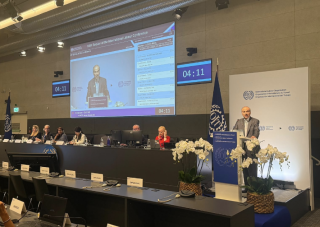
QatarDebate, a Qatar Foundation initiative, inaugurated the second edition of the International Conference on Debate and Dialogue on Monday at the Qatar National Convention Center.
The two-day event has drawn over 800 participants, including academics, youth leaders, and representatives from cultural, scientific, and research institutions from more than 36 countries.
The opening ceremony was attended by several distinguished figures, including Dr. Mohammed bin Abdulaziz bin Saleh Al-Khulaifi, Minister of State at the Ministry of Foreign Affairs, and Dr. Hayat Maarafi, Executive Director of QatarDebate Center.
In his opening speech, Dr. Al-Khulaifi highligted, “this conference presents a golden opportunity to delve into the practical dimensions of dialogue and debate, and to explore their tools and methods in a way that promotes a culture of opinion-building and reinforces the values of respect and mutual understanding within our societies.”
He explained that the conference presents an opportunity to explore the practical dimensions of these disciplines, contributing to the development of inclusive discourse and mutual understanding.
He elaborated on the intrinsic connection between debate and diplomacy, stating that the practice of debate extends beyond the mere presentation of ideas.
Debate, like diplomacy, serves as a forum for the exchange of ideas where minds are sharpened and respect for differing views is cultivated,” he remarked.
Dr Al-Khulaifi also highlighted Qatar’s global diplomatic approach, describing it as a strategic commitment to dialogue. He stated that Qatar’s adherence to dialogue, as outlined in its constitution, reflects its unwavering belief that peace is only achievable through justice and the safeguarding of human dignity.
He further explained that Qatar’s reputation as a neutral and effective mediator has grown as traditional diplomatic routes falter, positioning the nation as a credible player in resolving complex international challenges.

In her welcoming address, Dr. Maarafi highlighted the importance of the forum as a scholarly and humanistic space that fosters new approaches to argumentation.
She also noted that all academic submissions for this year’s edition were rigorously evaluated by independent reviewers, ensuring the event’s scholarly credibility and reinforcing its status as a leading research platform from the Arab and Islamic world.
Dr. Maarafi announced a strategic collaboration with the Canadian academic journal Informal Logic, which will publish a special issue featuring selected research papers from the conference.
She also launched the second edition of the QatarDebate Research Fellowship, which includes twelve new projects, half of which are theoretical in nature—exploring civil dialogue, legal argumentation, and comparative analyses—while the other half are practical initiatives in areas such as education and artificial intelligence. Among these is a research unit designed to assess the impact of debate in educational environments.
The opening programme included a creative visual presentation by QatarDebate Center and a keynote speech from Professor Christopher Tindale, Director of the Centre for Research in Reasoning, Argumentation, and Rhetoric at the University of Windsor, Canada.
His lecture, titled Cross-Cultural Argumentation as a Vehicle of Understanding, explored the nuances of argumentation across different cultures. He emphasized that recognising diverse argumentative styles and what counts as evidence in different cultural settings enhances our overall understanding of discourse and how it should be evaluated.
Following a short documentary produced by QatarDebate, the first cohort of research fellows was honoured. These fellows completed six pioneering projects that tackled advanced topics, including the classification of Arabic arguments using AI, Arabic argumentation analysis, and comparative studies on argumentation across Arab-Islamic and Western traditions. The academic portion concluded with a discussion panel featuring Professor Tindale.
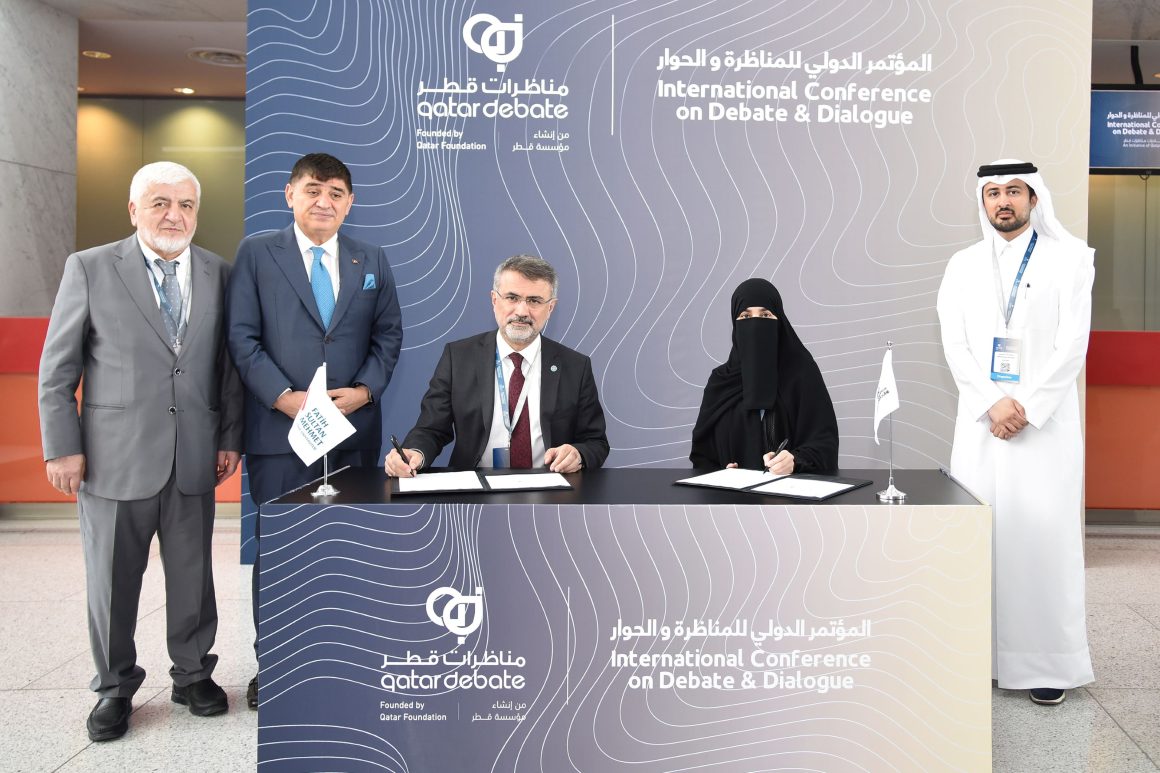
A memorandum of understanding was signed between QatarDebate Center and Fatih Sultan Mehmet University, aiming to foster academic and cultural cooperation. The agreement entails joint events such as championships, forums, and workshops focused on dialogue and debate.
Notably, the university will host a permanent QatarDebate office to coordinate activities with relevant departments, and it will introduce an elective course on debate, to be taught in Arabic, English, and Turkish in collaboration with the Center.
The institutions also agreed to share expertise in training and arbitration to enhance the quality of joint initiatives.
Students and researchers in Islamic studies and the Arabic language will benefit from research fellowships, while joint efforts will be made to publish manuscripts on debate in respected academic outlets.
Plans are in place to organise regional and international championships, including the European Debating Championship.

Throughout the first day, attendees participated in sessions exploring a variety of themes such as the study of Islamic manuscripts, models of argumentation, political discourse, cultural variation in debate formats, and the application of argumentation within Islamic jurisprudence.
These discussions were enriched by contributions from partner institutions such as Fatih Sultan Mehmet University and the University of Windsor.
Evening sessions delved into emerging issues in informal logic, the use of AI to enhance debate education, and the broader impact of debate on knowledge development.
Other panels examined the role of political argumentation in the Arabic-speaking world and the legislative underpinnings of Islamic legal thought.
One of the key attractions of this year’s edition was an interactive exhibition featuring rare historical manuscripts that document the evolution of debate within Islamic civilisation.
Organised in partnership with the Jordanian Crown Prince Foundation, the Turkish Ministry of Culture, and Fatih Sultan Mehmet University, the exhibition was supported by Qatar Museums and offered attendees a glimpse into the intellectual heritage of Islamic societies.
Youth played an active role in the event, with prominent young debaters and dialogue leaders from the Elite Academy contributing to conversations on current global challenges. Their involvement underlined the conference’s mission to place youth at the heart of transformative dialogue.
This year’s edition builds on the success of its 2023 predecessor, further cementing QatarDebate’s position as a global leader in promoting meaningful discourse. The event continues to serve as a bridge between traditions and disciplines, offering a unique space for dialogue that resonates far beyond the region.