Hosts of the FIBA Basketball World Cup 2027 will organise two editions of its eSports equivalent ahead of the premier competition.
Qatar will host the fourth and fifth editions of basketball’s flagship gaming competition, the eFIBA World Finals, in 2026 and 2027.
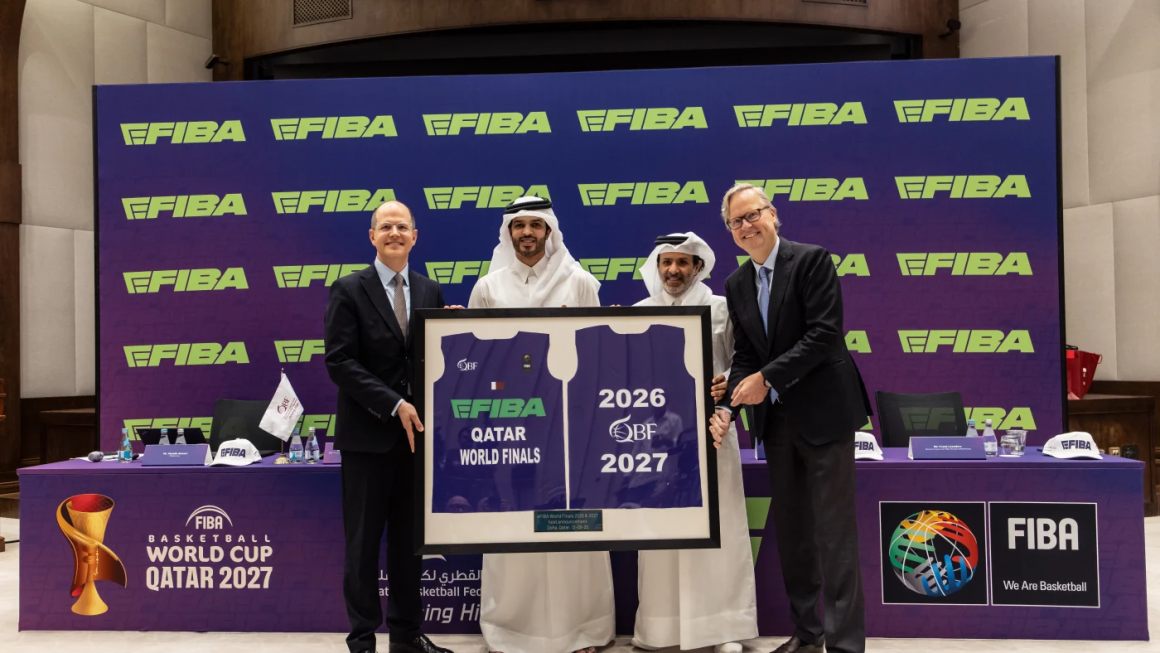
Qatar Basketball Federation President Mohammed Al-Meghaiseeb and International Basketball Federation (FIBA) Secretary General Andreas Zagklis signed an agreement on Monday to confirm the Gulf nation as the hosts of the esports equivalent of the Basketball World Cup, ahead of the main tournament in 2027.
“This represents a significant milestone for us not only as we prepare to host the first FIBA World Cup in the region in Doha, but also as we continue advancing our vision to manage education with sporting excellence,” Al-Meghaiseeb said in the press conference before the signing ceremony.
Hatched during the COVID-19 pandemic as FIBA Esports Open, the tournament pivoted to its current format in 2023. After six weeks of the competition, the U.S. claimed the third edition’s title in the Philippines last December.
The tournament has only grown in size, both in terms of participation and viewership, to become a standout event on its own, according to Zagklis.
“This is not only a stop on the road to the FIBA World Cup 2027,” the FIBA Secretary General said in the ceremony.
“This is a successfully tested concept which has […] a very passionate audience, a very dynamic group of players who are experts in what they do and certainly an atmosphere which will bring a very youthful and dynamic audience to Doha.”
eFIBA, eSports and innovation
FIBA’s flagship electronic sports event is part of a wider trend of sports tapping into the growing fanbase and industry globally, following the footsteps of football and various first-person shooting games.
The International Olympic Committee has now endorsed its own virtual and simulated sports competition, while massive investments are being poured in to organise other various eSports competition.
Esports’ worldwide revenue is expected to hit $1.86 billion (QAR 6.77b) by 2025, nearly double compared to 2020, according to one of Big Four accounting firms, PwC. The exponential growth can be credited to the growing popularity of streamers and lucrative sponsors.
The emphasis on eFIBA is also a resort to keep the innovation going and growing the popularity of the overall sport, according to Zagklis, which will also be one of the major discussion points in FIBA’s Congress in a few days.
“FIBA’s strategy for the current term and the remaining decade includes innovation as one of its pillars. An important aspect of that innovation agenda is the eFIBA World Finals,” he said.
The similarities with the actual game of basketball — from the five-versus-five and national team formats to the tactics involved — make it equally enticing for existing fans as well as video game lovers, he added, predicting the format has the potential to go to the “next level” following Doha tournaments.
In Qatar’s part, hosting the back-to-back finals in the precursor to the FIBA World Cup in 2027 could present a “critical” opportunity to engage the community and different age groups in the country and the region, according to Al-Meghaiseeb.
“The role of eSports is growing bigger and bigger. The economic impact it has is important. Therefore, this is another milestone for us to spread awareness and promote both basketball and e-basketball,” he added.