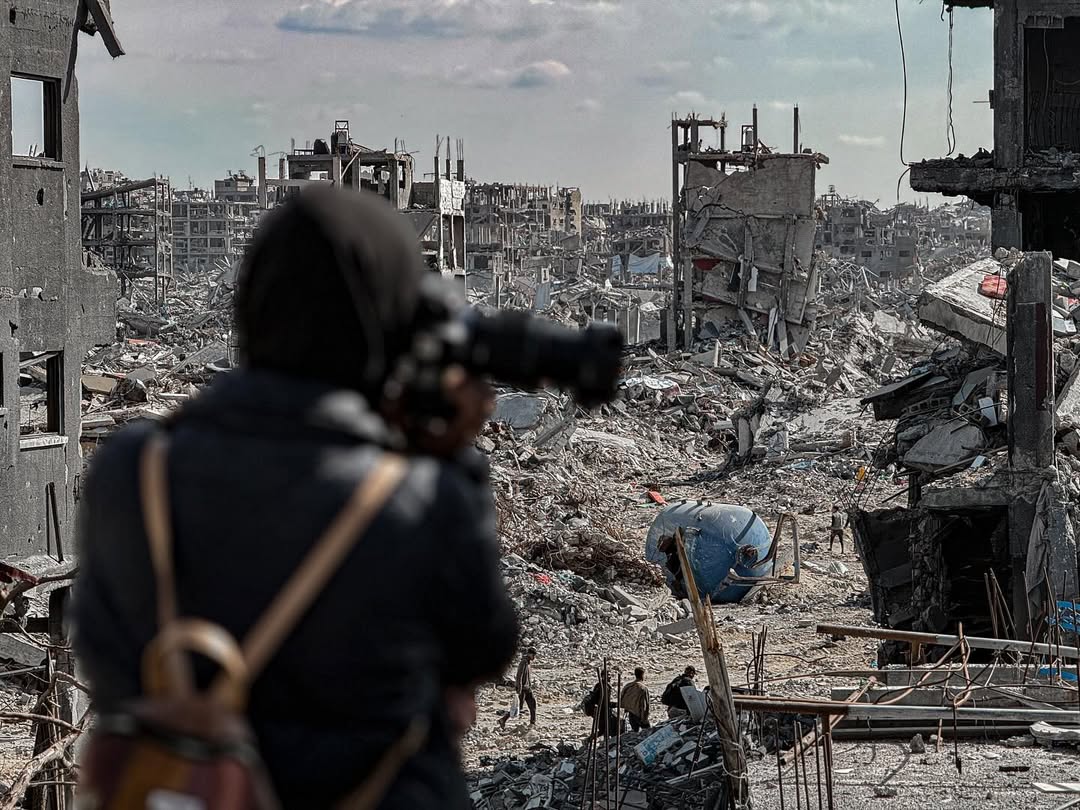
Despite the pain, Salem strives to capture the essence of Gaza at a time where news headlines can dehumanise them by reducing their lives and stories to numbers.
For Palestinian photographer Haneen Salem, October 7 was always a highly anticipated date—her birthday.
However, in 2023, what started as a joyful celebration of her 27th birthday quickly transformed into the beginning of a tragedy.
Salem’s life, like more than two million Palestinians in the Gaza Strip, changed on October 7, 2023, when Israel launched its genocidal war that reduced the once vibrant coastal area to rubble.
“I was asleep and ready for my birthday. I was waiting to celebrate and start a new year,” Salem, who is still in Gaza, told Doha News in a phone interview.
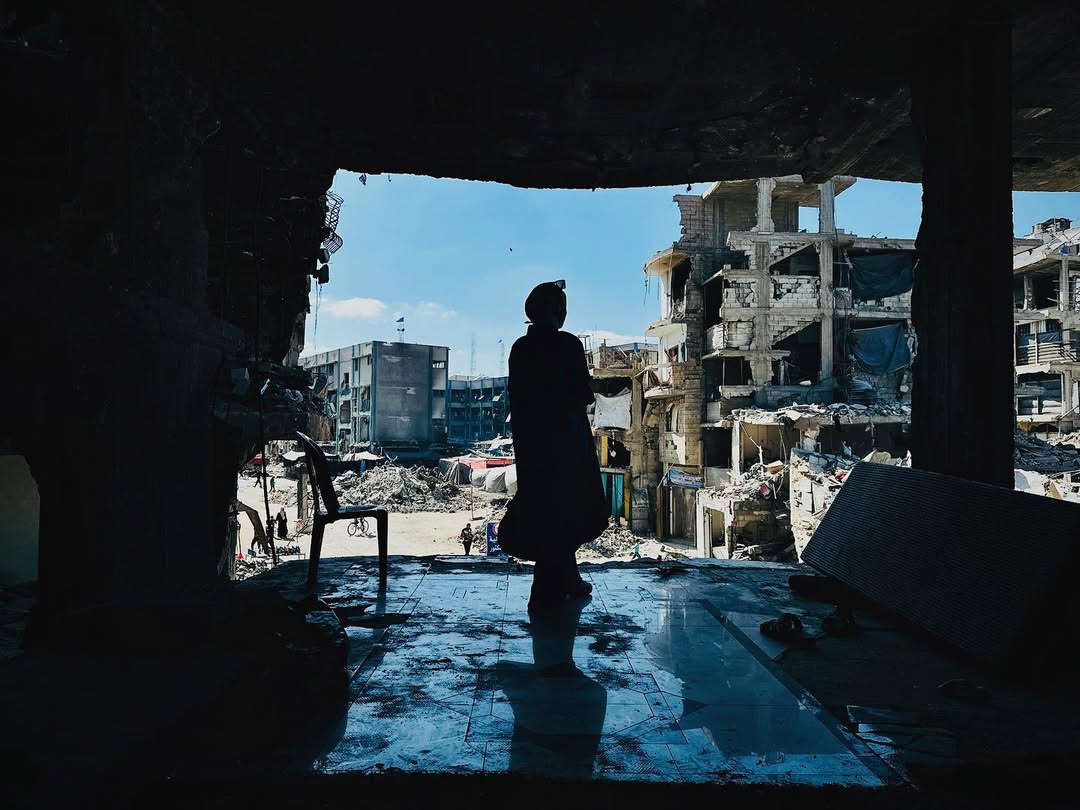
In December 2023, Israel targeted an entire residential block belonging to the Salem family, killing more than 150 of its members. Among them was five-year-old Dana Salem whose right arm was amputated and her siblings were killed.
Dana’s story of a lost childhood inspired Salem to take out her camera and document those of Gaza’s people under Israel’s genocide.
“I saw her one day looking sad as she watched other children play, but she refrained from joining them, ashamed of her arm. I turned on the camera and did a simple interview with her as a form of psychological support,” Salem said.
“That’s where it all started.”
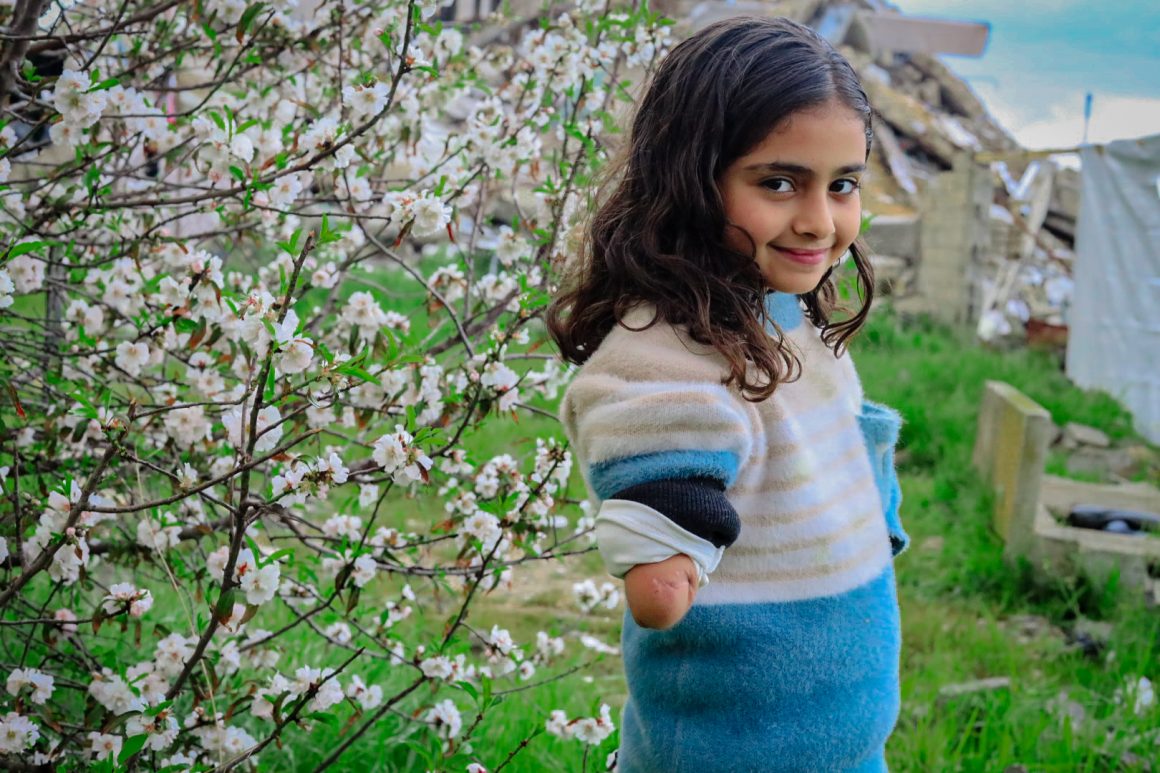
The moment Salem captured Dana’s story, a sense of strength overcame the helplessness she felt towards her people—it was the realisation of her camera’s power.
Despite majoring in accounting, documentation became a duty for Salem. Her photos dominated social media and prominent outlets, including Untold Palestine, and World Literature Today.
“Documentation isn’t a luxury, it’s a responsibility, because if we don’t tell our story, others will in a distorted way and erase the truth,” she explained.
Documentation has long been among the most powerful tools in resisting Israel’s occupation of Palestine, which attempted to erase the history of an entire people for the past 76 years.
The very tool became even more crucial in the face of Israel’s atrocities in the Gaza Strip, in what became the world’s first livestreamed genocide.
Among the more than 61,700 Palestinians killed, there are at least 232 journalists deliberately targeted by Israel.
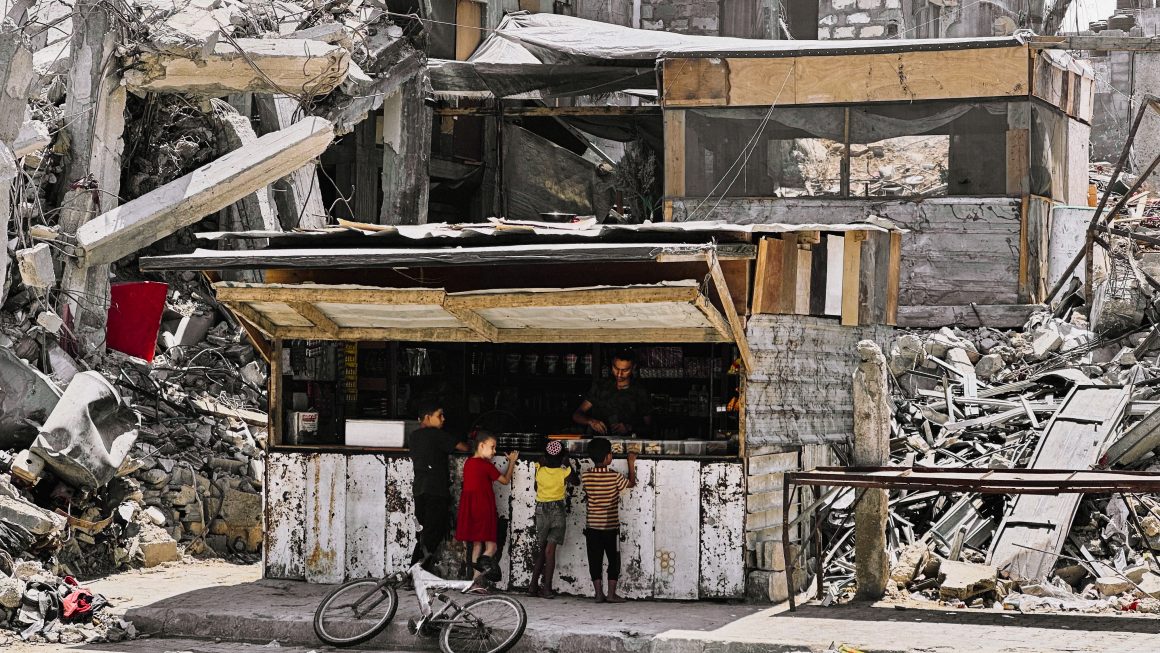
“An image is more powerful than a bullet, because it pierces hearts before minds. It may not change policies overnight, but it plants itself in people’s consciousness. A truthful image endures, it haunts the global conscience and awakens dormant humanity,” Salem said.
Photography’s undefeatable power succeeded in dismantling decades of Israel’s attempts to promote its narrative to prevent any form of pro-Palestine solidarity. With each click, Israel loses its grip over its image, especially in the West.
“A single photo can immortalise a crime, disrupt the machinery of lies and crack the wall of political indifference. History is not written only in ink, but also in light and shadow,” Salem said.
Telling the story of Gaza’s people
Everyday, Salem risks her life to tell the stories of Gaza’s people, especially children who are the most vulnerable as they are robbed from their childhood while watching the killings of their families and surviving horrific injuries.
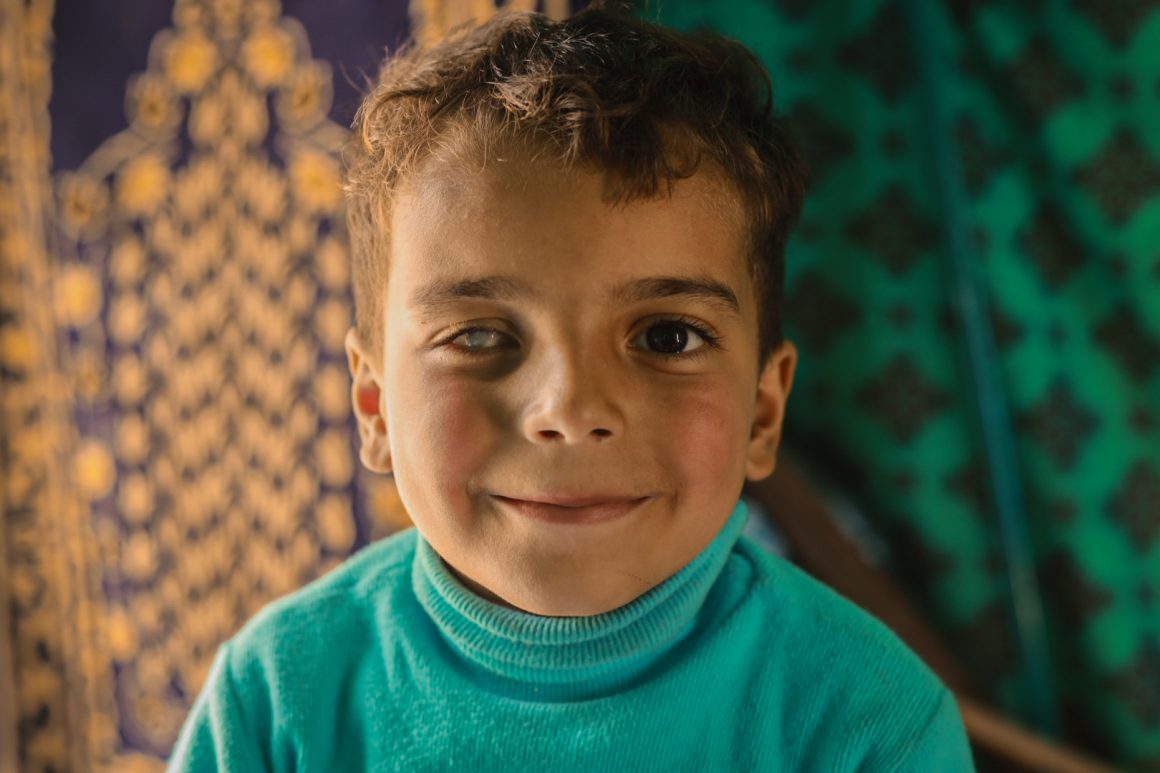
For nearly two years, more than 10 children in Gaza have lost one or both legs each day, according to the World Health Organization.
“They’ve lost their innocence, their laughter, and their future[…]I decided to be the bridge, to be their voice, to tell the world that they are not just numbers, but souls who deserve to live,” Salem said.
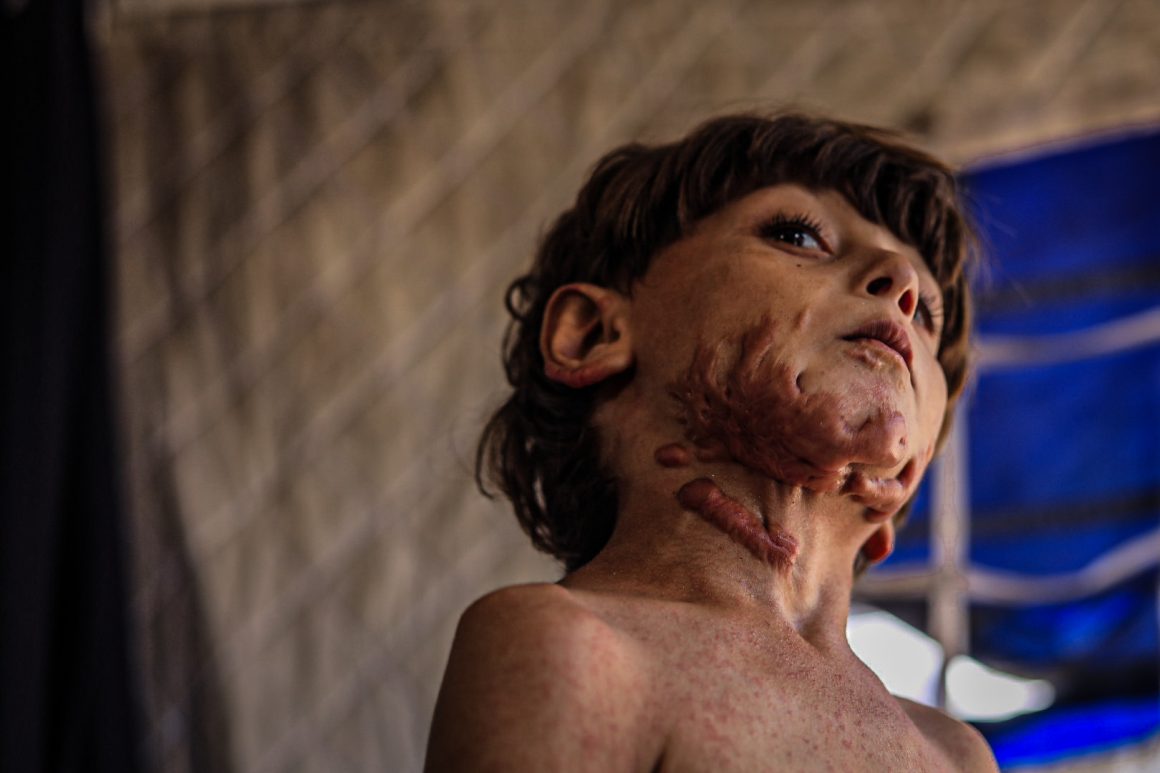
But in the Gaza Strip, photography is an arduous process.
Photographers like Salem walk on foot to capture a single photo due to the absence of transportation, endure the scorching sun and pray that they are not the next casualty.
While Salem gathers the courage to tell her people’s story, exhaustion and fear take a heavy toll on her.
“I’m not just a lens capturing a scene, I’m a soul that trembles every time I see a mother cry or a wounded child. Sometimes I keep filming while my tears fall. Other times, I finish shooting and collapse from the emotional exhaustion,” she said.
Capturing starvation
The Gaza Strip’s pain and struggle has only increased, especially as Israel weaponises starvation by blocking the entry of aid. Salem described the documentation of starvation as an even more difficult process.
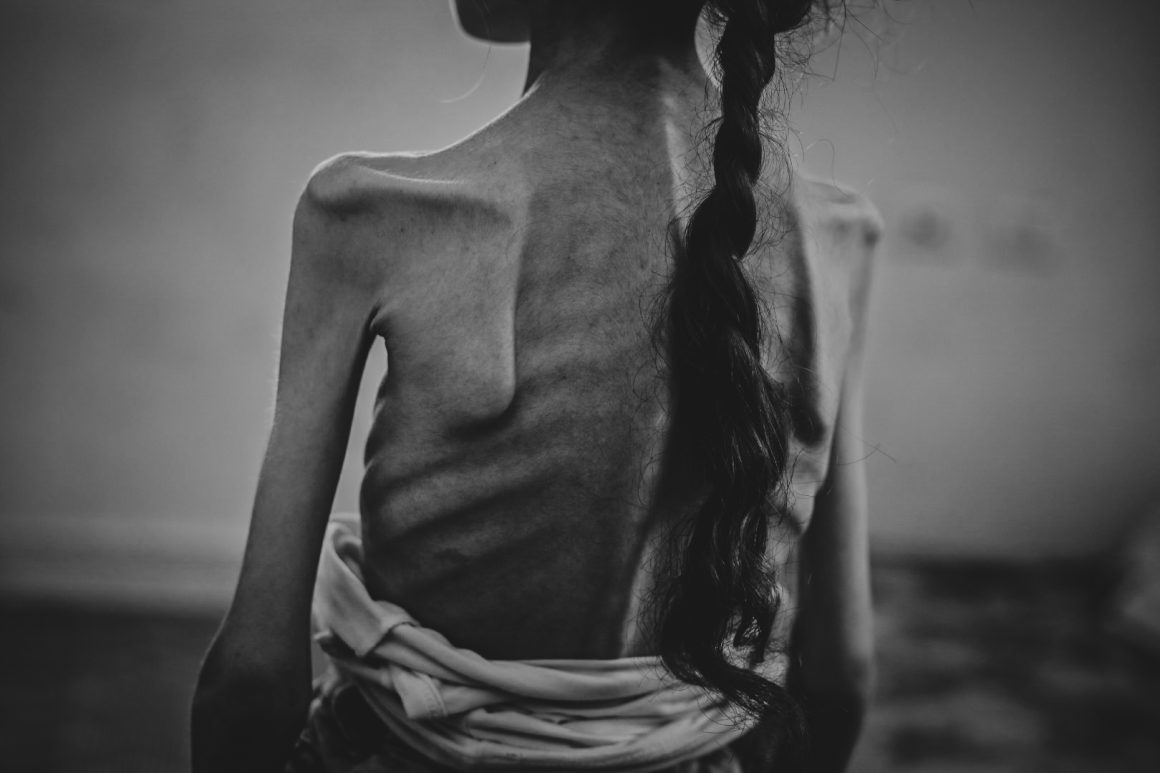
“It’s one of the hardest types of photography, not just because you’re capturing hunger, but because you’re living it too. I go out to shoot while feeling faint, my body betrays me and the camera feels heavy,” she explained.
As she captured emaciated people desperately searching for a crumb of bread, Salem questioned the absence of global action despite.
“I’m shocked by a world living in an era of speed, artificial intelligence[…]yet still silent about our hunger. How can people open their fridges ten times a day, while ours have been empty for months?” she questioned.
“This isn’t poverty, this is annihilation. This isn’t famine, it’s a crime and the scene is right in front of you, clear, direct. And those who stay silent…are complicit.”
‘Gaza is not numbers’
Despite the pain, Salem strives to capture the essence of Gaza at a time where news headlines can dehumanise them by reducing their lives and stories to numbers.
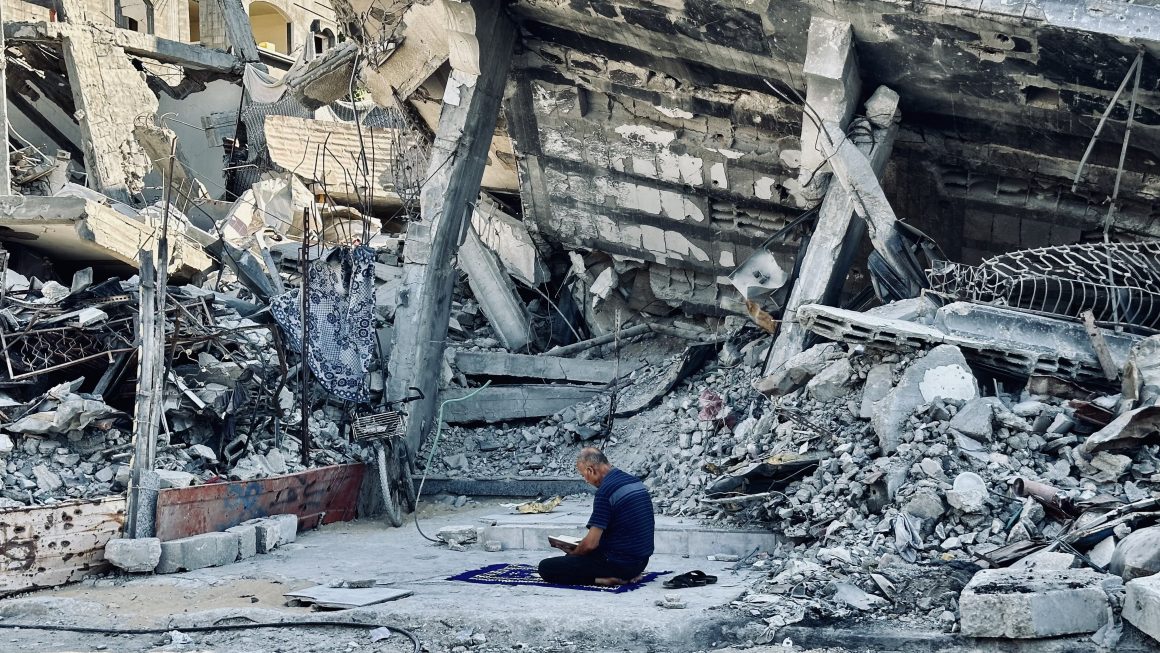
In one such example, Salem captured a photo of an elderly man on a prayer rug and reading the Quran amid the rubble of his home. His calmness, Salem explained, resembled Gaza’s people who have held onto their faith despite the devastating reality.
While Israel killed the man days later, his image remained, serving as a testament that photos will live on to show the true nature of Gaza’s people.
This message is what Salem wants to continue to tell the world as she courageously fights to convey Gaza’s story.
“Gaza is not just breaking news. Gaza is not numbers or reports. Gaza is souls, people, mothers, children, a laughter that once existed and was extinguished. I want people to see the human being, not just the scene. To see the real pain,” she said.