Iran launched further missile and drone attacks affecting Kuwait, Bahrain and Jordan on Saturday, while the IRGC warned countries hosting U.S. forces to prepare for a “corresponding response”.
After a week of rapidly widening escalation across the Gulf, U.S. Central Command announced a seventh consecutive night of strikes on Iran, as Tehran launched further attacks on countries hosting American military facilities in the region. Saturday’s developments came one day after Qatar intercepted an Iranian missile and other aerial threats.
U.S. fighter jets, drones, and warships targeted Iranian surveillance sites, military logistics, underground weapons storage, and maritime capabilities, according to the latest report from the U.S. Central Command.
In a statement reported by the semi-official news agency Mehr, Iran’s Islamic Revolutionary Guard Corps (IRGC) warned countries hosting U.S. forces in its neighbourhood to get ready for what it termed a “corresponding response.” The IRGC urged these nations to activate their civil defence units and relocate residents away from potential military targets.
Attacks widen across the Gulf region
Kuwait faced several waves of Iranian missile and drone attacks before dawn on Saturday, with warning sirens sounding four times as air defences engaged incoming threats.
Kuwait International Airport has announced a temporary suspension of operations due to the ongoing Iranian aggression against the country. Shortly after, Kuwait Airways rescheduled most flights and advised passengers to monitor updates sent through their registered contact information.
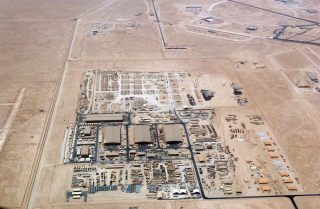
Kuwaiti authorities reported a fire at a power generation and water desalination facility after an Iranian attack. The IRGC claimed it targeted Camp Arifjan and Ali Al Salem Air Base, alleging casualties and damage to radar and drone facilities as part of the 18th wave of operation Nasr-2, according to Tasnim News Agency.
As of noon today in Bahrain, warning sirens were activated five times. Iran claimed to have struck U.S. military assets, aircraft facilities, and fuel tanks at Sheikh Isa Air Base. In response, Bahrain reported that its defense forces intercepted and destroyed several aerial threats. These claims from Iran were reported by the semi-official Tasnim news agency.
On Saturday, Jordan’s military intercepted 10 Iranian missiles that had entered its airspace, with no damage reported, according to their reports. However, the Islamic Revolutionary Guard Corps (IRGC) claimed that in response to U.S. attacks, it launched another wave of strikes as part of Operation Nasr-2. These attacks targeted U.S. aircraft shelters at the Al Azraq base in Jordan using missiles and drones, according to Tasnim.
U.S. strikes reach civilian infrastructure
Iranian media reported that the latest U.S. attacks targeted bridges, a maritime control tower, electricity facilities, and desalination pumps in southern Iran.
During the latest rounds of U.S. strikes, reports point to damage to a desalination facility in Bunji, located in Hormozgan Province, which resulted in disrupted drinking water supplies for approximately 10,000 people across 20 villages.
Shipping through the Strait of Hormuz also decreased, reaching a three-week low, with only eight vessels recorded crossing the monitored section of the waterway on Thursday. Iran claimed that two tankers caught fire after entering a mined route, but CENTCOM rejected this claim as false.
U.S. issues regional travel warning
Amid the continuing attacks and aviation disruptions, the U.S. State Department advised Americans to reconsider travel to or through the Middle East, warning that the security environment remained complex and could escalate unexpectedly.
Americans already in the region were advised to remain cautious, monitor breaking developments, and confirm that flights were operating before travelling.