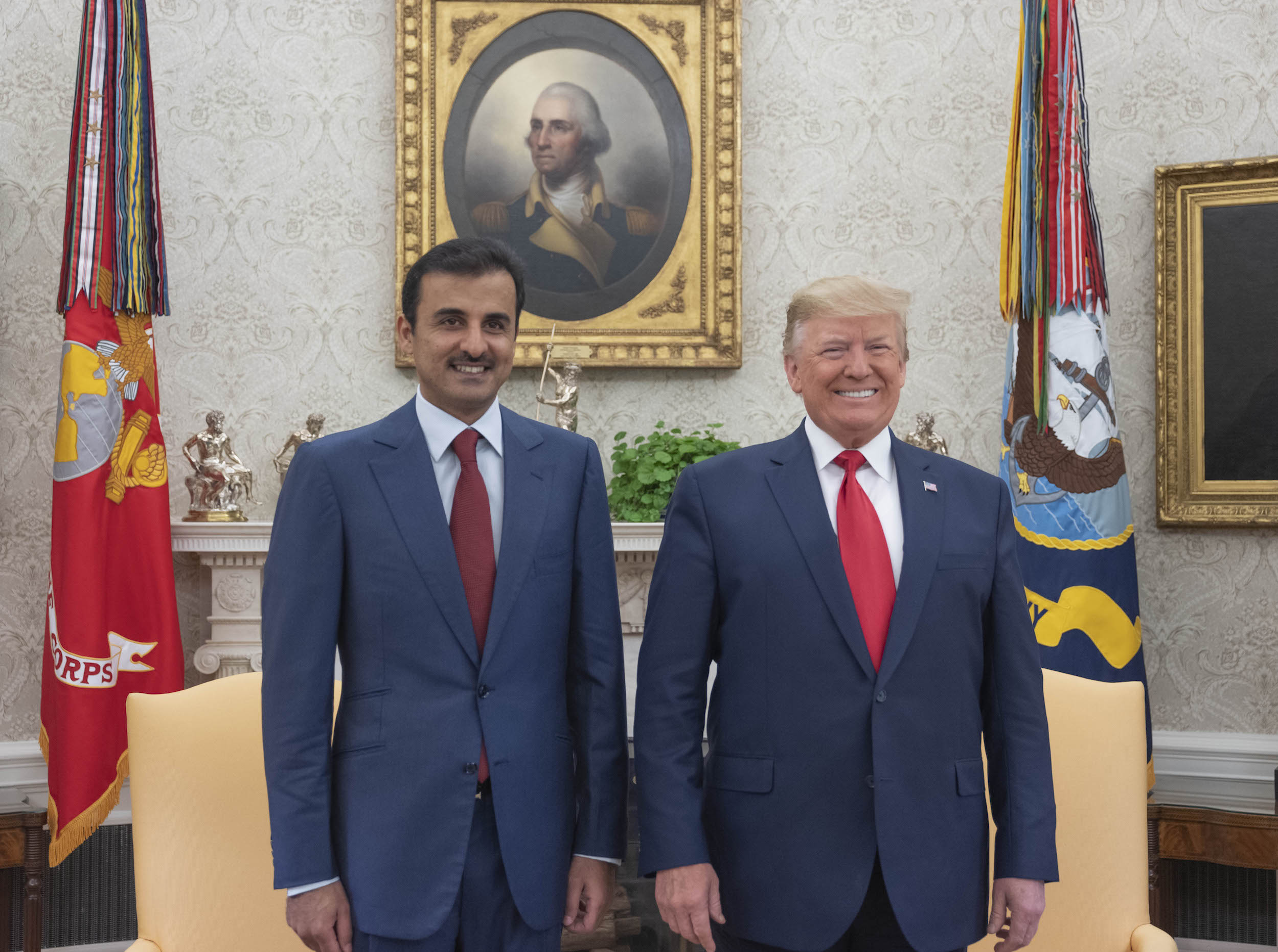
Qatar’s Amir urged de-escalation in a call with U.S. President Trump as Iran and Israel traded heavy missile fire following Israel’s deadly strikes on Iranian nuclear and military sites.
Qatar’s Amir Sheikh Tamim bin Hamad Al Thani held a phone call with U.S. President Donald Trump late on Friday to discuss the spiralling conflict between Israel and Iran, as missile strikes and retaliatory attacks shook both countries into Saturday morning.
The call came just hours after Israeli warplanes launched a wide-ranging assault on Iran, hitting over 100 sites, including its main nuclear enrichment facility at Natanz, as well as key military installations and missile depots.
The strikes, which Israeli Prime Minister Benjamin Netanyahu described as “just the beginning”, killed dozens, including senior Iranian generals and six nuclear scientists, according to Iranian officials.
By early Saturday, Iran had responded with a barrage of missiles aimed at Israeli cities, with air raid sirens and explosions heard throughout the night across Tel Aviv, Ramat Gan, and Jerusalem.
Israel’s emergency services said two people were killed and at least 34 others injured when missiles struck residential areas in the Gush Dan region. In one Tel Aviv neighbourhood, firefighters spent hours rescuing people from a high-rise building damaged by a direct hit.
Iran’s Revolutionary Guards claimed responsibility for the retaliatory barrage, saying dozens of Israeli targets had been struck. Israeli military sources confirmed that more than 100 missiles were fired in several waves, and while most were intercepted, some penetrated Israel’s defences and caused extensive damage.
Images from Ramat Gan showed twisted steel, burnt-out vehicles, and buildings with shattered facades.
In Tehran, heavy smoke and fire were seen rising from Mehrabad airport in the early hours of Saturday, as Iranian media reported incoming Israeli fire and the activation of air defences. Loud blasts were also reported in northern parts of the capital.
During their phone call, the Qatari Amir urged calm and called for de-escalation through diplomatic means. Trump, who had earlier praised Israel’s assault despite previously calling for restraint, told Sheikh Tamim the U.S. was ready to support regional efforts to contain the crisis and maintain stability, according to the Amiri Diwan.
The two leaders also discussed strategic relations between Qatar and the United States, but the bulk of the conversation focused on the rapidly evolving conflict and its implications for the wider region.
Meanwhile, Iranian Supreme Leader Ayatollah Ali Khamenei vowed to “bring Israel to ruin” in a televised address, while Netanyahu responded by encouraging Iranians to rise up against their government and warning that further strikes were imminent. “As we achieve our objective, we are also clearing the path for you to achieve your freedom,” Netanyahu said.
The death toll from Israel’s initial wave of strikes on Friday rose to 78, with over 300 injured, according to Iran’s UN ambassador.
While Israeli officials claimed they had severely damaged Iran’s nuclear infrastructure, Tehran’s atomic agency said most of the destruction at Natanz and other sites was above ground, with no major radioactive leakage.
The escalating conflict has also cast doubt over planned U.S.–Iran nuclear talks in Oman, originally scheduled for Sunday. Trump has since urged Tehran to return to the negotiating table, warning that further attacks could be “even more brutal”.
As Saturday wore on, calls for restraint intensified. UN Secretary-General António Guterres urged both sides to halt hostilities, writing on X, “Enough escalation. Time to stop. Peace and diplomacy must prevail.”