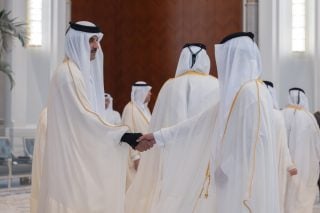
The final stage was held publicly at Imam Muhammad ibn Abdulwahhab Mosque, where 15 finalists representing all three categories competed before the International Supreme Judging Committee.
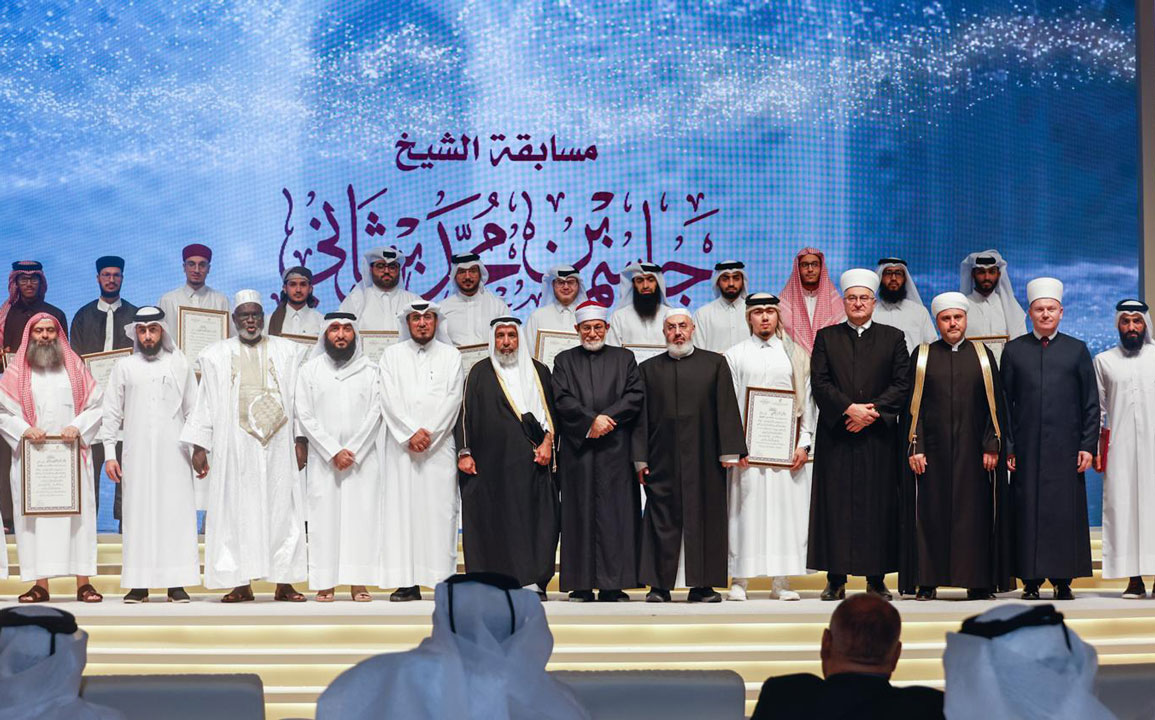
Qatar’s Ministry of Endowments and Islamic Affairs on Tuesday awarded the top male winners in the citizens, elite memorisers, and general memorisers categories cash prizes ranging from QAR 50,000 to QAR 100,000 at a ceremony held at the Sheraton Doha Hotel. Additional encouragement awards were also given to high-performing contestants who did not make the top five.
In the citizens’ category for full memorisation, Abdulaziz Al Hamri claimed first place with QAR 100,000, followed by Ibrahim Mohammed Hashem Al Mashhadani [QAR 85,000] and Mohammed Ahmed Mohammed Abdulrahim Al Haram [QAR 70,000]. Mohammed Abdullah Mohammed Buleidah and Hamad Abdullah Tayis Al Jumaili placed fourth and fifth, receiving QAR 60,000 and QAR 50,000 respectively.
In the elite memorisers category, Hamza Al Habashi of the United States took first place, Yemen’s Mohammed Abdu Ahmed Qasim came second, and Tunisia’s Rasheed Abdulrahman Al Alani was third. Libya’s Mahmoud Suleiman Al-Mabruk Idris and Egypt’s Magdy Abdullah Salem Ahmed finished fourth and fifth.
The general memorisers category saw Nasser Nahed Deeb from the United States win first place, with Bangladesh’s Khalid Hafiz Mohammed Fakhrul Huda and Saad Abdul-Sattar Abu Saeed in second and third. Yemen’s Abdulaziz Fahad Mohammed Al Hawsali and Bangladesh’s Ismail Hafiz Mohammed Elias completed the top five.
The ceremony was attended by Minister of Endowments and Islamic Affairs Ghanem bin Shaheen Al Ghanem, alongside scholars, preachers, reciters, state officials, and international guests including Shaikh Dr Rushan Abbyasov, Chairman of the Organising Committee of the Moscow International Holy Qur’an Competition, Slovenia’s Grand Mufti Shaikh Nevzet Poric, and Croatia’s Grand Mufti Shaikh Aziz Hasanovic.
Malallah Abdulrahman Al Jaber, Chairperson of the Organising Committee, said the competition, named after Qatar’s founder Sheikh Jassim bin Mohammed bin Thani, “reflects his legacy of promoting goodness, piety, and knowledge” and inspires young Qataris to engage with the Quran.
He noted that the 30th edition drew more than 2,450 contestants, including around 800 Qatari citizens, across full and partial memorisation branches. This year, male and female judging committees were fully separated, and five independent centres were allocated for female winners, with identical prize values to those awarded to men. Rewards were also increased for distinguished contestants outside the top five.
The competition has grown internationally, with Qatar supporting Qur’anic contests in Russia, Croatia, and Bosnia and Herzegovina. A visual presentation at the ceremony highlighted the contest’s three-decade evolution, its role in training generations of memorisers, imams, and preachers, and the electronic release of the Encyclopedia of Qur’anic Readings and Sciences by Sheikh Dr Ahmed Aissa El Masarawi.
The Ministry emphasised its ongoing support for Qur’anic learning circles, which attract thousands of students, and praised the judging panels of distinguished imams for their rigorous evaluation of memorisation, recitation, and tajwid.