Crude oil prices have risen sharply, while stocks are down, as investors weigh the fallout of the US-Israeli attacks on Iran.
Oil prices surged on Monday as the fallout from U.S. and Israeli military strikes on Iran rippled through global energy markets, with tanker traffic through the Strait of Hormuz already heavily impacted and military strikes continuing across the region.
The United States and Israel bombed Iran on Saturday, killing senior leaders and plunging the Middle East into a widening conflict.
The U.S-.Israeli attacks on Iran have triggered swift retaliatory attacks from Tehran, targeting their assets in multiple Middle East countries, including Qatar, the United Arab Emirates, Kuwait, Bahrain, Jordan, Saudi Arabia, Iraq and Oman.
President Donald Trump said the U.S. and Israeli strikes “will continue until all of our objectives are achieved,” setting expectations for a prolonged conflict. The escalation has sent shockwaves through global markets, with oil prices surging and stock indices falling across Asia, Europe, and the United States.
The jump in oil prices has been accompanied by a wider pullback in financial markets, as investors move away from riskier assets.
Futures tracking the S&P 500 and Nasdaq 100 pointed to roughly a 1% drop on Wall Street as trading resumed, while gold prices climbed about 2.6%, highlighting a typical shift towards safe-haven assets in times of uncertainty.
Analysts are warning of a surge in global oil prices after Iranian officials hinted at closing the Strait of Hormuz, one of the world’s most important maritime routes.
The recent attacks by the U.S. and Israel on Iran mark the first clear sign that the conflict could directly disrupt global energy supplies, raising concerns for oil markets and international shipping.
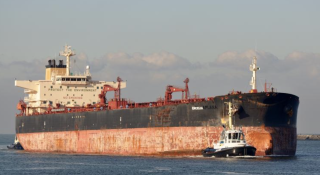
Despite its narrow width, the channel accommodates the world’s largest crude carriers. Major oil and gas exporters in the Middle East rely on it to move supplies to international markets, while importing nations depend on its uninterrupted operation.
This vital chokepoint carries about 20% of the world’s oil and gas. With movement through the strait disrupted, markets and energy watchers are closely monitoring the situation as the regional conflict unfolds.
Brent crude rose as much as 13 percent in Asia on Monday morning before stabilising later in the day, with the international benchmark up by about 5 percent, at $76.48 per barrel, as of midday Tokyo time.
Hamad Hussain, a climate and commodities economist at the United Kingdom-based firm Capital Economics, said to Al Jazeera that for the global economy, a sustained rise in oil prices would add upward pressure to inflation.
“If crude oil prices were to rise to $100 per barrel and remain at those levels for a while, that could add 0.6-0.7 percent to global inflation,” he said, noting that this would also lead to an increase in natural gas prices.
“This could slow the pace of monetary easing by major central banks, particularly in emerging markets, where policymakers tend to be more sensitive to swings in commodity prices,” he added.
Early Monday saw Asian stock markets open lower, with Hong Kong’s Hang Seng Index and Japan’s benchmark Nikkei 225 down about 2 percent and 1.5 percent.
In the US, stock futures, which are traded outside of regular market hours, racked up significant losses, signalling a choppy day ahead on Wall Street.
Futures tracking the benchmark S&P 500 and tech-heavy Nasdaq Composite were both down about 0.7 percent.
Experts warn that If the conflict continues or escalates, higher oil prices are sure to have a knock-on effect for refined product markets, inflation metrics, and fiscal outcomes in energy-importing economies.