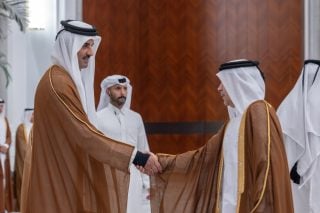
The Hazardous Materials Management System project aims to enhance oversight of hazardous substances and streamline regulatory processes across Qatar.
The Ministry of Environment and Climate Change has launched the first phase of Hazardous Materials Management Project, a national initiative designed to enhance the oversight, monitoring, and regulation of hazardous chemicals and waste.
Developed collaboratively with the Ministry of Communications and Information Technology (MCIT), the project aims to create a holistic system for tracking, licensing, and inspecting hazardous materials, ensuring safe and sustainable management across industrial, agricultural, and consumer sectors.
The announcement came during the Chemical Safety Symposium held on Monday by the Ministry of Environment and Climate Change in Doha under the theme “Towards the Effective and Safe Management of Chemicals,” highlighting Qatar’s commitment to advancing chemical safety and environmental protection.
The event was attended by Minister of Environment and Climate Change, Abdullah bin Abdulaziz Al Subaie, Minister of Transport, Sheikh Mohammed bin Abdullah Al Thani, Minister of Communications and Information Technology, Mohammed bin Ali Al Mannai, and Undersecretary of the Ministry of Environment and Climate Change, Abdulaziz bin Ahmed Al Mahmoud, alongside representatives from the United Nations Environment Programme, the Arab League, and the Gulf Cooperation Council (GCC) countries.
According to Qatar News Agency report, “the Symposium focused on key challenges related to chemicals management across a variety of sectors, in addition to sharing expertise and reinforcing cooperation among national and international entities in surveillance, inspection, and chemical safety legislation”.
In his opening address, Abdullah bin Abdulaziz Al Subaie reaffirmed Qatar’s commitment to the safe and effective management of chemicals.
He emphasised that chemical safety represents one of the foremost national priorities, directly linked to public health protection and environmental conservation.
The minister highlighted Qatar’s role as a proactive partner in international agreements on chemical safety and hazardous materials management, noting that “addressing environmental challenges and risks associated with the growing use of chemicals in industrial, agricultural, and consumer sectors requires a holistic system to ensure safe and sustainable management,” as reported by Qatar News Agency.
Al Subaie also outlined the ministry’s ongoing efforts, including the operation of online systems to manage and monitor chemical licences and the advancement of electronic inspection systems for depots and hazardous waste facilities.
He further noted the cooperation with the Qatar Research, Development and Innovation Council to develop detection devices for hazardous materials at national ports of entry, in coordination with the General Authority of Customs and the Ministry of Public Health, ensuring rigorous oversight of chemicals.
On the sidelines of the symposium, Minister Al Subaie met with Rolph Payet, Executive Secretary of the Basel, Rotterdam and Stockholm Conventions, to discuss cooperation between the two sides and ways to strengthen international partnerships in chemical safety, waste management, and the monitoring of hazardous pollutants.
The meeting also focused on the exchange of technical expertise. Al Subaie reaffirmed Qatar’s commitment to supporting international efforts to tackle global environmental challenges, particularly those related to biodiversity loss and pollution, highlighting the importance of collaboration with the secretariats of the three conventions to develop national policies and build capacity.
In response, Payet praised Qatar’s efforts in sound chemical and waste management, sustainability, and environmental protection, and expressed the Executive Secretariat’s readiness to expand cooperation through joint projects and programmes that advance global environmental goals.