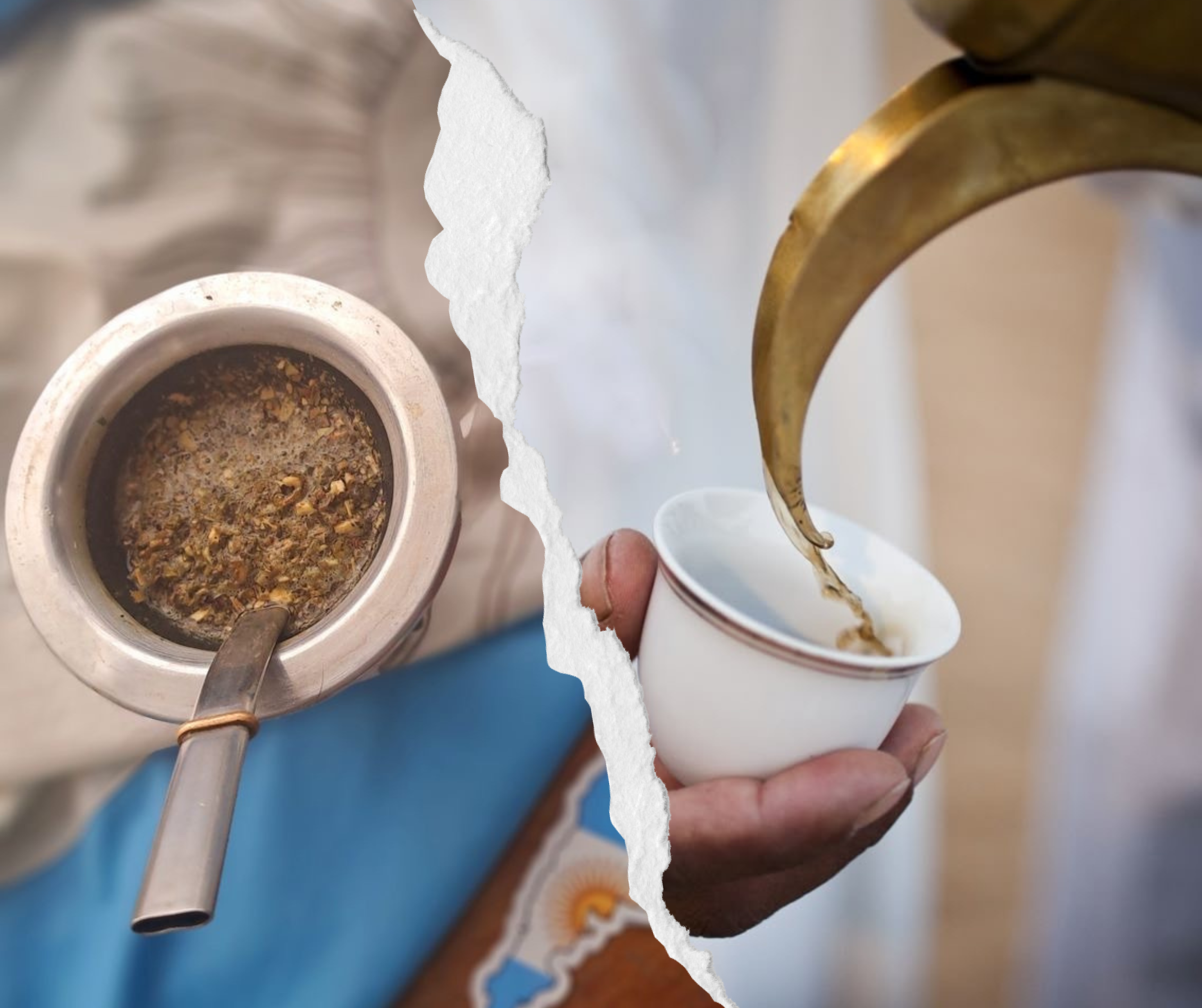
A tale of two traditions brewed across continents, where Qahwa flows through the rhythm of Qatari hospitality and Mate pulses with the heartbeat of Argentine life: two drinks, centuries apart in origin, yet beautifully alike.
Qatar is calling Argentina.
It’s early morning in Doha, and already high noon in Argentina. The sound of the kettle rises in both places, one brewing Qahwa, the other Mate.
“Call me back in a bit, the mate water will boil in a rush,” Belen’s father says on the phone, his voice half lost in a steam.
Thousands of kilometres away, Belen, Argentinian, living in Qatar with her husband and daughter, smiles knowingly. She can already see her father getting ready: thermos in one hand, yerba in the other, ready for his afternoon mate. She still hears her mother’s voice in her head on those sleepy childhood mornings, years back. “Dear, do you want me to prepare a mate for you?”
And just like that, a drink becomes a time machine that took Belen back home, years ago.
In Argentina, mate isn’t just consumed, it’s lived. It’s a habit, a gesture, a thread that connects people and generations. Mate is always there: on road trips, in parks, during study sessions, lazy Sundays, work meetings, and heartbreaks.
“Honestly, I can’t think of a single stage of my life without mate being part of it,” Belen says. “It’s always been there, a quiet constant in every memory.”
But what is mate, exactly?
“Sabe la tierra… pero nuestra tierra.”
Mate, or Yerba Mate, is a traditional South American drink made from the dried leaves of the Ilex paraguariensis plant, which grows in various regions of Latin America, and isn’t usually cultivated elsewhere.
The leaves are placed in a calabash gourd (called a mate), and hot water (never boiling) is poured over them. The drink is sipped through a bombilla, a metal straw with a filter at the bottom to strain out the leaves.
Its taste? Ask any Argentinian and you’ll likely hear: “Sabe a tierra… Pero nuestra tierra.” which means “It tastes like soil… but our soil.”
It’s earthy, grassy, slightly bitter, and completely acquired. But once it’s in your life, it never really leaves.
“At first, I didn’t like it,” recalls Maria, an Argentinian living in Qatar, as she reflects on how Yerba Mate eventually became one of her greatest loves.
As a little girl growing up in Concordia, a city in northeastern Argentina just 45 minutes from the Uruguayan border, her afternoons were filled with family gatherings, laughter, and a kind of everyday magic that only close company can bring.
“Watching my parents and grandparents drink it every day,” Maria recalls, “and seeing the joy in those simple moments, it made me want to be part of it too.”
There was something that was connecting them in a good spirit beyond just being together at the same place.
“Beyond its flavour,” Maria explains, “what truly matters is its meaning. What makes us love it most is the bond it creates between people.”
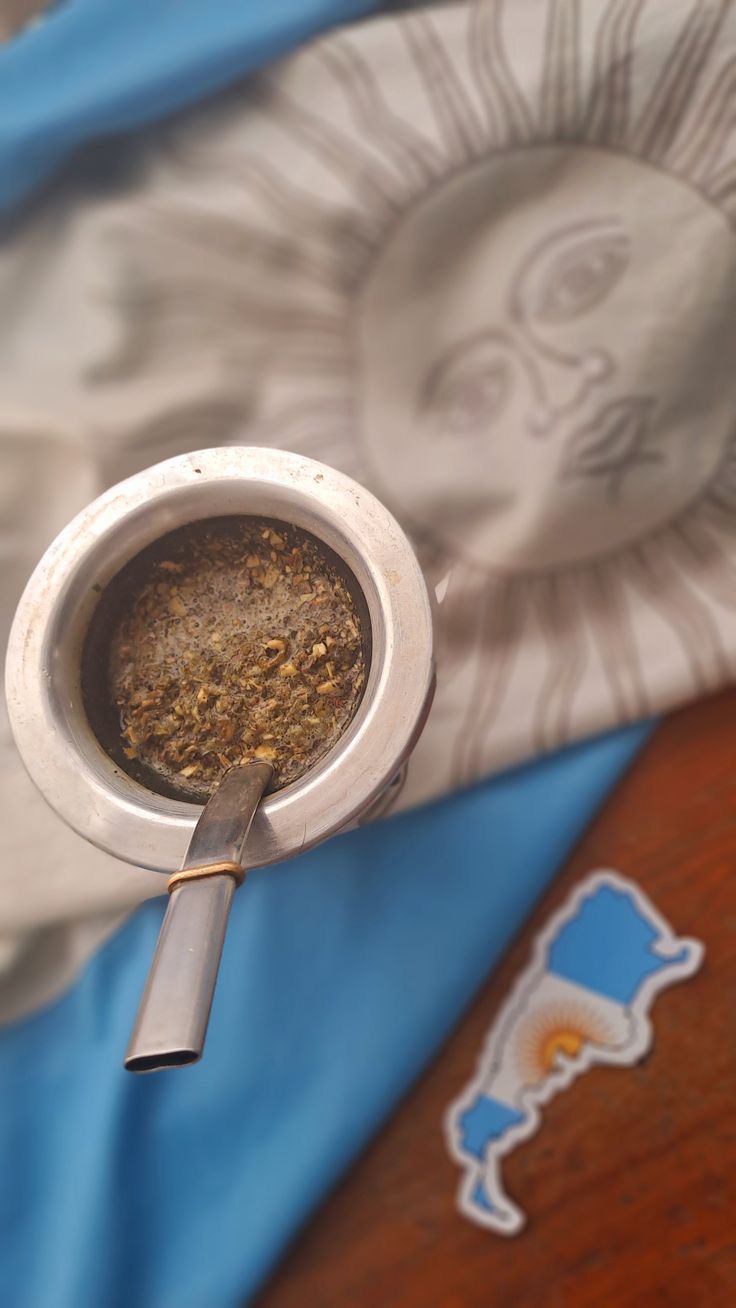
“Do you want a mate”?
“When an Argentinian asks, ‘Do you want a mate?’ it means I want to know you. I want to share something real.” Belen explains.
People drink mate at all hours, morning, noon, night. On buses, in offices, on balconies, and even on beaches. Belen even recalls sipping mate in freezing Germany, wrapped in coats.
“Some Argentinians nearby saw us and came over right away. They didn’t even need to ask, we just shared it. That’s the thing about mate. It’s a connector.”
Even in Qatar, where mate isn’t widely available, she finds ways to keep it close.
“When someone comes from Argentina, they bring yerba. It’s like green grass in a bag, and it smells like home.”
“I remember learning to serve Qahwa as a child”
“In our majlis, serving Qahwa isn’t just about the drink, it’s how we welcome guests with warmth and respect,” says Ghanim Almohannadi, a Qatari local. “It’s the same today as it was in my grandparents’ tents.”
In the heart of Qatari culture, one small cup holds centuries of tradition, hospitality, and pride, Arabic Qahwa.
Just like Mate, Qahwa in Qatar is more than a beverage. It’s a proud tradition passed through generations.
In every Qatari home, majlis, or desert camp, you’ll likely find a dallah (traditional coffee pot) gently steaming beside a tray of golden cups and sweet dates, ready to greet guests.
In Qatar, this preparation and presentation are deeply influenced by Bedouin values of hospitality, generosity, and honour.
Qahwa is made from lightly roasted Arabica beans, often infused with cardamom, saffron, or cloves.
Guests are served in order of respect, eldest first. The cup is filled only one-third. Guests gently shake the cup when they’ve had enough.
“I remember learning to serve Qahwa as a child,” Ghanim recalls. “It was a way to show elders respect, and to be trusted with something sacred.”
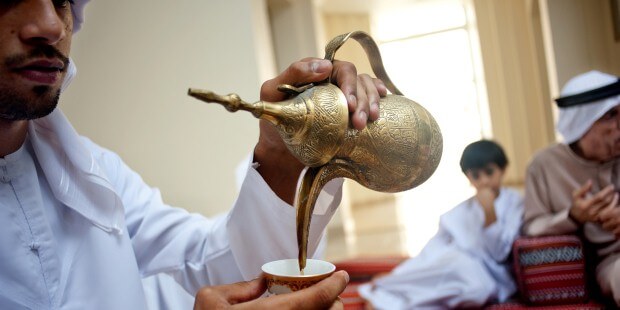
What unites Mate and Qahwa isn’t the ingredients or the method. It’s what they carry.
They are the drinks of slow time, of togetherness, of shared silences and deep conversations. “Qahwa is more than coffee,” says Ghanim. “It’s our culture. Our hospitality. A symbol of who we are.”
“Mate is our companion,” Maria adds. “It’s with us in joy, in sadness, in love, always.”
When Belen prepares mate for her daughter in a Doha kitchen, she’s not just passing on a taste, she’s passing on a heritage.
When Ghanim pours Qahwa for his grandfather, he’s not just offering coffee, he’s offering honour.
Across continents, in two very different cups, life is quietly shared, one sip at a time…