Qatar’s date farmers, many from Peshawar, share how decades of labour and love for the land turned empty desert into thriving palms that sustain both heritage and livelihood.
Under the blazing sun of Shahaniya, the rough hands of Qatar’s date farmers climb towering palms to harvest fruits that carry generations of tradition. At Heenat Salma Farm, each date tells a story of labour, heritage, and the deep bond between the land and those who nurture it.
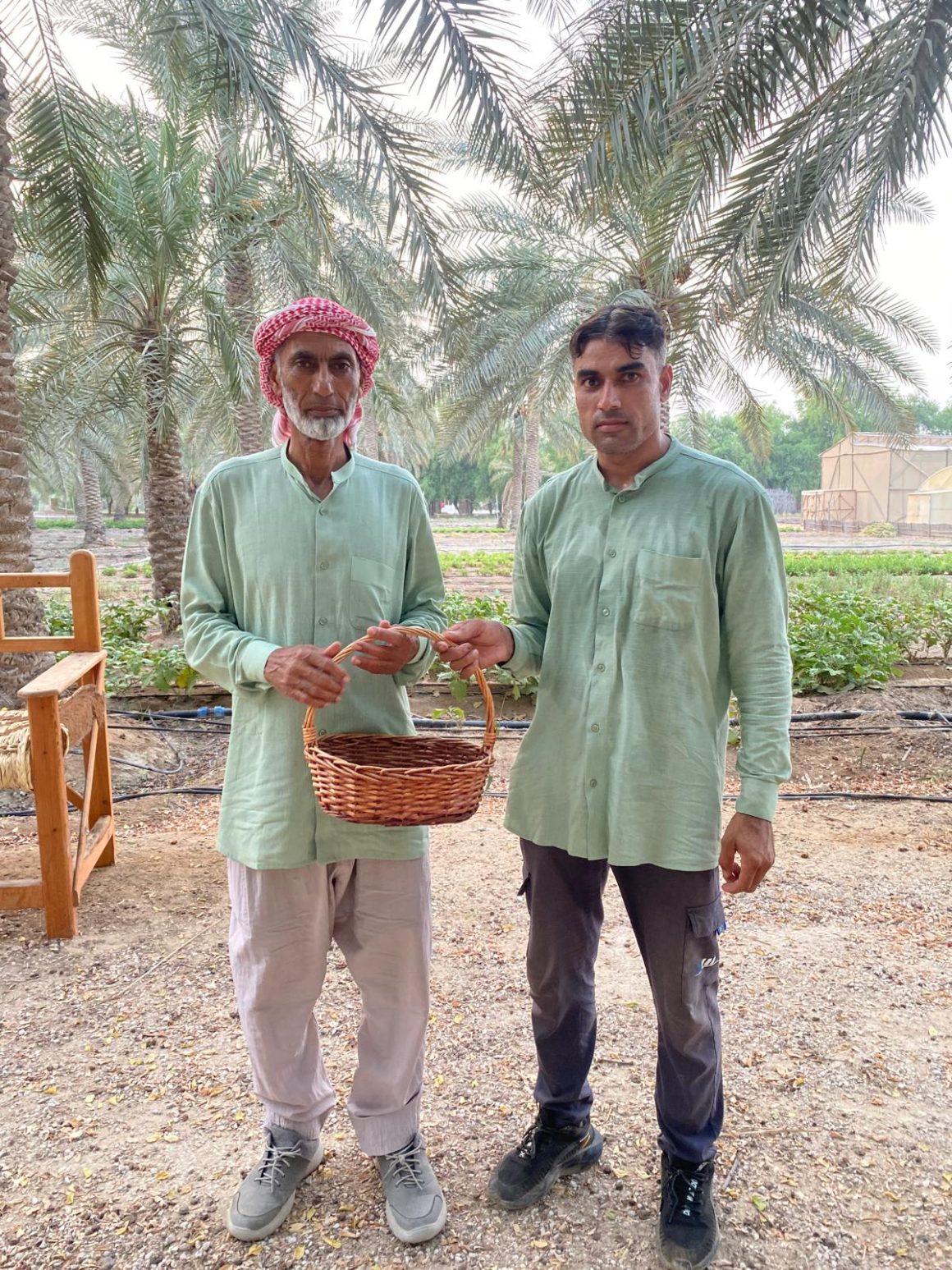
The hands of 61-year-old Habbib are worn and calloused, each line etched by decades under the desert sun. He runs them along the trunks of palm trees, feeling the grooves he knows by heart.
These are not just trees to him but living witnesses to the years he has poured into the land, each one planted with care. “I planted most of these palms with my own hands. This farm is home to me. I gave it my best years, I gave my youth to it,” he tells Doha News.
Arriving in Qatar in 1987 from Torbet City, Peshawar, he remembers finding nothing but empty sand. Now, 38 years later, towering palms stand as proof of a lifetime of dedication.
“When I came, there was nothing here. It was just sand and the heat,” he recalls. Over the years, every tree he planted became a milestone.
“Many people moved on, or passed away, but I am still here,” he adds, pride in his voice.
His children — Elijas, Femida, Nagina, and Yunus, who tend his own 20 palms back home — remain close in his heart despite the distance.
“I speak to them all the time, I keep showing them the palms,” he says.
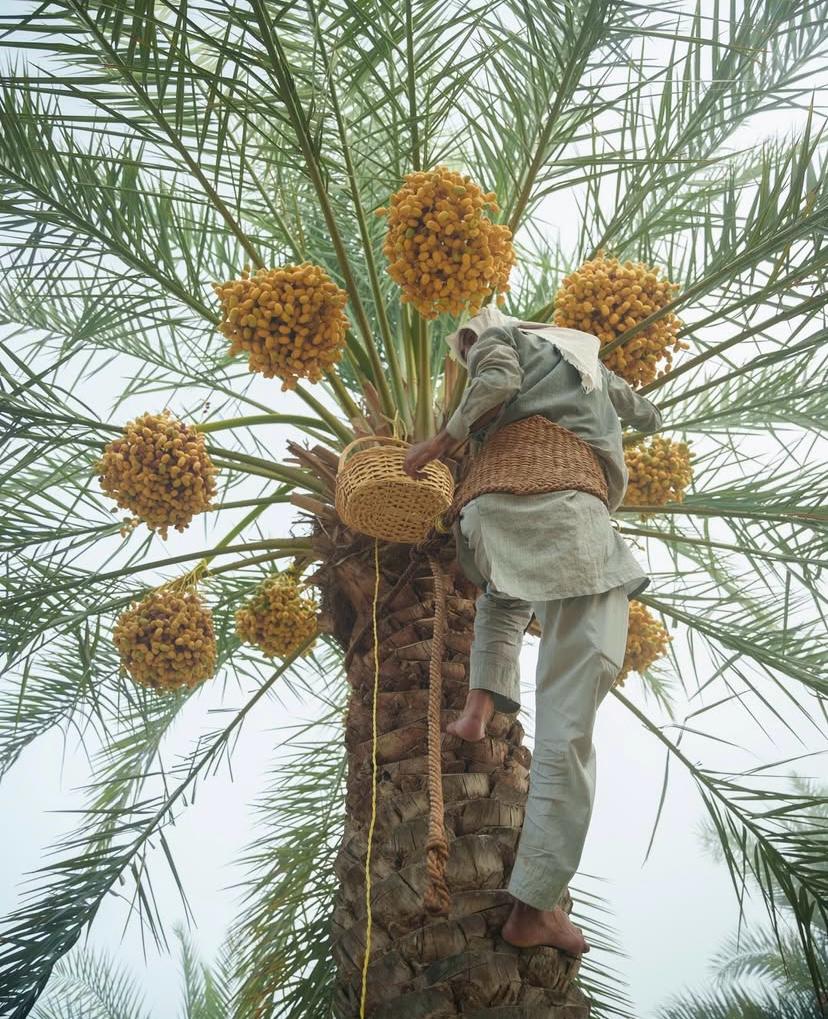
Not far away, 36-year-old Mohamed Shafiq ascends a slender palm, ropes tightening around his waist as he climbs. Each step carries memories from Peshawar’s orchards, where he first learned to harvest dates as a child.
“I love dates, I love eating dates, so I love harvesting them,” he says.
His earliest memories are of long afternoons spent picking fruit with his cousins, laughing and racing one another up the trees. Now, his children, Azelohan and Abiha, see his life through video calls.
“I show them the farm every day. Who knows, maybe one day they will do the same,” he says, gazing over endless rows of palms. “Date palms at Heenat are beautiful… but Peshawar is more beautiful,” he smiles.
Across Qatar, palm trees are everywhere — lining streets, shading courtyards, and filling supermarket shelves with their sweet bounty.
Heenat Salma Farm itself tells the story of transformation. Once a 50-hectare conventional farm, it has grown into a permaculture centre of excellence, diversifying local food with vegetables, fruits, medicinal plants, poultry, and other staples suited to Qatar’s arid climate.
The farm is not just about production. It is a place to reconnect with local culture, traditions, and the Qatari way of life.
Today, more than 1,500 palms at Heenat Salma yield around five tons of dates each year. Harvesters scale or shake seven to eight trees a day, from dawn until dusk. Varieties like Zahidi, Kholas, Khenaizi, Khesab, and Barhi ripen in sequence, with the Arabic word rutab marking the tender stage when sweetness emerges.
Every date picked is a continuation of centuries-old agricultural knowledge, passed carefully from one generation to the next.
For Qataris, dates are far more than fruit. They are part of every occasion — from weddings to funerals to the simplest family gatherings — symbols of both hospitality and heritage.
They remain the country’s most important crop, thriving where desert and people have long worked in harmony. Today, dates are Qatar’s first agricultural export, with more than 30,000 metric tons produced each year.
For farmers like Habbib and Shafiq, the palms carry not just the weight of their fruit but the responsibility of preserving a living tradition. They often speak of the farm as more than a workplace, calling it a heritage that has grown alongside them. “They grew as we grew.”
As the sun dips low over Shahaniya, the silhouettes of Habbib and Shafiq against golden palms tell a story of devotion to land and legacy.
Behind every date sold in Qatar are hands, lives, and histories shaping the sweetness that reaches tables across the nation, ensuring that the story of the palms and the people who care for them continues to thrive for generations to come.