On Qatar’s National Sports Day, Doha News explores how community-led initiatives in the fast-moving capital use sports not only to promote well-being but to socialise.
For many growing up until the late 2000s, gathering at a park after school and playing a team sport, alongside peers remains a core memory. Those activities were fun and a key part of most school-goers’ routines — you had to be there around a certain time to join the unspoken club.
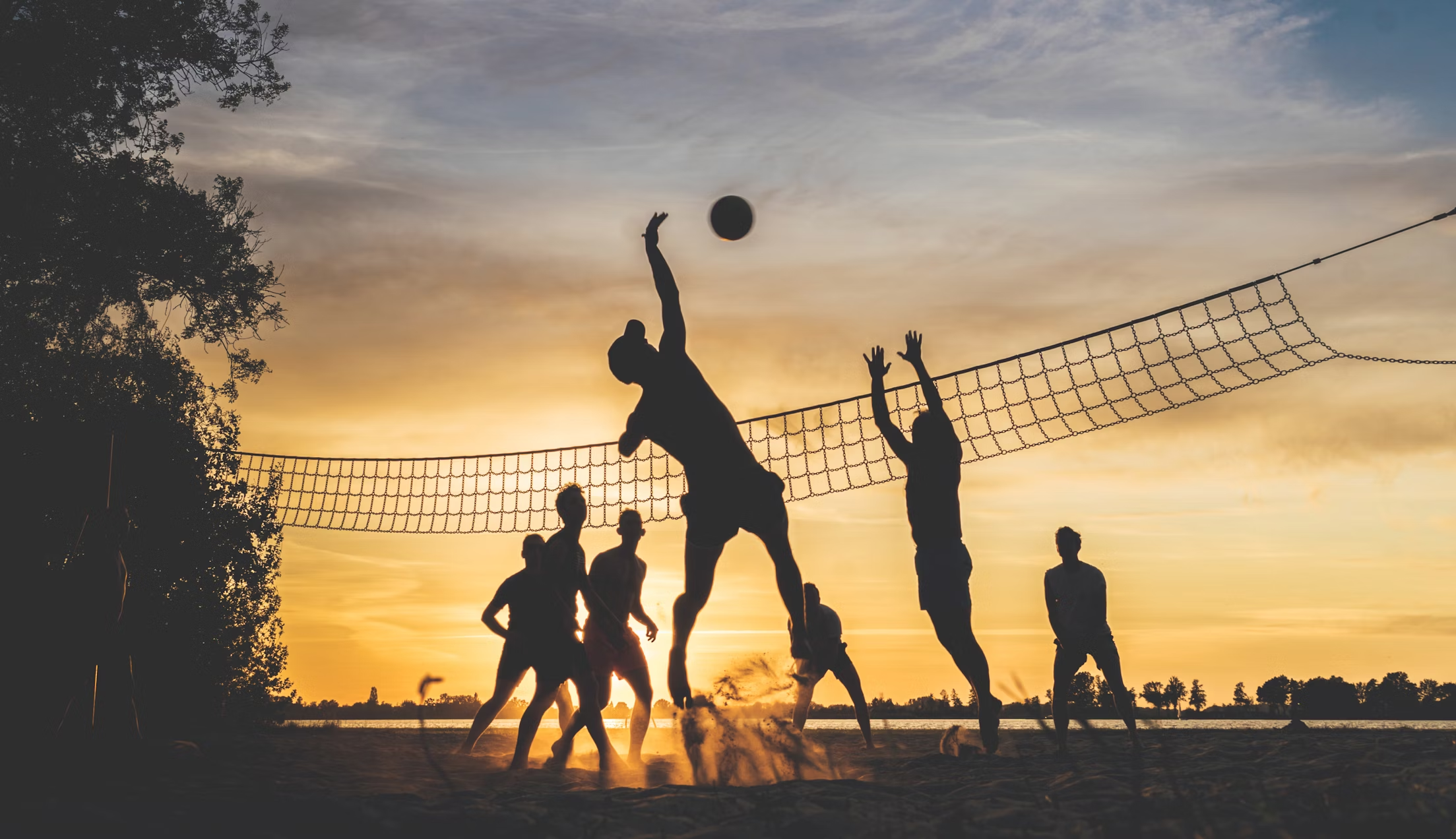
While much of those activities, most often referenced in contemporary memes as childhood nostalgia, have been replaced by screens and virtual means of engagement, there has been an uptick of niche clubs that are using sports and physical activity to socialise in Doha recently.
The rules are simple and in many ways, resemble the park activities. Show up, do your hobby sport, and bond over it.
Except, there is no contemporary aspect to it — everyone is welcome, as long as you want to do what you signed up for. The rise of running clubs, calisthenic clubs, bicycle ride clubs and expatriate community-led sports efforts mirror this trend in the Qatari capital.
‘Not about pace, but togetherness’
Jay Toet — then training to run the Ooredoo Doha Marathon — and his friend Beau Swart used to run together now and then. In what started as a spontaneous idea, they decided to give a shot at inviting people to run and train together.
Five or six people showed up in the first week for what has now become a weekly run that Necessity Run Club conducts. Bar summer, the club’s weekly run every Saturday at nine in the morning pulls about 20 to 30 running enthusiasts.
“After the first run, everyone loved it so much and we decided to organise it the following week too,” co-founder of the club, Toet, told Doha News. “Some 25 to 30 people showed up and we pushed to do it every single week until the summer.”

The location changes every week to keep up the fun. Last Saturday saw those who showed up run around the Lusail Stadium, after having run around the Old Doha Port, the Pearl, and various parks across Doha so far. The target is to run five kilometres early and it usually starts with upbeat music in the warm-up.
While the run is the centrepiece, the cooldown is equally fun — it often ends with everyone getting coffee together and bonding over common interests other than running. The club has continued to grow ever since and a new face joins the run almost every week. “It has emerged as a safe and healthy way for shy people, as well as those new in Doha, to meet new faces,” Toet said.
It has been less than a year since it all started and although summer will halt the proceedings, Toet thinks the club will continue to grow because of the community element that it touches on.
“For us, it is not about how fast you run, but about running together,” he added.
A social and inclusive space
Coffee Ride Qatar‘s origin story is not that different to Necessity Run Club’s tales. A small group of cycling enthusiasts gathered one random day and it picked up, giving rise to an entirely community-based cycling group that meets three times a week.
While there’s more equipment and technique involved in cycling, Mukaddes Eryoruk claims the group is “inclusive” for everyone from beginners to pro cyclers since the intent is more towards having fun and socialising while improving at cycling. “We focus on the social aspects of cycling,” Eryoruk told Doha News.
The name comes from the post-cycling coffee that everyone from the group sits down over to socialise and have fun. The group is a diverse one and includes the likes of pilots, lawyers, trainers and other diverse professionals who come together for the love of bikes.

From a beginner just getting their wheels balanced to an intermediate aiming for their first long race, there is a spot for everyone. Some who started with the group as beginners are now triathlon competing athletes.
“We realised that there was a need for a social space in cycling,” Eyoruk said when asked how the group initially came to fruition.
“Cycling is very competitive in general. Most groups have hard training and welcome only advanced riders. There is not much for beginners, hence we started taking them in […] With the coaches that we have, we know what it takes to motivate each other and share knowledge to keep improving.”
While mutual and individual growth is an automatic byproduct of cycling, the emphasis still remains on socialising, Eyoruk added. “The social aspect is very important since it is vital to connect like-minded people to achieve their goals. That is the primary aim.”
A home away from home
Expatriate community-led activities in Doha, a city with a significant international population, also serve as a way to connect back to their homeland.
“There are a lot of events happening around the year, led by expatriate organisations,” said Renjith Raju, general secretary of Qatar Indian Association, one of the bodies under the Indian Embassy that organises various sports tournaments throughout the year.
Among others, QIA is in charge of holding the annual Champions League, an Indian Expatriate football tournament that draws significant attention from the Indian community in Qatar. So popular has the tournament been in recent years that plans of a youth edition is underway.

The Indonesian community in Qatar recently concluded a similar league-format tournament among its members, as well as hosted the World Community Football Tournament, which the Spanish expatriate side won. Similar initiatives occur in some shape or form among other countries that have a sizeable expatriate population in Qatar.
While the volume of expatriate-led sports tournaments from the community level in Doha is impressive, Raju thinks their scattered nature often causes their influence to not be visible. Regardless, they are some of the best ways to connect with the community from back home, according to Raju.
“It goes beyond just sports and wellness,” Raju told Doha News. “They become great platforms of interaction as well as allow people to meet higher representatives to share ideas and concerns.
“It is a great occasion to connect back to your roots. As organisers, we focus equally on that aspect in addition to what happens in the sport.”