Israel’s attack on Iran, which prompted a series of retaliatory strikes from Tehran and the U.S. bombing of Iranian nuclear facilities, has raised concerns about the region’s economic stability.
Markets across the Gulf continue to show an upward trend, hinting recovery from the initial tumble following heightened regional tensions.
Major stock exchanges in Qatar, Saudi Arabia, Kuwait, the United Arab Emirates, Bahrain and Oman all continued to rise, continuing to recover in the aftermath of Israel’s airstrikes on Iran on June 13.
Qatar Stock Exchange’s latest figures showed a 0.51% rise on Monday afternoon compared to the previous day, mirroring the broader trend.
It had slid by 3.20% by the afternoon of June 15, with most entities bearing a slight decline due to the shocks of concerns over the region’s economic stability.
Qatar’s market showed strong performance on Monday, with 49 listed entities posting gains, just three experiencing modest losses, and one holding steady.
Saudi Arabia’s benchmark index rose by 1% compared to the previous closing and Oman’s Muscat Stock Exchange also observed a positive graph. The cautious bounce for both, however, is yet to put them back to the pre-attack figures.
Kuwait’s premium market, consisting of relatively larger and more liquid listed companies, also rose by half a per cent, according to Boursa Kuwait‘s figure.
The Bahraini index was up by 0.22%, alongside the UAE’s Abu Dhabi Securities Exchange and Dubai Financial Market. The latter witnessed a strong 1.15% from the previous day’s closing figures at the time of writing.
Why do Gulf stocks fluctuate?
Regional stock markets change because of various factors, but those across the Gulf often rely heavily on oil and gas revenues and are subject to fluctuations whenever prices change or a significant political or economic event poses risks to the extraction and supply chain of those commodities.
Concerns emerge about potential risks to natural gas fields, alongside the possibility of shipping route closures, following Israel’s initial strikes.
Israel’s targeting of an oil field near the South Pars, followed by the U.S. bombing of Iranian nuclear facilities, furthered the anxiety.
Extraction and supply, however, have remained largely stable throughout the region, including Qatar, despite looming fears about a broader escalation.
Qatar’s Ministry of Foreign Affairs said its energy facilities had remained secure despite sharing the gas field with Iran on June 17. “Operations are continuing without disruption,” Majed Al-Ansari, the MoFA spokesperson, said during his latest briefing.
Oil prices, however, hit a five-month high amidst the tensions, despite no significant disruption so far.
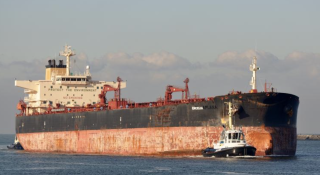
Much concern centred around the Strait of Hormuz, a narrow chokepoint in the Arabian Gulf controlled by Iran, vital to the global energy supply chain. Estimates say about 20% of global oil and gas passes through the corridor, totalling $600 billion (about $2.19 trillion) per year, according to the U.S. Energy Information Administration’s estimates.
Despite widely reported speculations of Iran potentially closing the integral point, it has not occurred yet, keeping the supply seemingly constant so far.