Doha hosted the signing on Friday of a Commitment to Peace agreement between the Colombian government and the self-designated EGC group, marking a significant step in internationally mediated efforts to end decades of conflict in the country.
Doha hosted on Friday the signing of a Commitment to Peace agreement between the Government of Colombia and the self-designated EGC group, in what mediators described as a “significant and responsible step” towards ending decades of conflict.
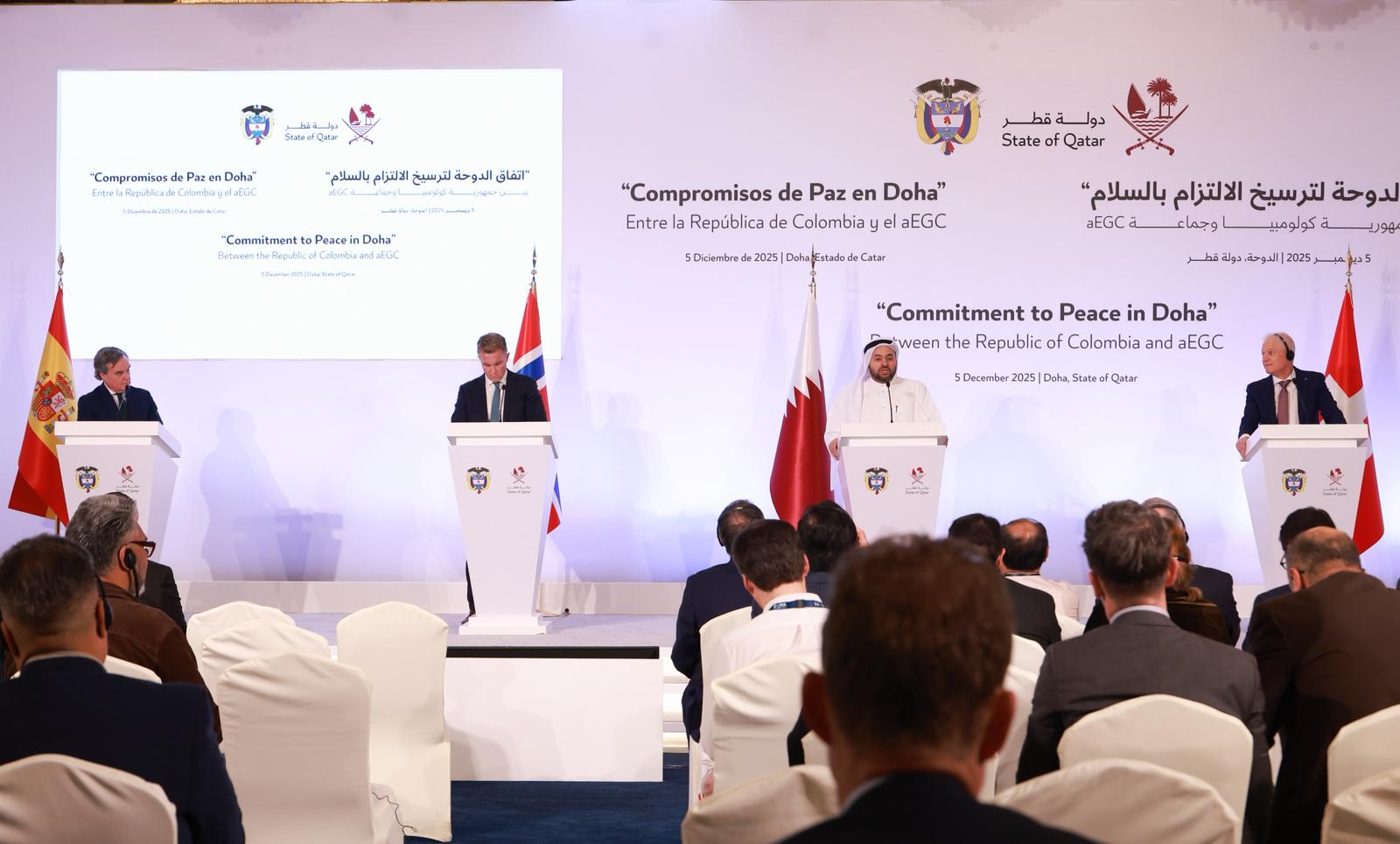
The agreement was signed at a ceremony in the Qatari capital following a new round of talks brokered with the support of the Group of Mediator Countries – Qatar, Norway, Spain and Switzerland.
Mediators said the declaration marks a key moment in ongoing efforts to advance demobilisation and peacebuilding in Colombia’s conflict-affected regions.
In a joint statement, the Group of Mediator Countries said that after two rounds of mediation in Doha, “the Government of Colombia and the self-designated EGC have taken important steps towards peace,” adding that the new declaration “reflects compromise, responsibility, and commitment to alleviate the conditions for the civilian population and end armed conflict.”
In a joint statement, the mediators announced that, after two rounds of mediation in Doha, “the Government of Colombia and the self-designated EGC have taken important steps towards peace,” adding that the new declaration “reflects compromise, responsibility, and commitment to alleviate the conditions for the civilian population and end armed conflict”.
The mediators emphasised that the process had sought to improve the lives of families exposed to violence, young people seeking opportunity, and victims demanding truth, justice, reparations, and guarantees of non-repetition.
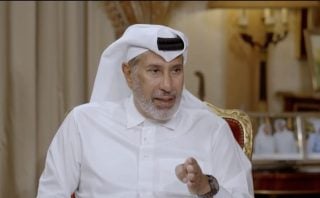
At the press conference following the signing, Minister of State for Foreign Affairs Mohammed bin Abdulaziz Al-Khulaifi hailed the Doha Agreement as a framework for a responsible transition built on trust and mutual respect, highlighting Qatar’s growing diplomatic role.
He praised the efforts of Norway, Spain, and Switzerland in achieving the agreement, describing today’s outcome as “a responsible decision for peace and security, which will open a political path for the establishment of continuous calls for peace within the agreed framework”.
Al-Khulaifi also highlighted that “Qatar has established itself as a powerful and influential diplomatic force, which has the exceptional ability to open communication channels and deal with complex issues. One of these is its role as a centre of influence, which extends beyond the boundaries of responsibility, commitment, and loyalty.”
He noted that the agreement would also “greatly help to challenge the legitimate trade of drugs and humans in specific areas” while emphasising that it is directed “first and foremost to the friendly people of Colombia for their security, safety, and right to a decent life”. He added that the credibility of the agreement would be tested by whether Colombian communities experience tangible progress in the coming months.
Al-Khulaifi explained that the first track of the Doha Agreement had involved the allocation of fifteen designated areas in Colombia, where the government and the EGC will work jointly to reduce illicit drug production, prevent the recruitment of children and adolescents into armed groups, and establish safe and dignified conditions for affected communities.
He described this as “a human-centred effort driven by the commitment of the parties, supported by the mediators, to ensure a decent life for the Colombian people in these regions.”
The second track concerns the reintegration and rehabilitation of EGC members, a process Al-Khulaifi described as complex and multi-layered. Both sides have agreed on essential initial steps, while mediators will follow up “closely and continuously” as mechanisms for implementation are developed.
He stressed that the primary responsibility lies with the two parties to the agreement, with mediators facilitating communication and supporting the development of practical mechanisms that benefit Colombian civilians.
Looking ahead, Al-Khulaifi confirmed that new rounds of technical work will take place in the coming days to define operational mechanisms for implementation. Coordination will involve civil society organisations, regional partners, and several Latin American states that have already expressed readiness to support this stage of the peace process.
The mediators’ joint statement cautioned that many hurdles and challenges remain and emphasised that the implementation of commitments requires discipline, transparency, and trust. They pledged continued support to help build confidence, noting that they hope to work with civil society, institutions, and international partners to ensure the success of the process.