The Arab foreign ministers also reiterated their firm rejection of any violation of Palestinians’ ‘inalienable rights’ and their forced transfer to Egypt and Jordan.
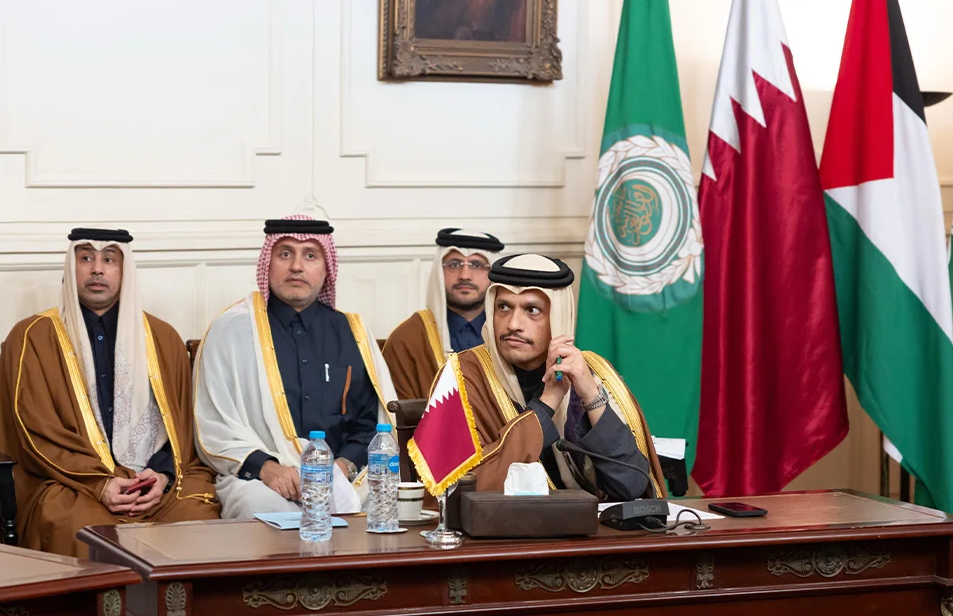
Delegations from six Arab countries met in Cairo on Saturday to discuss the latest developments in the Gaza ceasefire and the ongoing captives-prisoners exchange process.
The meeting was attended by the foreign ministers of Qatar, Jordan, the United Arab Emirates, Saudi Arabia and Egypt. The Secretary-General of the Executive Committee of the Palestine Liberation Organization (PLO), as well the Secretary-General of the League of Arab States were also present.
In a joint statement, the participating nations thanked Qatar and Egypt for facilitating the Gaza ceasefire and captives-prisoner agreement between Hamas and Israel.
“The participants also expressed their commitment to working with the administration of U.S. President Donald Trump to pursue a just and comprehensive peace in the Middle East, in line with the two-state solution, and to strive for a conflict-free region,” the statement said.
The Arab foreign ministers also reiterated their firm rejection of any violation of Palestinians’ “inalienable rights”, condemning activities such as settlement expansion, home demolitions, land annexation, and the forced displacement of Palestinians.
This rejection was a response to Trump’s proposal, which suggested the forcible displacement of Palestinians out of the occupied territories in the Gaza Strip and the West Bank to Jordan and Egypt.
The participants “rejected any efforts to encourage the transfer or uprooting of Palestinians from their land, under any circumstances or justifications”.
Despite both Egypt and Jordan’s clear rejections, Trump has continued to push for the resettlement of Gaza’s population.
Egyptian President Abdel Fattah el-Sisi dismissed the idea in a press briefing, asserting that the transfer “can’t ever be tolerated or allowed”.
“The solution to this issue is the two-state solution. It is the establishment of a Palestinian state,” Sisi said.
“The solution is not to remove the Palestinian people from their place,” he added.
Jordanian Foreign Minister Ayman Safadi also echoed this stance, confirming that his country’s rejection was “firm and unwavering”.
A ceasefire brokered by Qatar, Egypt and the U.S. has allowed hundreds of thousands of Palestinians to return to their demolished homes in northern Gaza following the end of Israel’s brutal 15-month war, referred to as a genocide, on the besieged territory.
Looking ahead, Egypt, Jordan, Qatar, the UAE, and Saudi Arabia announced plans to host an international conference on Palestine in June of this year, aiming to advance efforts toward a lasting resolution to the Palestinian issue and support the implementation of the two-state solution.
Gaza captives-prisoner exchange continues
On Saturday, the fourth captives-prisoner exchange between Israel and Hamas took place since the ceasefire signed on January 19, where three Israeli captives were released in return for 183 Palestinian prisoners.
Since the deal began, 583 Palestinian prisoners have been released. Saturday also marked the first time the southern Rafah border crossing was reopened in over nine months, allowing for 50 wounded Palestinians to exit for medical treatment.
On the same day, Israel’s Channel 12 reported that Prime Minister Benjamin Netanyahu may send a delegation to Qatar on February 3, as indirect talks continue between Israel and Hamas to facilitate the second and third phases of the ongoing exchange agreement.
The first phase of the three-phase deal, which spans 42 days, involves the exchange of over 1,900 Palestinian detainees with 33 Israeli captives held in Gaza.
Qatar PM meetings
Qatar-based daily Al Araby Al Jadeed reported that Netanyahu spoke with U.S. Special Envoy to the Middle East, Steve Witkoff, on Saturday.
Netanyahu is also scheduled to meet with Trump in Washington on Monday to begin discussions on the second phase of the prisoner and detainee release agreement with Hamas.
Other reports said that Witkoff may meet with Qatari Prime Minister and Foreign Minister Sheikh Mohammed bin Abdulrahman Al Thani and Egyptian officials later in the week.
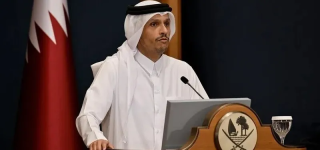
Sheikh Mohammed has played a central role in Qatar’s mediation efforts between Hamas and Israel, working towards a ceasefire in Gaza.
At the World Economic Forum in Davos, the Prime Minister participated in a one-on-one panel focused on the future of Gaza’s leadership, reiterating the importance of Palestinian self-determination.
“I don’t see that there is any country in a position to dictate anything for them,” he said. “We hope to see a government that will really address the issues of the people over there, and there is a long way to go with Gaza and with the destruction. We hope to see the PA [Palestinian Authority] back in Gaza.”
On Sunday, the Prime Minister met with Jibril Rajoub, Secretary-General of the Palestinian Fatah Movement’s General Committee, in Doha to discuss the latest developments in the Gaza Strip and the occupied Palestinian territories.