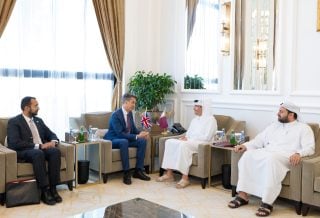
Qatar’s Minister of State for Foreign Affairs, Sultan Saad Al Muraikhi, participated in an Arab League ministerial meeting held via video conference on Tuesday to address Iran’s “unlawful and reprehensible” attacks on Arab countries.
Qatar participated in a ministerial-level meeting of the Council of the League of Arab States — the supreme authority of the Arab League — held via video conference on Tuesday.
The meeting was dedicated to the “unlawful and reprehensible” Iranian attacks against Arab countries in addition to Iran’s obligations under international law.
The Minister of State for Foreign Affairs, Sultan bin Saad Al Muraikhi, represented Qatar at the meeting.
Under the presidency of Abdullatif bin Rashid Al Zayani, Minister of Foreign Affairs of Bahrain, together with Arab foreign ministers and the Secretary-General of the League, Ahmed Aboul Gheit, the Council reviewed a wide range of Arab, UN, and international legal instruments before issuing a strongly worded resolution concerning recent regional developments.
The Council referred to the Arab League Charter and the Joint Defence and Economic Cooperation Treaty, which consider any aggression against one member state to be an attack against all.
It also cited relevant UN Security Council and international resolutions that, according to the statement, condemned Iranian attacks on several Arab countries and described them as violations of sovereignty and international law.
The Council further referenced decisions by the Human Rights Council, the International Maritime Organization, and the International Civil Aviation Organization, all of which were said to have denounced attacks on civilians and civilian infrastructure and called for accountability and reparations.
In its resolution, the Council “condemned in the strongest terms” missile and drone attacks attributed to Iran against multiple Arab states, including Qatar, Saudi Arabia, the UAE, Bahrain, Kuwait, Oman, Jordan, and Iraq, carried out since late February 2026.
It expressed “grave concern” over continued strikes despite UN calls for cessation, alleging that these attacks deliberately targeted civilian areas and critical infrastructure such as oil facilities, airports, ports, telecommunications networks, and diplomatic missions, causing significant material damage and endangering civilian lives.
The Council stressed that these actions constitute a serious violation of sovereignty and international law, including the UN Charter and international humanitarian law.
It stated that Iran bears full international responsibility for what it described as unlawful attacks and is obligated to provide full reparations, including compensation and appropriate redress.
It also reaffirmed that, under the Arab League’s collective defence framework, aggression against one member is considered aggression against all, and expressed full solidarity with affected Arab states.
The resolution also called on the United Nations Security Council to assume its responsibilities in maintaining international peace and security and to ensure implementation of its earlier Resolution 2817 (2026), including the demand that Iran immediately halt all attacks.
It affirmed the “inherent right” of Arab states to self-defence, individually or collectively, in accordance with Article 51 of the UN Charter, and urged coordinated Arab diplomatic action across international organisations to document violations and pursue accountability mechanisms.
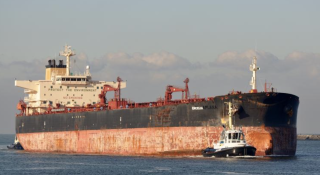
Finally, the Council rejected and condemned Iranian threats to close strategic waterways such as the Strait of Hormuz and Bab al-Mandab, warning that such actions would endanger global energy security and freedom of navigation.
It also criticised continued support for armed groups in Arab states, and tasked Arab diplomatic missions worldwide with conveying the resolution internationally, while requesting the Secretary-General to follow up on its implementation and report back to the next ministerial session.