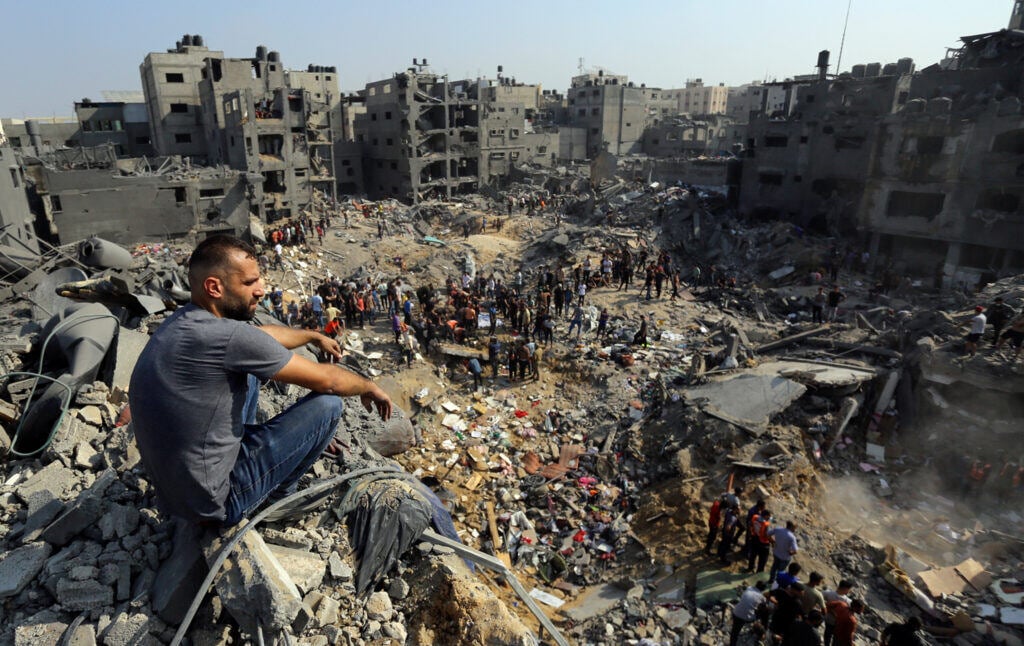
Momentum has picked up in recent days for a potential ceasefire to halt Israel’s onslaught on Gaza and a potential captive release, following two years of continued negotiations and multiple failed truces.
In the two years since it started the genocidal war on Gaza, Israel has killed more than 66,000 people, a haunting figure considered to be an undercount with thousands still trapped under the rubble.
In addition to imposing a total blockade on the enclave for almost seven months, which has resulted in a famine, Israel has managed to attack several countries across the region as well as violate several regulations, conventions, and truce agreements.
Here’s a rundown of all the major developments of several ceasefire negotiations that took place in the last two years, aiming to end the onslaught:
2023
Hamas’ attack, Israeli ‘state of war’, and shuttle diplomacy
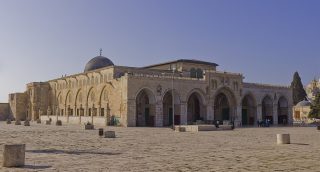
Israel declared a “state of war” on Gaza a day after Hamas’ unprecedented Operation Al Aqsa Flood on October 7.
While the bombings continued, Israel subsequently announced a total blockade on the besieged strip, as well as completely cut off water, fuel, and electricity on October 12.
On October 20, Qatar mediated the release of two American-Israeli captives, and the first batch of humanitarian aid entered through the Rafah crossing on the same day.
Hamas released two more captives to the Red Cross, following a joint mediation by Egypt and Qatar on October 23. Both were elderly female Israeli citizens whose husbands were still in captivity.
Series of diplomatic efforts and a temporary truce
On November 22, Qatar, Egypt, and the U.S. brokered the first four-day humanitarian truce, which came into effect on November 24 following a series of discussions.
More than 14,000 Palestinians had been killed by the time the truce came into effect, with approximately 1.7 million displaced.
The pause allowed for large-scale captive–prisoner exchanges and humanitarian aid deliveries. Israel had first agreed to daily four-hour pauses to its bombing to allow aid into certain parts of northern Gaza on November 9.
The deal was extended twice, leading to the release of over 100 captives from Gaza and several hundred Palestinian prisoners from Israeli jails, all of whom were women and children. Israel resumed its bombings on December 1.
2024
Hamas agrees to Qatar-Egypt mediation proposal, Biden rolls out plan
Following months of stalled negotiations that mainly stumbled on the sequencing of the captive release and the Israeli military’s withdrawal from Gaza, Hamas publicly accepted a ceasefire proposal drafted by Egypt and Qatar on May 6.
Israel, however, disputed key details and continued in its military onslaught. On May 31, then-U.S. President Joe Biden revealed his three-phase ceasefire plan.
It began with a six-week truce, prisoner–hostage exchanges, and Israeli withdrawal from populated areas, followed by negotiations toward a permanent ceasefire and Gaza reconstruction. Despite claims of its agreement, Israel’s air and ground offensive continued.
By then, more than 36,000 had been killed by Israeli attacks in Gaza, with more than 82,000 injured, according to the United Nations Office for the Coordination of Humanitarian Affairs.
Israel assassinates Hamas mediators
On July 31, Israel assassinated Hamas’ political bureau chief Ismail Haniyeh during a visit to Tehran.
Haniyeh was the Palestinian group’s chief since 2017 and was a key figure in then-ongoing negotiations. Mediators Qatar and Egypt strongly condemned the assassinations, warning they undermined any chance of reaching a durable agreement.
On August 1, Israel claimed that it had killed Hamas’ military chief, Mohammed Deif, in an airstrike on Khan Yunis on July 13 — a claim later confirmed by the group in January 2025.
Yahya Sinwar, who took charge following Haniyeh’s assassination, was killed in action on October 16 in Rafah’s Tel al-Sultan while battling the Israeli Occupation Forces.
The assassinations would then begin a period of stalemate in ceasefire negotiations.
Qatar announces suspension of mediation efforts
On November 19, Qatar’s foreign ministry spokesperson Majed Al-Ansari said that his country was suspending mediation efforts due to the “lack of seriousness of the parties involved in the negotiations”, affirming that it will return to the table once favourable conditions are present.
During his address at the opening panel of Doha Forum 2024 on December 9, Qatar’s Prime Minister Sheikh Mohammed bin Abdulrahman Al Thani accused parties involved in the process of trying to “score political points”.
On December 2, U.S. President-elect Donald Trump demanded that captives from Gaza be released before he took office in January 2025, with both the new and the incumbent American administrations now involved in the negotiations.
2025
Renewed momentum and January ceasefire
On January 13, Qatar and Egypt presented Israel and Hamas with a final draft of a ceasefire plan, which later put an end to Israel’s 15-month-long hostility in the Gaza Strip.
On January 15, the Qatari PM announced the agreement during a press briefing in Doha, adding that the three-phase ceasefire would start from January 19.
Despite internal resistance, Israel’s cabinet passed the decision a day before the plan was to be executed. The first of the three phases, each lasting 42 days, would see 33 Israeli captives being released in exchange for Palestinian prisoners.
Israel had killed more than 47,000 Palestinians in its genocide in the Gaza Strip by the time the ceasefire came into effect following a three-hour delay on January 19.
Israel breaks ceasefire, imposes choking blockade
The second and third phases, which were set to be determined once Phase 1 was completed, never came to fruition.
An Israeli strike on March 18 effectively ended the ceasefire agreement, killing more than 400, including 263 women and children in a single day, marking one of the deadliest events since October 2023.
Israel’s renewed attacks included a ground offensive in addition to intensive airstrikes that flattened large swaths of Gaza, destroyed civilian infrastructures, including schools and hospitals, and targeted aid convoys.
Civilians, including women and children, as well as several journalists, were continuing to be killed as Israel continued its genocidal onslaught.
A total blockade was also imposed on all entrances to Gaza, reducing the enclave to famine. A UN-backed food security report said later that Gaza was marked by “widespread starvation, destitution and preventable deaths” with hundreds confirmed dead due to hunger so far.
Iran-Israel war ends with Qatari mediation
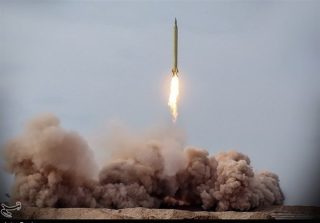
Announcement of an end to the Twelve-day war between Israel and Iran came on the same night the latter unleashed a barrage of missiles targeting the U.S. air base in Qatar, on June 23.
Earlier, both sides had exchanged fire after Israel assassinated prominent politicians and nuclear scientists in Iran on June 13.
The U.S. got involved on June 22, bombing three nuclear sites. Iran’s attack on the Al-Udeid Air Base was termed as retaliation for those attacks.
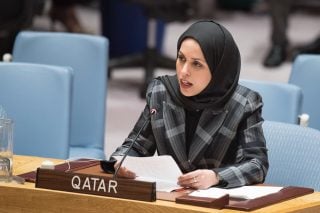
In the aftermath of the attacks, Qatari foreign ministry spokesperson Al-Ansari voiced his country’s outrage towards Israel’s escalations, noting the Gulf state had repeatedly warned against their impact on the region’s stability. Hours later, a ceasefire was brokered by the U.S. and Qatar.
Israel targets Hamas negotiators in Doha, UN confirms genocide
In an unprecedented course of action, Israel attacked Doha on September 9, targeting Hamas’ top brass that had convened to discuss a new ceasefire proposal.
The attack killed five Hamas members and a Qatari security officer and evoked widespread international condemnations for the breach of Qatar’s sovereignty as well as for an attack on a mediator.
While Arab and Islamic leaders from across the globe descended on Doha on September 15 to show their solidarity and jointly condemn the attack, a UN commission concluded that Israel had committed a genocide in Gaza for the first time a day later.
Israel’s attack on Qatar, its strikes across the region, and its continuing genocide in Gaza were a common theme at the high-level debate of the 80th session of the United Nations General Assembly from September 23 to 29.
Trump’s 20-point plan and latest momentum
Following the Israeli PM’s formal apologies to his Qatari counterpart, Sheikh Mohammed, for the September 9 attack on Doha, U.S. President Trump began pushing for a new 20-point ceasefire proposal on September 29.
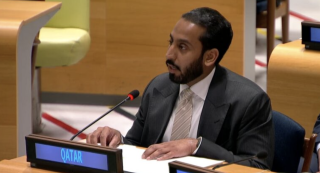
The ceasefire negotiations had been stalled since the attacks, with Qatar saying its commitment to host talks and mediate was contingent upon security guarantees.
“The basis on which Qatar relies is the guarantees provided that the Israeli attack will not be repeated,” Al-Ansari, the foreign ministry spokesperson, said on September 30, claiming a draft of the latest plan had been submitted to Hamas.
On October 3, Hamas said that it had accepted several elements of the proposal, yet demanded further negotiations on certain fronts concerning the rights of the Palestinian people and the future of Gaza.
Following Hamas’ statement, Trump called on Israel to immediately stop bombing Gaza to secure a pathway to release the captives.