Qatar’s long-term commitment to marine conservation continues to yield results, with thousands of endangered sea turtles returned safely to their natural habitat.
The Ministry of Environment and Climate Change (MoECC) has confirmed the conclusion of the 2025 nesting season for hawksbill sea turtles, a protected species under international conservation agreements.
Running from 31 March until the end of July, the season witnessed the release of 8,213 hatchlings into Qatar’s natural coastal environment.
In a statement shared on X, Qatar’s Ministry of Environment and Climate Change said, “The ministry extends its gratitude to everyone who contributed to the success of this season.”
The Hawksbill Turtle Conservation Project was established in 2003 and is run in cooperation with QatarEnergy and Qatar University’s Environmental Science Center (ESC).
This project aims to protect the endangered species, classified as critically endangered on the International Union for Conservation of Nature (IUCN) Red List.
According to QNA report, the project has successfully overseen the release of more than 60,000 hatchlings into the wild over the past five years alone.
The 2025 season recorded the nesting of 219 turtles across eight key coastal sites, including Fuwairit, Ras Rakan, Ras Laffan, Sharaoua, Umm Tais, Al Ghariya, Al Maroona, and Al Khor.
To ensure optimal safety and monitoring, environmental teams relocated the nests to Fuwairit Beach, which has served as a protected nesting site since 2020.
The site is equipped with necessary infrastructure to facilitate conservation and minimise risks to both nests and hatchlings.
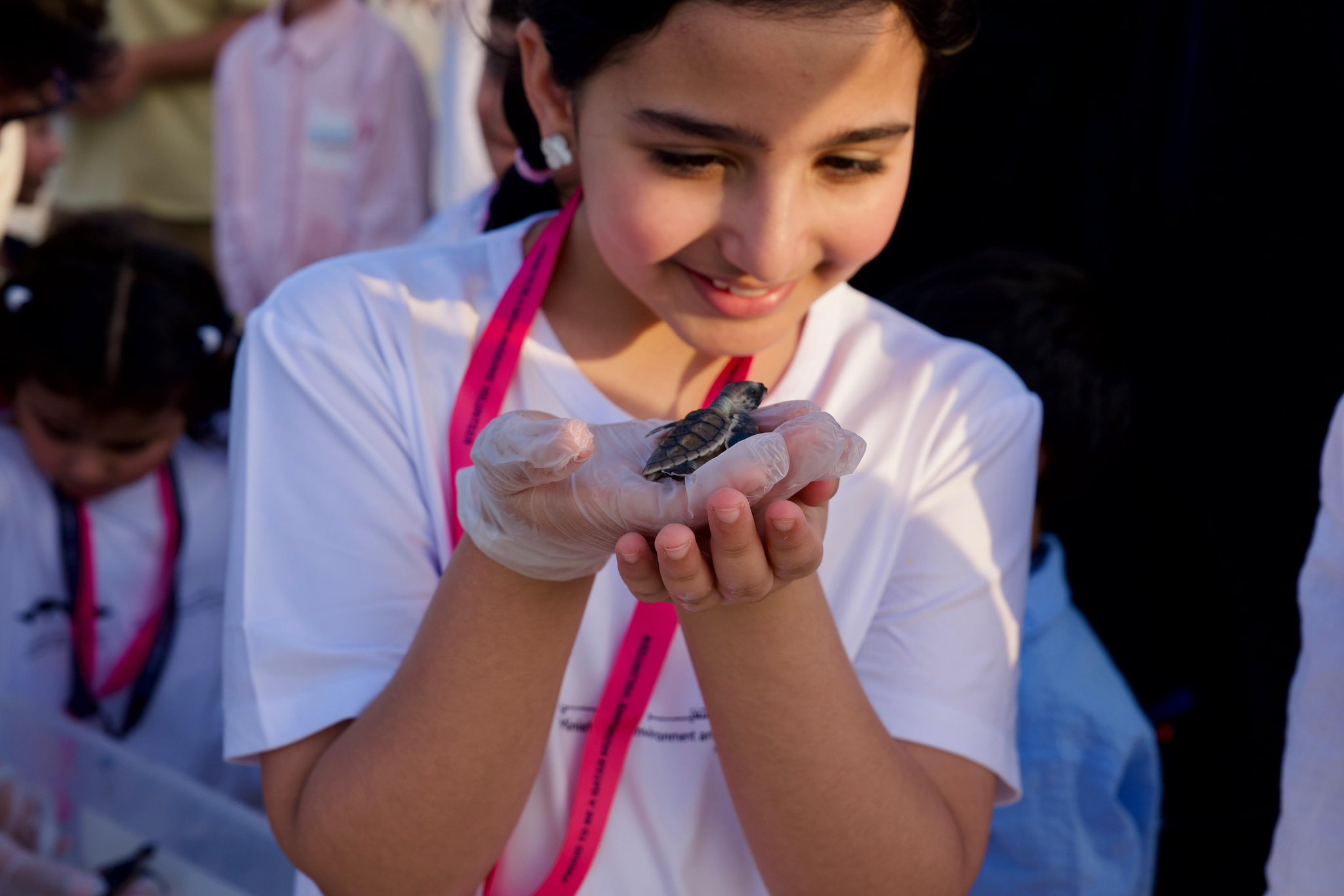
In an effort to enhance public engagement and education, the ministry also arranged field visits to Fuwairit Beach, encouraging wider participation and reinforcing the ecological significance of sea turtles.
These trips served not only as educational opportunities but also as platforms to showcase the importance of biodiversity and environmental stewardship.
The ministry’s comprehensive conservation approach involved tracking turtle activity during the nesting process, recording physical measurements, tagging individual turtles with identification numbers, and transferring eggs to protected zones.
DNA samples were collected for genetic research, while satellite tracking devices were affixed to selected turtles to monitor migratory routes and habitats, providing crucial data for future protection strategies.
Further scientific studies were conducted to understand the factors contributing to hatchling mortality. Findings from these studies are expected to inform future improvements to nesting sites and conservation protocols.
Additionally, orientation sessions were held in schools, especially in northern Qatar, to raise awareness among younger generations.
Commending the efforts of the project team, Khalid Jumaa Al Mohannadi, Director of the Wildlife Development Department at MoECC, emphasised the importance of cooperation among partners and the public in reporting injured turtles and promoting conservation awareness.
Dr. Dhafi Nasser Hidan, Assistant Director of the department, reaffirmed that joint efforts would persist in the coming seasons to ensure continued protection for this rare species.