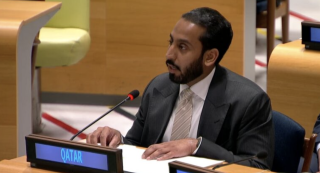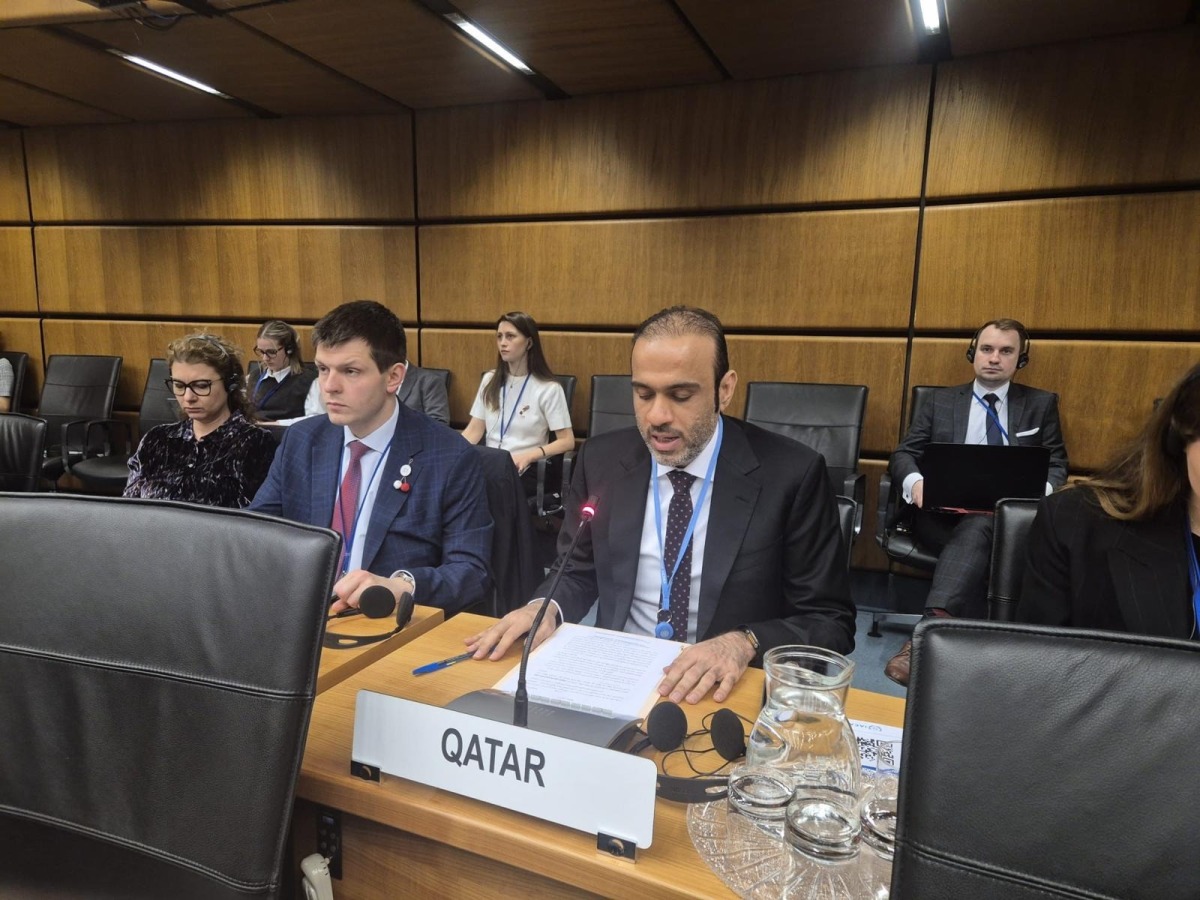
Qatar pointed out that all Middle Eastern countries, except Israel, are parties to the Nuclear Non-Proliferation treaty.
Qatar’s Ambassador to the UN has called for all Israeli nuclear facilities to be under the supervision of the International Atomic Energy Agency (IAEA).
Speaking at the IAEA Board of Governors session in Vienna on Saturday, Jassim Yacoub Al Hammadi called for the importance of the international community to honour its commitments.
He referred to obligations under UN Security Council resolutions, the UN General Assembly, the IAEA, and the 1995 Nuclear Non-Proliferation treaty (NPT) Review Conference. These resolutions specifically call for Israel to place all its nuclear facilities under IAEA safeguards.
Al Hammadi also pointed out that all Middle Eastern countries, except Israel, are parties to the NPT.
Furthermore, he condemned Israel’s ongoing aggressive policies, including attempts to forcibly displace Palestinians, escalating military actions in the occupied West Bank, blocking humanitarian aid to the Gaza Strip, and restricting the operations of the UN Relief and Works Agency (UNRWA).
In light of these actions, Al Hammadi revealed that Qatar had submitted a memorandum to the International Court of Justice last week, seeking an advisory opinion on Israel’s obligations under the UN General Assembly’s December 19, 2024 resolution. This resolution urges Israel to cease obstructing UN operations and humanitarian aid in the “Occupied Palestinian Territory,” comply with international law, and facilitate UN relief efforts.
Al Hammadi emphasized that Qatar’s memorandum called on Israel to allow UN and humanitarian organisations, particularly UNRWA, to operate in Israel and the occupied Palestinian territories. It also demanded the protection of UN property, including schools, medical facilities, infrastructure, and personnel.
He concluded by urging the international community to hold Israel accountable for its actions, support Palestinian self-determination, and work towards regional stability to prevent further global risks.