The U.S. and Iran sign a breakthrough memorandum of understanding, with Qatar among regional states credited for helping secure the deal.
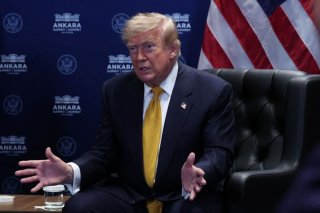
U.S. President Donald Trump and Iranian President Masoud Pezeshkian signed a memorandum of understanding on Wednesday aimed at ending the war between Washington, Israel and Tehran and launching negotiations over Iran’s nuclear programme.
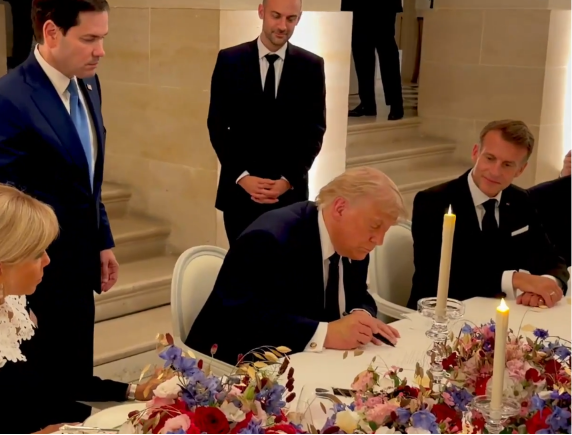
Trump signed the agreement during a dinner at the Palace of Versailles following the G7 summit in France, while Iranian officials confirmed that President Pezeshkian had also signed the document.
“It’s signed,” Trump told reporters as he left Versailles. “I signed it in Versailles. Just signed it.”
French President Emmanuel Macron later shared footage showing Trump signing the agreement, describing it as an important step that could help ease tensions and lower energy prices.
Video showed Trump pausing before signing and telling those gathered: “This was not easy, I can tell you that.”
Iranian state news agency IRNA also published images showing Pezeshkian signing the agreement in Tehran.
Iranian Foreign Ministry spokesperson Esmaeil Baghaei confirmed that the document had entered into force.
“The text of the memorandum of understanding was finalised with the signatures of the presidents,” Baghaei told IRNA. “Now it is time to test the implementation of the agreement.”
The White House later confirmed that Trump had signed the deal.
The agreement is intended to draw a line under the conflict that began on 28 February when the United States and Israel launched military operations against Iran, prompting Iranian missile and drone attacks across the region.
As a first step, Iran will reopen the Strait of Hormuz while the United States will lift its naval blockade of Iranian ports, according to details released by Pakistani Prime Minister Shehbaz Sharif, whose government mediated the negotiations.
Washington has also agreed to waive sanctions on Iran’s oil sector, while both sides will enter a 60-day negotiating period focused on Iran’s nuclear programme.
The memorandum also states that once a final nuclear agreement is reached, the United States will facilitate access to a proposed $300 billion reconstruction fund backed by regional countries.
Speaking after the signing, Baghaei said Tehran would closely monitor U.S. compliance with the agreement.
“We will not show any leniency in monitoring the implementation of commitments,” he said, warning that Iran would not fulfil its obligations if Washington failed to honour its own.
Baghaei said discussions during the 60-day period would focus on sanctions relief and Iran’s nuclear programme but stressed that Tehran’s missile programme was not negotiable.
“Iran’s missiles are only for firing, not for negotiation. Iran’s defence capabilities will not be discussed in any process with any party,” he said.
He also said Iran would retain its stockpile of highly enriched uranium, although dilution under international supervision remained one of the options being discussed.
Addressing developments in Lebanon, Baghaei said Iran had demonstrated that it “does not abandon its friends” and argued that it was Washington’s responsibility to ensure Israel complied with its commitments under the agreement.
Pakistan’s Prime Minister Shehbaz Sharif thanked Qatar, Saudi Arabia, Turkey and Egypt for their roles in helping secure the deal.
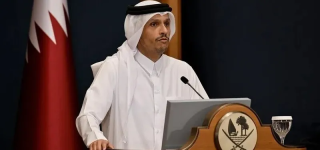
“I would especially like to acknowledge the sincere efforts and constructive engagement of the leadership of the State of Qatar in helping reach this point,” Sharif said.
“I also highly commend the leadership of the Kingdom of Saudi Arabia, the Republic of Türkiye and the Arab Republic of Egypt for their indispensable role and invaluable contributions in this regard.”
Although officials had previously expected a signing ceremony in Geneva on Friday, Baghaei said the electronic signatures by both presidents meant such a ceremony was no longer necessary.
However, Sharif said an official ceremony would still be held in Switzerland on Friday, where technical talks are expected to begin.
Discussions are expected to cover sanctions relief, Iranian assets frozen in Qatar and Iran’s nuclear programme, according to Al Arabiya English sources.
Qatar and Pakistan are expected to participate in the talks, while some sessions may also involve Saudi Arabia and Turkey. Additional discussions are expected to address Lebanon and Hezbollah-related issues.