Iran’s foreign minister defends Tehran’s war response, denies targeting civilians in Gulf attacks, and rejects a ceasefire while blaming the U.S. and Israel for escalating the conflict.
Iran’s Foreign Minister Abbas Araghchi described the Islamic Republic as resilient and unable to be destabilised by the loss of individuals, responding to the killings of senior figures Ali Larijani and Basij commander Gholamreza Soleimani.
Speaking to Al Jazeera on Wednesday, he said Iran’s political system is strong, with established institutions that continue to function regardless of individual figures, adding that even the loss of top leadership would not disrupt the system.
“We have not had anyone more important than the leader himself, and even the leader was martyred, but the system continued to work and immediately provided a replacement. If anyone else is martyred, it will be the same,” Araghchi said.
Iran’s state media confirmed on Tuesday that senior Iranian security official Ali Larijani and the commander of Iran’s internal Basij militia, Gholamreza Soleimani, were killed.
Larijani is the highest-ranking Iranian official killed in U.S.-Israeli attacks on Iran since former Supreme Leader Ayatollah Ali Khamenei was assassinated on the first day of the war on 28 February.
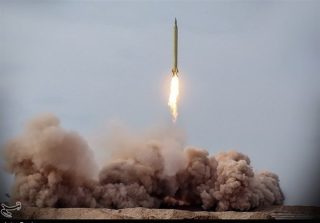
Speaking about the war, Araghchi said Iran did not start the conflict and is compelled to respond by targeting U.S. military bases and assets in the region, some of which are located in neighbouring “friendly countries”.
“When the United States attacks us, our armed forces, our missiles, and our drones cannot reach U.S. territory. Therefore, we are inevitably compelled to respond by striking U.S. military bases in the region,” Araghchi said.
When asked about strikes affecting residential and business areas, Araghchi said Iran has not intentionally targeted civilian locations in neighbouring countries, including Qatar.
He expressed surprise at what he described as a lack of global reaction to U.S.-Israeli attacks on Iran’s residential areas, schools, and hospitals.
“First of all, I am truly surprised that the world does not speak out about the attacks on Iran’s residential areas, the attacks on schools and hospitals. Why does no one talk about these? But I can say with confidence that we have not attacked civilian targets in neighbouring countries,” Araghchi added.
He said any impact on civilian areas outside Iran was unintended, adding that strikes were aimed at locations linked to U.S. presence in the region, which in some cases were situated near urban areas.
“However, when it comes to striking what the Americans call their bases in the region, it is natural that we have not limited ourselves only to their formal military bases. They evacuated their soldiers from military bases and moved them into hotels inside cities,” he said.
He added that overall, the current tensions in the region are the result of U.S. actions.
Araghchi: Iran’s nuclear doctrine remains peaceful, Hormuz access tied to enemies
When asked whether the fatwa issued by the late Supreme Leader Ayatollah Ali Khamenei banning nuclear weapons would continue under the new leadership, Araghchi said Iran’s nuclear doctrine has long been peaceful.
He added that it is too early to assess how the new leadership under Mojtaba Khamenei might approach the issue.
“A fatwa, as you know, depends on the person who issues it. I am not yet in a position to judge what the new leader’s jurisprudential or political stance on this matter will be. My understanding is that it should not differ greatly from our previous policies, but we must wait until we become aware of his views,” he said.
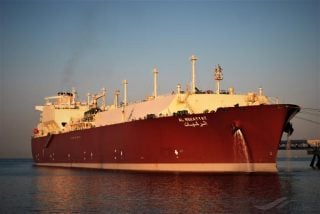
Commenting on the Strait of Hormuz, Araghchi said Iran will not allow its enemies to use the waterway, while stressing the need for safe navigation during the war.
“From our perspective, this is a waterway located next to Iran. Naturally, we will not allow our enemies to use this waterway,” he said.
“Some countries contact us to discuss safe passage through the Strait of Hormuz, and we try to provide them with the conditions for such passage,” he added.
Looking ahead, Araghchi said new arrangements for the strait should be designed after the war.
“The first step should be drafting a new protocol for the Strait of Hormuz. Naturally, this should be done between the countries that lie on both sides of the strait, and it should guarantee that safe passage takes place under specific conditions,” he said.
He added that such measures should consider both Iran’s interests and those of the wider region.
Araghchi: Trump undermined Pezeshkian’s apology, Iran rejects ceasefire
Speaking about Iranian President Masoud Pezeshkian’s apology to neighbouring countries for missile and drone strikes, Araghchi said it was made out of respect for those affected by the conflict.
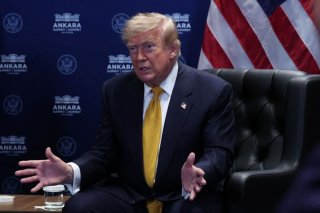
However, he said the approach was undermined by the United States and President Donald Trump, whose public statements dismissed the gesture and prevented improved relations with regional countries.
“Immediately after Dr Pezeshkian’s statement, the U.S. president posted a tweet describing the apology as a sign of defeat and declaring that Iran had been defeated using very insulting language. In reality, Mr Trump killed this approach from the start. He prevented the emergence of a new atmosphere and a new perspective between us and the regional countries,” Araghchi said.
He said Iran does not accept a ceasefire at this stage but is open to proposals that could end the war permanently and compensate Iran for its losses.
“We do not accept a ceasefire. However, if there is an idea for ending the war that meets our conditions, so that the war ends permanently across the entire region and the damages suffered by Iran are compensated, we will certainly listen to it,” he said.
Addressing the American public, Araghchi said the current conflict is not a war between Iran and the United States, but one driven by Israel’s interests.
“This is Israel’s war, designed for Israel’s interests, for those who believe in Israel first. The cost is being paid by the people of Iran, the people of the region, and the people of the United States,” he said.
He added that ordinary people in Iran, the region, and the U.S. are bearing the human and financial costs, and that ending the war depends on Americans using their influence to push their government.