The U.S.-Israel war on Iran has escalated since it broke out on 28 February, triggering instability in the Middle East.
Spanish Foreign Minister Jose Manuel Albares voiced his country’s solidarity with Qatar in light the Iranian attacks on the country and the rest of the region as the U.S.-Israel war on Iran continues.
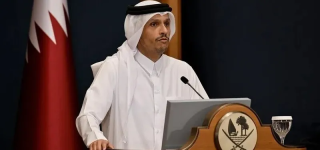
This came in a phone call between Albares and Qatar’s Prime Minister and Minister of Foreign Affairs Sheikh Mohammed bin Abdulrahman Al Thani, Doha’s foreign ministry said in a statement on Monday.
“[The] Minister of Foreign Affairs, European Union and Cooperation of the Kingdom of Spain expressed his country’s solidarity with the State of Qatar, stressing the importance of deescalation, preserving infrastructure and civilian facilities, and ensuring the safety of the energy sector,” the statement said.
The phone call dealt with the developments of the military escalation in the region as well as “its serious repercussions on regional and international security and stability”. The discussions on the matter involved “ways to resolve all disputes in a peaceful manner”.
Sheikh Mohammed also stressed the need for Iran to halt its attacks on Qatar and the rest of the region, warning against the “targeting of vital infrastructure, particularly related to water, food and energy facilities”.
“[Sheikh Mohammed] also emphasised the necessity of strengthening coordination, intensifying joint efforts, returning to the negotiating table, and prioritising reason and wisdom to contain the crisis, to ensure global energy security, freedom of navigation, environmental safety, and to preserve regional stability,” the statement added.
The U.S.-Israel war on Iran has escalated since it broke out on 28 February, triggering instability in the Middle East.
Spain has taken a decisive stance against the U.S. military actions by closing off its airspace for American planes involved in the war while blocking the use of its jointly operated military bases.
Since the start of the war, Iran has attacked countries in the region, including Qatar, under claims of targeting U.S. interests—a claim that has been rejected globally.
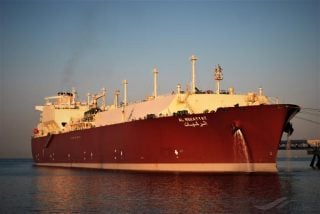
The attacks targeted vital facilities, including energy sites such as Qatar’s Ras Laffan Industrial City. On 1 April, Iran attacked Aqua 1, a fuel oil tanker on charter to QatarEnergy, in Qatar’s economic waters without casualties.
Iran’s closure of the vital Strait of Hormuz has also been a major issue of concern, given the waterway’s critical importance in global shipments. The Strait is used for roughly 20 percent of the world’s oil and liquefied natural gas (LNG) trade.
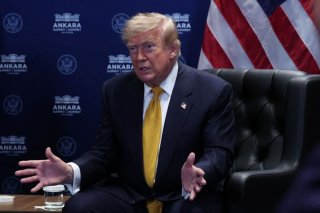
On Sunday, U.S. President Donald Trump warned Iran to open the Strait of Hormuz by his Monday deadline, threatening to attack bridges and power plants.
“Tuesday will be Power Plant Day, and Bridge Day, all wrapped up in one, in Iran. There will be nothing like it!!! Open the F* Strait, you crazy b*, or you’ll be living in Hell – JUST WATCH! Praise be to Allah,” Trump said in a Truth Social post.