With the arrival of Ramadan, curiosity grows among non-Muslims eager to learn about and experience this holy month.
Ramadan, the ninth month of the Islamic lunar calendar, is a time when Muslims from around the world fast from dawn to sunset, abstaining from food, drink, and other physical needs.
It is a period of spiritual reflection, self-discipline, and heightened devotion. But what happens when non-Muslims, driven by curiosity, cultural immersion, or personal challenge, decide to fast alongside their Muslim friends and colleagues?
Doha News had the opportunity to interview three individuals from different backgrounds who shared their unique experiences of fasting during Ramadan.

Daniel Marushkevich: A personal challenge in Qatar
Daniel Marushkevich, a 23-year-old Arabic translator from Belarus, first encountered Ramadan during his year-long study at Qatar University. Immersed in Arab culture and surrounded by Muslim friends, Daniel decided to take on the challenge of fasting.
“It was simply an experiment,” he said. “I am religiously neutral, not Christian, even though my country is traditionally Christian.”
Daniel’s decision to fast the entire month was partly influenced by the practicalities of student life, where according to him, the food in the cafeteria was subpar.
But the main reason was his desire to connect with his Arab friends and understand their culture on a deeper level.
“I used to think that friendships between people of different cultures, religions, and beliefs were impossible, but in Qatar, I found a friend I still talk to today,” he said.
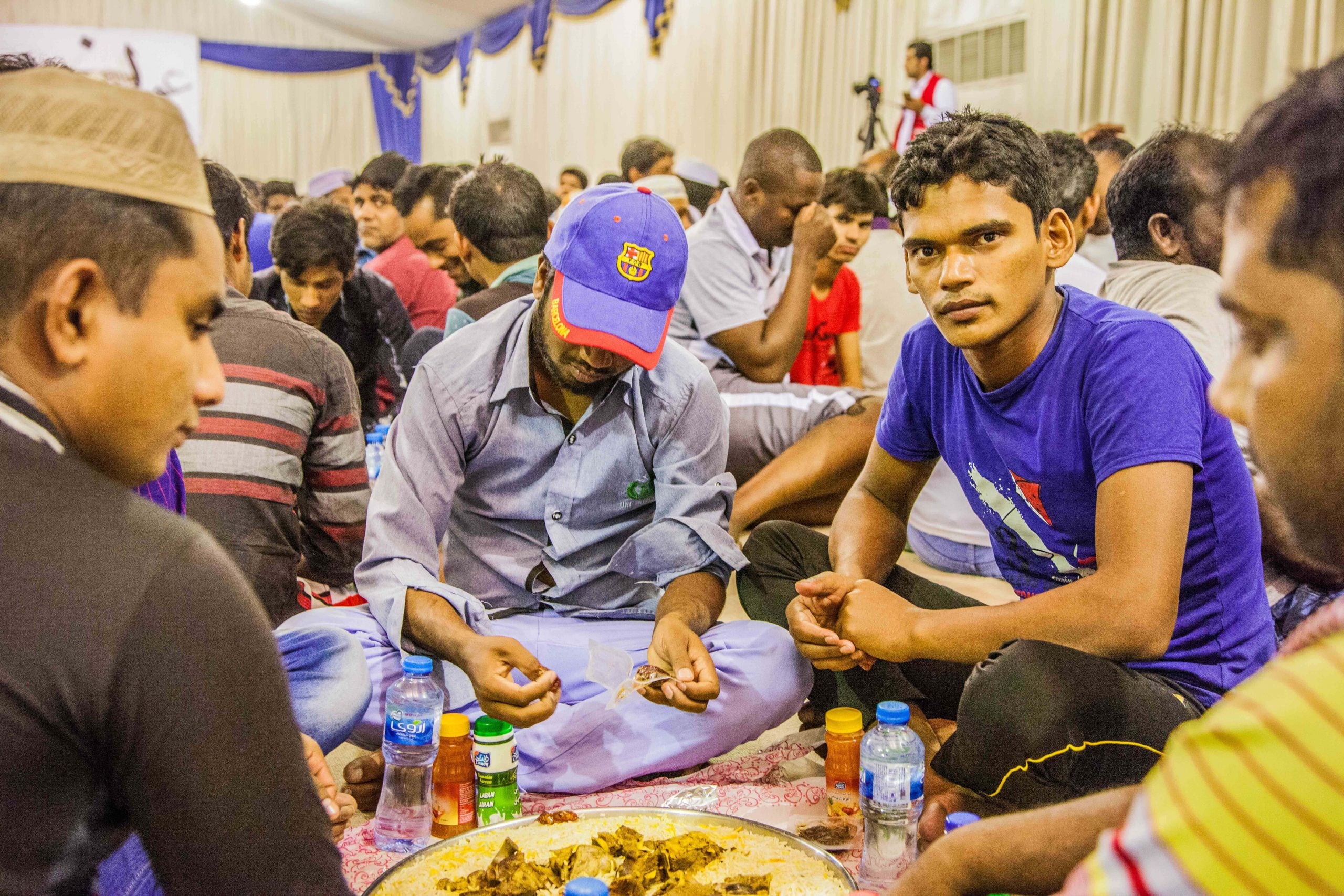
Daniel’s first iftar was a memorable experience, albeit it being a simple meal consisting of just water and a few dates.
“Everyone was gathered [in the kitchen] as if it were a party,” he said.
Daniel’s experience didn’t end in Qatar. The following year he fasted again, this time in Belarus, which he said was much harder.
“The atmosphere in Arab culture made it easier, better, and warmer. In Belarus, food is everywhere, people are working, and nothing changes, you are the only one fasting.”
“That’s why Muslims who fast in non-Muslim countries are strong, they are heroes,” he added.
Ralina Valiullina: Rediscovering ancestral roots
Ralina Valiullina, a 23-year-old from Russia, found herself drawn to Ramadan while living in Qatar.
“Originally, my ancestors were Muslims, so I wanted to join and explore,” she said. “I wanted to go back to my family history, to my culture, and also not to feel excluded from my friends because they were fasting.”
Ralina’s initial apprehension about experiencing hunger were quickly dispelled, and said she actually had a sense of ease as she began fasting.
“Whenever I broke my fast, I felt so proud of myself because I was able to fast the whole day.”
For Ralina, the communal aspect of Ramadan was particularly impactful.
“It was very beautiful and touching,” she said of the iftar gatherings. “I had never seen anything like this in my culture because people there are more isolated from each other. During Ramadan here, I felt that everyone was thinking about each other. It was a time to care about your neighbours.”
Ralina’s experience also led her to reflect on her own cultural values, saying she was “brainwashed” by Western ideals.
“I believed in pure individualism, thinking it brings more good than harm, and that being part of a community is something to be ashamed of because it means you can’t survive on your own,” she said.
“But this environment and experience highlighted for me that being part of a community is valuable, and now I feel like I belong to one.”

Alex Petrov: A journey of self-discovery in Dubai
Alex Petrov, a 29-year-old from Sofia, Bulgaria, tried fasting for the first time while living in Dubai. A self-described agnostic, he said he grew curious about fasting after meeting some Muslim friends.
Fasting quickly turned into a personal challenge for Alex, both on the physical and mental level.
“The first few days were rough,” Alex explained. “I got headaches, I felt sluggish, and the no-water part was the hardest. By afternoon, I could barely focus.”
But as his body adjusted, Alex began to notice mental changes as well.
“I became more patient, more aware of my habits,” he said. “I realised how much I usually eat just out of boredom. Fasting forced me to slow down, reflect, and even appreciate small things, like the simple joy of drinking water.”
Alex’s experience also deepened his understanding of the communal aspects of Ramadan. “The sense of unity really stood out to me,” he said. “Everyone, no matter their background or job, sitting side by side, waiting for the call to Maghrib [prayer]. The moment the adhan started and everyone took their first bite at the same time, it felt powerful.”
By the end of Ramadan, Alex had gained a new respect for the practice.
“I didn’t walk away with a sudden belief in God, but I did leave with a deep respect for those who observe it, not because they have to, but because they want to,” he said.