QF’s Rasekh initiative introduces its first cohort of schools and ‘Roots’ campaign to align global curricula with Qatar’s cultural identity, language, and values.
Qatar Foundation [QF] has launched the accreditation framework for its Rasekh initiative, a new education pathway designed to integrate international schooling with Arabic language development, local cultural identity, and values-based learning.
The announcement was made during the Rasekh Strategic Forum held at Multaqa (Education City Student Center) in Doha on Sunday, where education leaders from Qatar and abroad gathered to mark the programme’s next phase and unveil its first participating schools.
The forum, attended by senior leadership from QF’s Pre-University Education sector, including Chief Executive Officer Yousif Al-Naama, brought together private international school leaders and global education partners to explore how Rasekh will reshape international education in the region.
The initiative aims to support schools in promoting Arabic as a language of learning, while aligning global curricula with local context and community needs without compromising academic standards.
“Rasekh represents a practical step forward in the development of international education in Qatar. It looks at educational quality from a broader perspective, encompassing not only what students learn, but how they perceive themselves within that learning, and their connection to their language, environment, and values,” Vice President of Strategic Educational Initiatives at QF’s Pre-University Education Sheikha Noof Ahmed bin Saif Al Thani said.
“We want the international education experience to provide students with a strong foundation of belonging and confidence, empowering them to contribute to their communities and interact with the world consciously and capably,” she added.
As part of the launch, QF introduced the first cohort of schools joining the Rasekh pathway.
These include QF schools, as well as private international institutions in Qatar and the wider region, such as Al Maha Academy for Boys, Al Maha Academy for Girls, Al Jazeera Academy, Arab International Academy (Doha and Lusail), Amman Baccalaureate School in Jordan, and Houssam Eddine Hariri High School in Lebanon.
The cohort will serve as a foundation for developing applied models of the framework across diverse educational settings.
The Rasekh framework itself is built around four core standards: Arabic Language, Curriculum Localisation, Ethical and Citizenship Values, and Local and Global Innovation.
Together, these standards guide schools in embedding Arabic as a language of knowledge, aligning curricula with local realities, reinforcing values in daily school life, and encouraging students to develop innovative solutions to local and global challenges.
A new awareness campaign titled “Roots” was also unveiled, designed to communicate the initiative’s goals through a symbolic identity centred on language, values, and belonging.
The campaign’s three core messages—“Roots that Empower the Arabic Language”, “Roots that Instil Values”, and “Roots that Nurture Identity”—reflect the broader vision of Rasekh under the slogan “Toward an Education That Deepens Roots and Creates Impact”.
The forum also featured a presentation on the Rasekh ecosystem and its supporting initiatives by Maryam Al-Hajri, Executive Director, Strategic Initiatives and Partnerships at QF’s Pre-University Education.
It also included a panel discussion, including Head of Education Sector at UNESCO Regional Office for the Gulf States and Yemen, Farida Aboudan, IB Development & Recognition Senior Manager for Africa, Europe and the Middle East, Mary Tadros, Qatar Country Manager, Partnership for Education, at Cambridge University Press and Assessment, Fatima Hassan Fadlallah, and Managing Director of Tarsheed, Samia Bishara.
Participants highlighted a strong alignment between Rasekh and international education philosophies that support bilingualism and curriculum localisation.
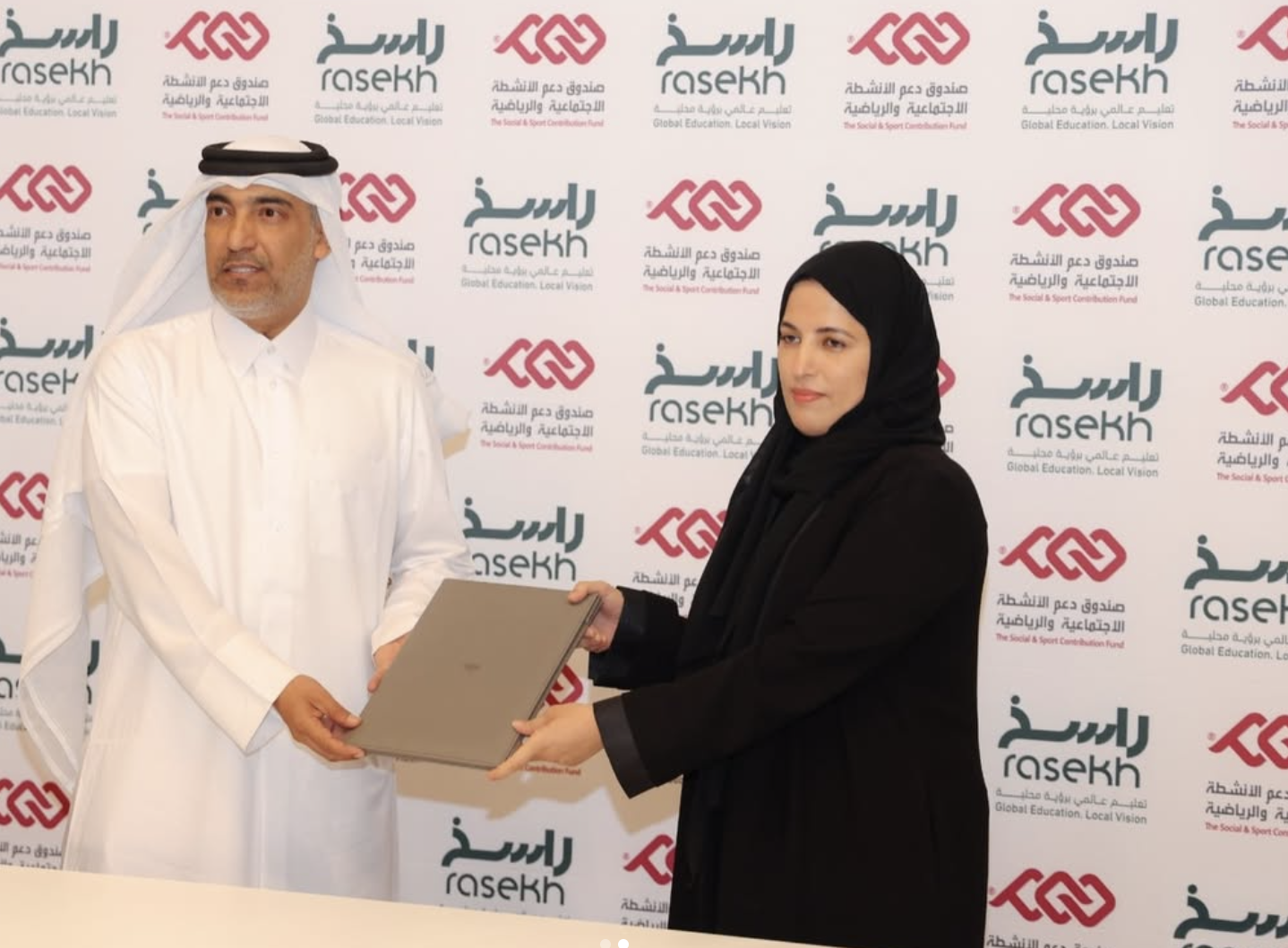
QF also signed a cooperation agreement with the Social & Sport Contribution Fund (DAAM) to support Rasekh’s mission.
The partnership will help develop teachers, enhance educational resources, and expand schools’ access to the framework.
The accreditation pathway includes structured stages: application and commitment, self-assessment, external evaluation, accreditation, and ongoing review.
Schools that meet requirements receive Rasekh accreditation, permission to use its quality mark, and membership in a wider network supported by continuous professional development.
QF has invited international schools to join the initiative and explore accreditation opportunities as part of its broader effort to strengthen education that connects global knowledge with local identity.