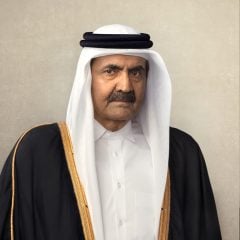
The Aga Khan IV, who was the spiritual leader of the Ismaili Muslims and renowned philanthropist, died in Lisbon at 88.
Qatar has joined the global community in mourning the death of Prince Karim Al-Hussaini, Aga Khan IV, the spiritual leader of the Ismaili Muslims and founder of the Aga Khan Development Network (AKDN).
The Aga Khan, who passed away at the age of 88 in Portugal on Tuesday, leaves behind a profound legacy in philanthropy, culture, and global development.
Sheikha Al Mayassa bint Hamad Al Thani expressed her sorrow on her Instagram, describing him as a visionary leader whose dedication profoundly influenced Qatar’s cultural and architectural landscape.
“His dedication left a lasting mark on the architectural and artistic landscape of Qatar and the world,” she said.
“Through the institutions he supported and the knowledge he nurtured, his passion for cultural understanding and development continues to inspire generations. Our condolences to his family,” Sheikha Al Mayassa added.
Cultural and artistic projects
The Aga Khan played a pivotal role in shaping Qatar’s cultural and artistic identity, aligning with the country’s vision of becoming a global hub for art, education, and innovation.
His philanthropic initiatives supported cultural and architectural projects that enriched Qatar’s heritage, leaving a lasting imprint on future generations.
Under the leadership of the late Aga Khan IV, Qatar and the Aga Khan Development Network (AKDN) have collaborated on several cultural and educational initiatives.
In November 2024, Qatar Museums (QM) and the Aga Khan Trust for Culture (AKTC) signed a significant cooperation agreement to advance heritage conservation, arts education, vocational training, and urban regeneration.
This partnership aims to protect and celebrate cultural heritage both within Qatar and on the international scene.
A month prior to that, the Aga Khan Music Programme partnered with Qatari cultural institutions to launch a new initiative.
The inaugural performance, titled “Isma’u wa’u”, featured the Aga Khan Master Musicians and artist Tazeen Qayyum, highlighting a fusion of traditional and contemporary artistic expressions.
Additionally, Msheireb Museums in Doha received a nomination for the Aga Khan Award for Architecture in 2019.
Bridging cultural divides
The Aga Khan assumed leadership of the Ismaili Muslim community at just 20 years old, succeeding his grandfather, Aga Khan III.
As a spiritual leader, he offered steadfast guidance through times of change, fostering unity and a shared sense of purpose within the community.
Over nearly seven decades, he expanded the AKDN into a global organisation dedicated to healthcare, education, housing, and rural development, operating in more than 30 countries with an annual budget of approximately $1bn for nonprofit activities.
His efforts to bridge cultural divides and foster dialogue between the Muslim world and the West mirrored Qatar’s aspirations in cultural diplomacy.
“I was an undergraduate who knew what his work for the rest of his life was going to be, I don’t think anyone in my situation would have been prepared,” he said in a 2012 interview with Vanity Fair magazine.
His humility and dedication earned him admiration from leaders and communities worldwide.
United Nations Secretary-General António Guterres described him as “a symbol of peace, tolerance, and compassion in our troubled world”.
Canadian Prime Minister Justin Trudeau hailed him as “an extraordinarily compassionate global leader”, while many others acknowledged his impact on development and interfaith dialogue.