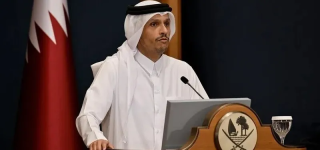
Qatar’s energy minister Saad Al Kaabi warns that the Iran war could halt Gulf energy exports within weeks and “bring down the economies of the world.”
Qatar’s energy minister Saad Al Kaabi has warned that the escalating regional conflict involving Iran, Israel, the United States and Gulf states could have serious consequences for the global economy if the fighting continues.
In comments carried by the Financial Times on Friday, Al Kaabi said disruptions to energy exports from the Gulf could “bring down the economies of the world”.
His warning comes after gas production was halted at Ras Laffan Industrial City following an Iranian drone strike on Qatar’s main liquefied natural gas facility.
Qatar declared force majeure after suspending output, meaning it is temporarily unable to meet some contractual delivery obligations.
Al Kaabi said that if the conflict continues, energy exporters across the Gulf could also be forced to halt production within weeks.
Qatar is the world’s second-largest exporter of liquefied natural gas and a key supplier to Asian and European markets.
The minister warned that oil prices could rise to around $150 per barrel if shipping through the Strait of Hormuz remains disrupted. About one-fifth of the world’s oil and gas shipments pass through the waterway.
European natural gas prices have already risen this week amid fears of supply disruptions.
Al Kaabi also warned that prolonged energy disruptions could lead to shortages of some industrial products. Higher energy costs and supply interruptions could trigger a chain reaction across global supply chains, affecting factories that depend on energy and petrochemical inputs.
He added that the war could delay Qatar’s major North Field gas expansion projects, which aim to significantly increase LNG production capacity in the coming years.
Even if the conflict ended immediately, Al Kaabi said it could take “weeks to months” for Qatar to return to normal export operations due to safety and logistical constraints.