Global Security Forum 2025, running from April 28 to 30 in Doha, focuses on the growing role of non-governmental actors in shaping global security and addressing humanitarian crises.
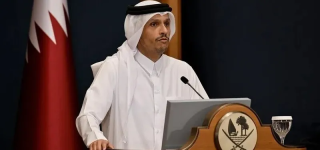
Qatar’s Prime Minister and Minister of Foreign Affairs, Sheikh Mohammed bin Abdulrahman Al Thani, strongly condemned the use of food and medicine as tools of war in the Gaza Strip, calling it a moral failure of the international community during the opening of the seventh Global Security Forum in Doha on Monday.
Speaking at the event, Sheikh Mohammed asserted, “The deaths of children from hunger and cold are being exploited for narrow political gains,” as he decried the weaponisation of essential humanitarian aid in the besieged Palestinian enclave. He labelled Israel’s genocidal actions in Gaza “a stain on the conscience of humanity” and said the humanitarian crisis had crossed all red lines.
Qatar’s support for the Palestinian people, he affirmed, is not a political position open to negotiation but “a moral and humanitarian commitment stemming from the values of justice we believe in”.
The 2025 Global Security Forum, taking place in Doha from April 28 to 30, highlights the increasing influence of non-governmental actors in shaping global security and tackling humanitarian crises.
Highlighting the broader implications of current global conflicts, Sheikh Mohammed warned that the absence of collective political will and the prioritisation of narrow national interests were fueling instability and obstructing the path to a just and comprehensive peace. He urged the international community to act with urgency to prevent further human suffering, particularly among children.
“The children of Gaza, Syria, Sudan, and Ukraine are not mere numbers,” he said. “They are the future of humanity and a reflection of our collective success or failure in creating a safer, more humane world.”
Reiterating Qatar’s commitment to peace efforts, Sheikh Mohammed said Doha would continue working with Egypt, the United States, and other regional partners to secure a lasting ceasefire in Gaza and ensure the unimpeded delivery of humanitarian aid to the Strip, which is reeling under genocide since October 2023.
“Our vision for the solution goes beyond ending wars,” he noted. “It extends to building strong foundations for comprehensive and sustainable recovery, based on collective responsibility and genuine international commitment.”
He also stressed the vital role of humanitarian organisations, civil society, and local actors- especially in contexts where official structures have failed. The crisis in Gaza, he said, had demonstrated the importance of these groups in keeping essential aid flowing and amplifying the voices of suffering civilians.
While recognising the positive contributions of non-governmental actors, Sheikh Mohammed also warned of the dangers posed by terrorist groups and criminal networks exploiting security vacuums. He called for a smarter, more inclusive global strategy that empowers constructive forces and builds effective partnerships across sectors.
ICRC warns of “new inferno” in Gaza
Also speaking at the forum, Pierre Krähenbühl, Director General of the International Committee of the Red Cross (ICRC), painted a grim picture of the humanitarian catastrophe unfolding in Gaza. He warned that the collapse of the ceasefire and renewed violence had ignited “the spark of a new inferno”.
“Gaza is experiencing and enduring… death, injury, multiple displacements, amputations, separation, disappearance, starvation and denial of aid and dignity on a massive scale,” Krähenbühl said. “And just when the all-important ceasefire led people to believe they had survived the worst, a new inferno was unleashed.”
He explained that although the temporary ceasefire had offered civilians a brief glimpse of relief, the resumption of hostilities had plunged them back into severe suffering. Krähenbühl also revealed that over 400 humanitarian workers and 1,000 healthcare personnel have been killed in Gaza, including 36 staff members from the International Red Cross and Red Crescent Movement.
A call for action
Throughout the forum’s sessions, a recurring theme has been the urgent need for collective international action to resolve conflicts, rebuild war-torn societies, and bolster humanitarian efforts.
This year’s edition focuses on the rising influence of non-governmental actors in shaping global security dynamics.
The three-day event, which runs until April 30, brings together policymakers, global security experts, humanitarian leaders, and civil society representatives to foster dialogue, share insights, and explore collaborative solutions to some of today’s most pressing challenges.