Qatar condemned Iran’s threats to maritime navigation in the Strait of Hormuz at an IMO session in London, warning that they violate international law and endanger global trade, energy security, and the safety of seafarers.
Qatar has strongly condemned attacks and threats by Iran against commercial ships, seafarers, and maritime infrastructure in the region, particularly in the Strait of Hormuz.
These include threats to close or obstruct navigation through the strait, which constitute a clear violation of international law and the principles of freedom of navigation, according to a statement by Qatar’s Ministry of Foreign Affairs.
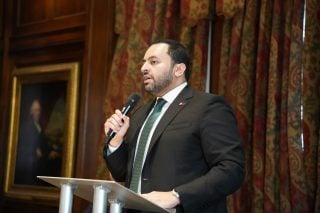
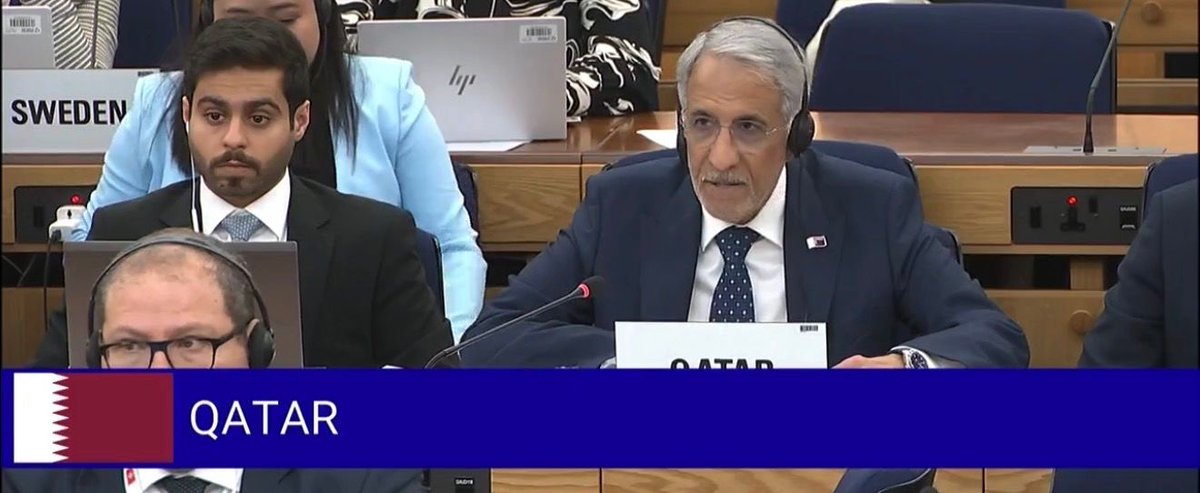
The remarks were delivered by Sheikh Abdullah bin Mohammed bin Saud Al Thani, Qatar’s Ambassador to the United Kingdom and Permanent Representative to the International Maritime Organization (IMO), during an extraordinary session of the IMO Council in London.
According to the statement published by the Ministry on Thursday, the session, in its thirty-sixth meeting, was dedicated to discussing attacks on Gulf countries and the resulting threats to maritime navigation, including risks of closure of the Strait of Hormuz.
Speaking at the opening of the session, IMO Secretary-General Arsenio Dominguez expressed concern over recent attacks on merchant ships in the Strait of Hormuz.
“At present, around 20,000 seafarers remain stranded inside the Persian Gulf, on board vessels, facing high risk and considerable mental strain. My thoughts are with these seafarers,” Dominguez said.
Iran’s Foreign Minister Abbas Araghchi said in an interview with Al Jazeera on Wednesday that Iran would not allow its enemies to use the Strait of Hormuz, while stressing the need for safe navigation during the war.
He added that some countries have contacted Tehran to discuss secure passage, with conditions being provided where possible.
“From our perspective, this is a waterway located next to Iran. Naturally, we will not allow our enemies to use this waterway. At the same time, a war is taking place around it, and many ships and countries may not want to use this route due to insecurity. Some countries contact us to discuss safe passage through the Strait of Hormuz, and we try to provide them with the conditions for such passage,” Araghchi said.
The Strait of Hormuz, which is 21 nautical miles wide at its narrowest point, is the only maritime passage linking the Gulf to the open ocean. It is considered the world’s most critical oil chokepoint, handling around one-fifth of global oil and LNG supplies.
Sheikh Abdullah stressed the need to protect seafarers and safeguard the security and safety of international navigation, including in the Strait of Hormuz, in accordance with international law, while rejecting any actions or threats that obstruct it.
He also affirmed Qatar’s support for the efforts of the IMO and its member states to enhance the security and safety of maritime navigation.
The ambassador renewed Qatar’s condemnation of attacks targeting its territory and other Gulf Cooperation Council states, describing them as violations of sovereignty and the UN Charter.
He also welcomed UN Security Council Resolution 2817, which condemned the attacks, stressing the need to uphold freedom of navigation and adhere to international law.
He added that such actions directly threaten maritime safety, endanger the lives of seafarers, and risk destabilising one of the world’s most vital shipping routes, with serious implications for global trade, supply chains, and energy security.