Qatar’s Amir Sheikh Tamim bin Hamad Al Thani and the UK Defence Secretary John Healey held talks in Doha on strengthening defence ties and addressing escalating Middle East tensions, as Gulf states call for de-escalation.
Qatar’s Amir Sheikh Tamim bin Hamad Al Thani met UK Defence Secretary John Healey at the Amiri Diwan in Doha on Tuesday, with talks focusing on escalating regional tensions and broader international developments.
According to QNA, the meeting addressed the latest developments in the Middle East as the region faces a sharp rise in instability following weeks of conflict involving Iran, the United States and Israel. The two sides also reviewed bilateral ties, particularly in the defence sector, and discussed ways to strengthen military cooperation and address shared security challenges.
The meeting builds on deepening defence ties between the two countries, formalised in October 2025 through a new Defence Assurance Arrangement signed during Healey’s previous visit to Doha. The agreement aims to boost interoperability between British and Qatari armed forces across land, air and sea, including joint planning on emerging threats.
UK officials at the time described Qatar as a key regional partner, with the deal underscoring Britain’s commitment to Gulf security. The partnership also includes ongoing cooperation, such as the UK-Qatar Joint Typhoon Squadron, the first joint fighter jet squadron established by the UK since the Second World War.
Beyond defence, economic ties between the two countries remain significant. UK exports to Qatar reached £4.4 billion in 2025, while Qatari investment in Britain stands at more than £40 billion, spanning sectors including energy, technology and finance.
Tuesday’s meeting comes amid heightened concern across the Gulf over the widening conflict. Qatar said regional states are “unified” in calling for de-escalation, as Iran continues to launch drone and missile attacks targeting neighbouring countries in response to US and Israeli strikes that began in late February.
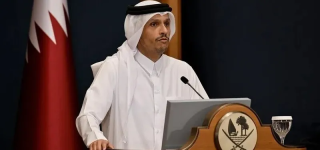
“Our understanding is that there is a very unified position in the Gulf on calling for the de-escalation and an end to the war,” foreign ministry spokesperson Majed Al-Ansari said during a press briefing on Tuesday.
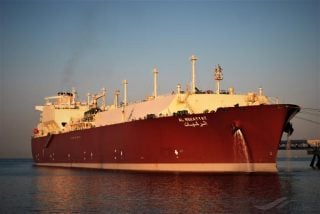
The escalation has also affected global energy security, with Iran targeting hydrocarbon infrastructure and disrupting shipping through the Strait of Hormuz, a critical route for roughly one-fifth of the world’s oil supply. Iranian lawmakers have also moved to impose restrictions on vessels using the waterway.
Al-Ansari said Gulf countries were treating the situation as a “collective threat”, stressing that decisions over the future of the strait must involve regional and international partners.