Iran’s Foreign Minister Abbas Araghchi has called for greater dialogue and cooperation as the Fourth Arab-Iranian Dialogue Conference opened in Doha on Saturday.
Held under the theme “Strong Relations and Mutual Benefits,” the event is organised by Al Jazeera Centre for Studies and Iran’s Strategic Council on Foreign Relations, and comes at a time of mounting regional tensions.
“The Middle East is undergoing a delicate phase that necessitates enhanced understanding and comprehensive cooperation among its nations,” Iranian Foreign Minister Abbas Araghchi stated during the opening session.
Araghchi reaffirmed Iran’s commitment to peaceful diplomacy, describing nuclear weapons as “religiously prohibited” while defending the country’s right to pursue peaceful nuclear activities.
He also confirmed a fourth round of indirect talks with the U.S., expressing hope for a “fair and balanced” agreement—provided, he said, that others refrain from making “unrealistic demands.”
Qatar on Saturday welcomed a new agreement between the U.S. and Iran to resume talks, with Oman acting as mediator, in a bid to reach a deal on Tehran’s nuclear programme.
The talks come as part of renewed efforts to revive dialogue after years of strain, following the U.S. withdrawal from the 2015 nuclear accord under former President Trump.
Qatar has since played a key role in mediation, supporting a return to the deal and enabling backchannel diplomacy.
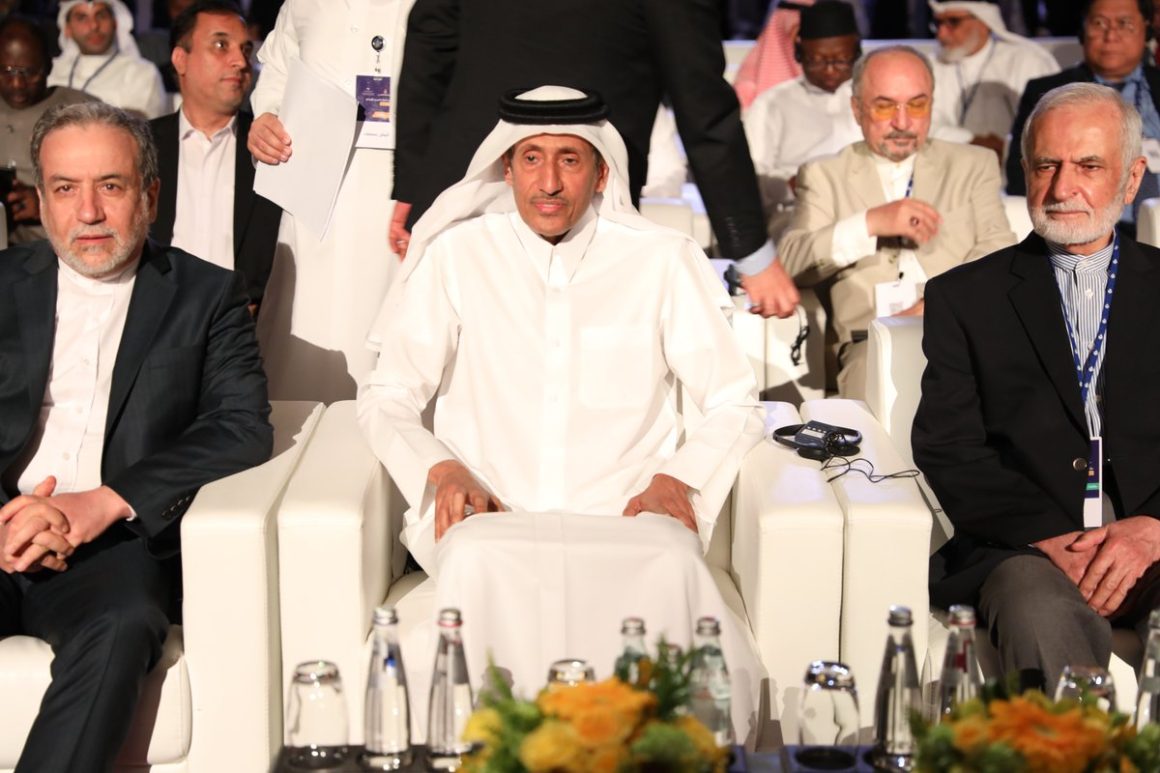
Addressing the Palestinian crisis, Araghchi referred to Palestine as “the central cause for the Islamic world,” while condemning Israeli actions in Gaza.
“We cannot remain silent regarding the daily crimes and massacres being perpetrated against the Palestinian people,” he said, urging Islamic nations to unite against occupation and injustice.
Araghchi described last year’s Iran-GCC meeting—the first in decades—as a “positive step toward building trust,” and urged deeper cooperation in energy, transport, and technology. “Iran is open to any initiative fostering regional economic integration based on mutual benefits,” he said.
The conference, jointly organised by Al Jazeera Centre for Studies and Iran’s Strategic Council on Foreign Relations, brought together senior officials, researchers, and policy experts to address the region’s most urgent challenges.
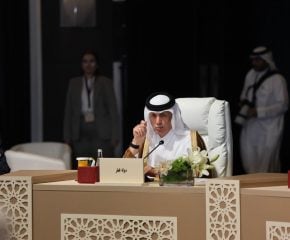
In his opening remarks, Sheikh Hamad bin Thamer Al Thani, Chairman of Al Jazeera Media Network’s Board of Directors, said the gathering came at a “critical moment” for the region. “Arab-Iranian relations are not merely defined by geography,” he noted, “but by a long history of cultural interaction and shared interests,” he noted.
He said the theme highlights a shared belief in dialogue as the “entry point to sustainable development and regional stability,” stressing the need for “continued discussions and new approaches” to resolve conflicts.
Sheikh Hamad welcomed the renewed U.S.-Iran talks hosted by Oman, expressing hope that they would yield results beneficial to all parties and “lay a foundation for broader global stability.”
“Cooperation between Arab states and Iran is what the region needs to institutionalise intellectual dialogue and seek sustainable solutions that serve the interests of both sides’ peoples,” he concluded.
President of Iran’s Strategic Council on Foreign Relations, Kamal Kharrazi, also addressed the conference, stating, “Regional dialogue between Iran and Arab states is an urgent need in light of rapidly evolving geopolitical developments.”
He echoed Araghchi’s call for soft power diplomacy and collaboration in key sectors such as the economy, culture, science, and energy.
Kharrazi called for a “regional mechanism for security and economic cooperation free from foreign interference,” reinforcing Iran’s willingness to pursue “broad and comprehensive partnerships with neighboring countries.”
Running until May 12, the conference focuses on de-escalation, regional shifts, and building strategic partnerships, with hopes of advancing Arab-Iranian dialogue and stability.