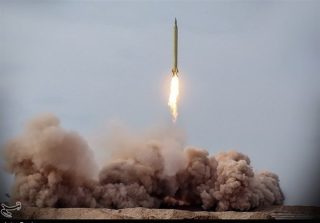
Damaging the radar does not make the THAAD system completely inoperable, experts say, as there are other assets and configurations, but it certainly degrades its capability and flexibility.
New satellite imagery from several key military bases in the Arabian Peninsula indicates that Iran has destroyed or partially destroyed U.S.-made radars that are designed to detect incoming missiles and drones.
The radar is a critical component of the high-end missile interceptor system, used to engage and destroy ballistic missiles as they fly toward their targets.
According to CNN, a radar unit belonging to an American THAAD missile battery in Jordan was struck and apparently destroyed in the first days of the U.S.-Israeli strikes on Iran, as shown in satellite imagery captured on Monday.
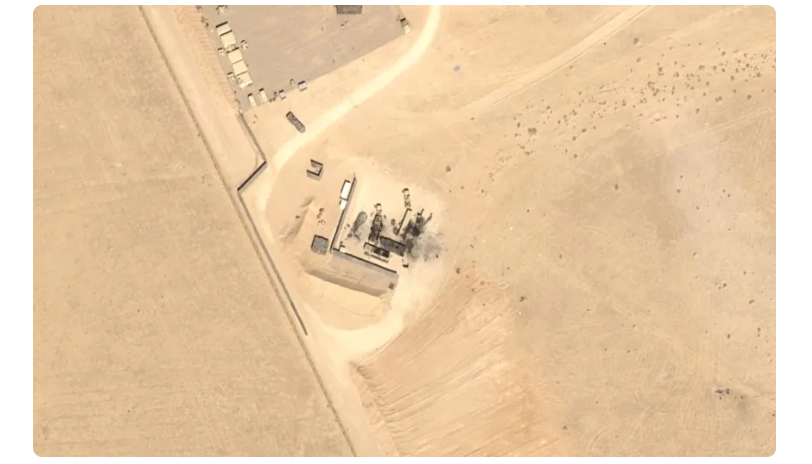
Ryan Brobst, deputy director of the Centre on Military and Political Power at the Foundation for Defense of Democracies, told Bloomberg that the damage creates a significant gap in high-altitude surveillance coverage.
“If successful, an Iranian strike on a THAAD radar would mark one of Iran’s most successful attacks so far,” he explained.
According to CNN, the Jordan incident may not be the only THAAD radar struck in the opening days of the war with Iran.
At least three buildings at a military installation near Ruwais, and four at an installation in Sader, both in the UAE, were damaged between February 28 and March 1, according to CNN’s analysis.
CNN notes that it remains unclear whether the radar equipment itself was affected, though pull-through vehicle sheds used to house radar systems for THAAD batteries at both sites were among the buildings struck.
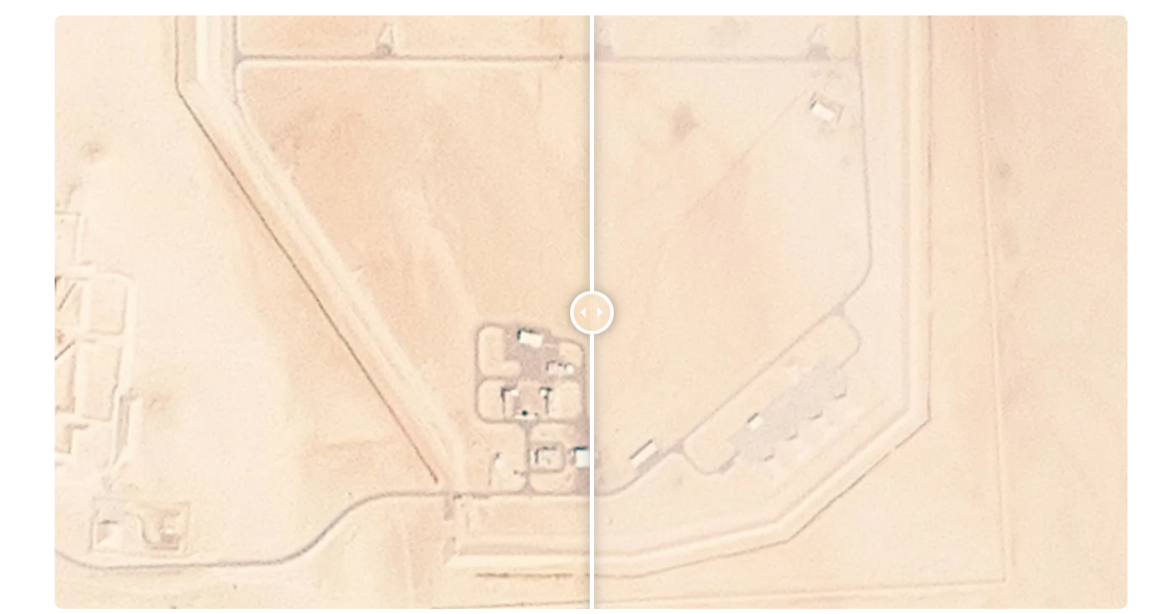
The image shows a pair of 13-foot craters in the sand near the radar, suggesting that it may have taken multiple attempts to hit the system, which is split across five 40-foot trailers.
All appeared to be destroyed or seriously damaged.
In a satellite image taken March 1, CNN reports, smoke can be seen rising from a radar site near the Prince Sultan Air Base in Saudi Arabia, where dozens of American planes are stationed.
At the site, a tent used to shelter a radar system for a nearby THAAD battery was badly charred, and debris was scattered around it.
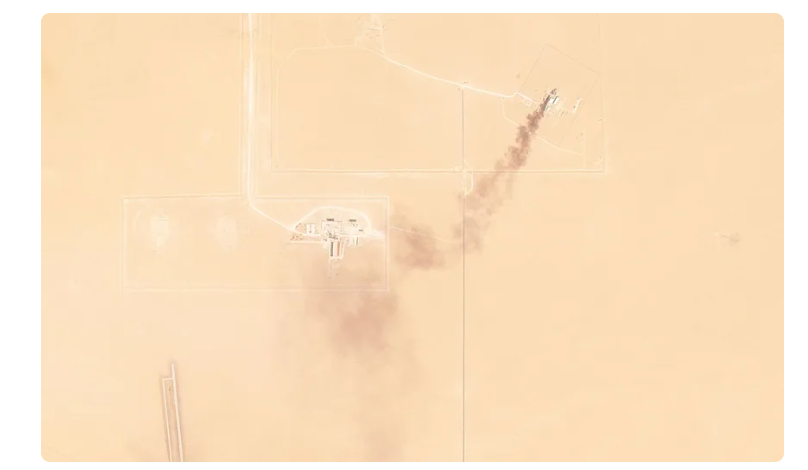
CNN explained that it was not immediately clear if the radar was present at the time of the strike or if the system previously stationed at the site belonged to the United States or Saudi Arabia.
The U.S .has lost nearly $2 billion worth of military equipment amid its attacks against Iran since Saturday, according to estimates and data compiled by Anadolu Agency, TRT reported.
In addition, satellite imagery reviewed by CNN also shows damage to a U.S.-made Qatari early-warning radar system at Umm Dahal.
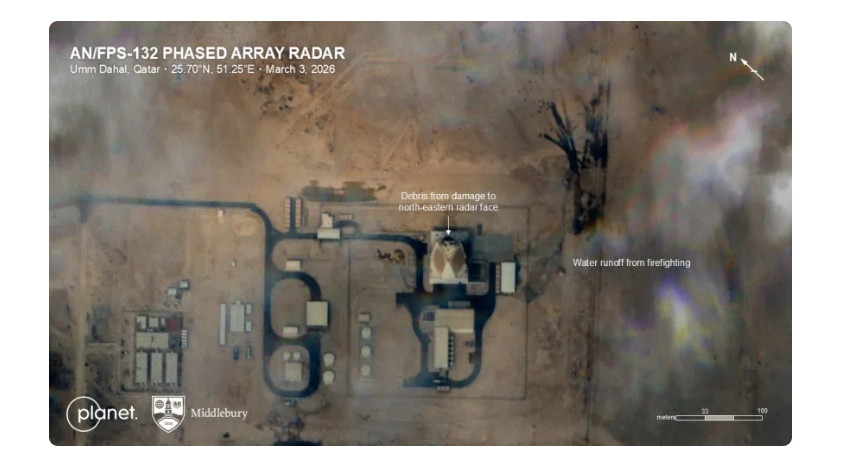
Defence Security Asia reported that an AN/FPS-132 early-warning radar in Qatar — a permanent installation rather than a mobile THAAD system — sustained damaged during an Iranian attack.
The AN/FPS‑132, part of the Block 5 Upgraded Early Warning Radar family, was supplied by the United States and became operational in 2013. The project cost roughly US$1.1 billion and was intended to give Qatar the ability to spot long‑range ballistic missile launches at distances of up to 5,000 kilometers.
The radar sits in the vicinity of Al Udeid Airbase, the largest U.S. military installation in the Middle East, where it plays a central role in providing early detection of potential threats, including those from Iran.
Experts note that damaging the radar does not make the THAAD system completely inoperable, as there are other assets and configurations, but it certainly degrades its capability and flexibility.