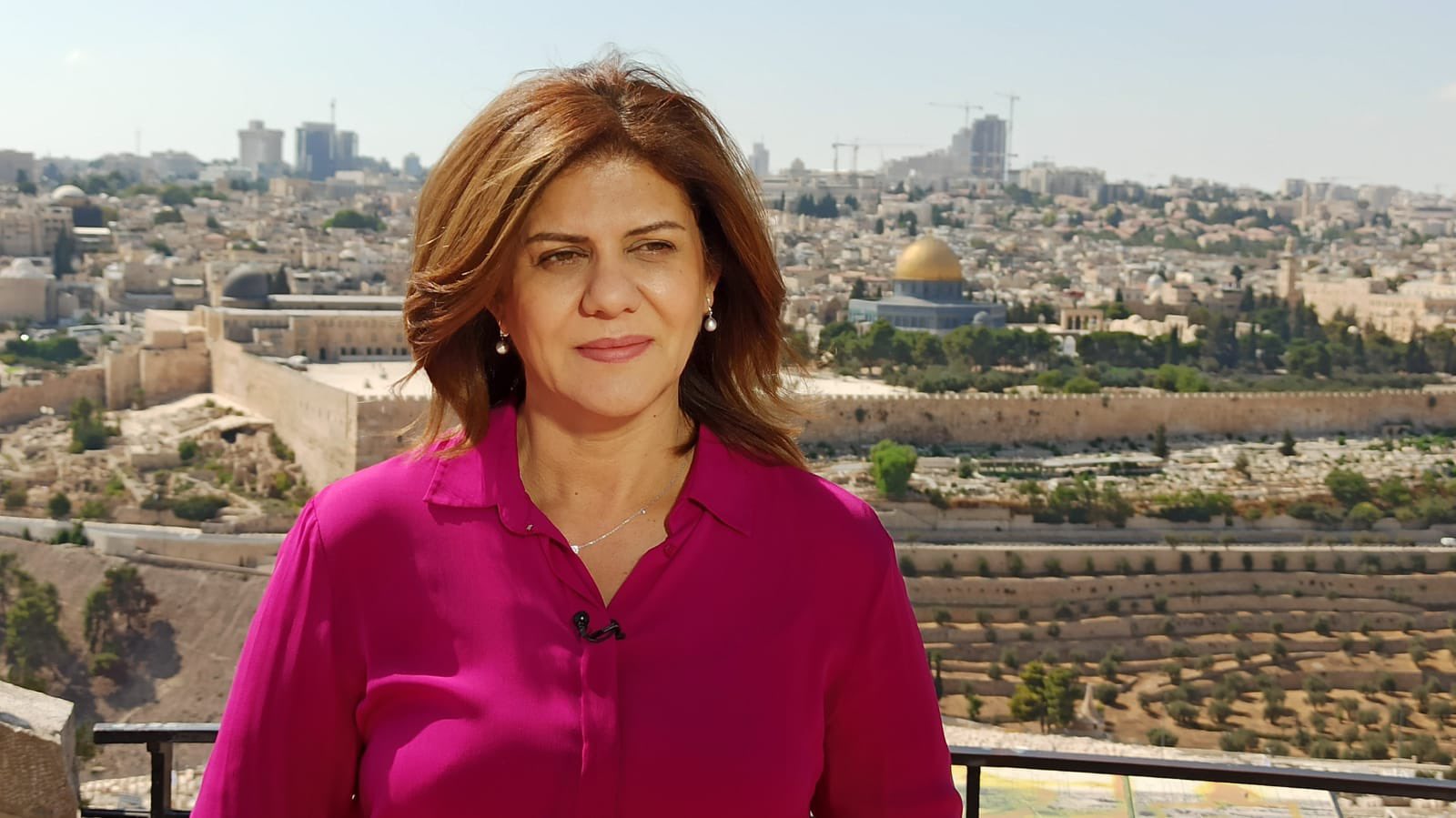
Goldsmiths has named a lecture theatre after Shireen Abu Akleh following a student-led campaign, with speakers linking the tribute to ongoing risks faced by Palestinian journalists.
Goldsmiths, University of London, has named a lecture theatre after the renowned Palestinian journalist, Shireen Abu Akleh, nearly four years after her killing, in a move driven by months of student campaigning.
The decision follows a student occupation of part of the university building in 2024, carried out as part of a wider movement in solidarity with Palestine. Among the key demands was formal recognition of Abu Akleh’s legacy.
At an event held on Wednesday, speakers framed the naming not only as a tribute but as part of a broader discussion about journalism, accountability, and the ongoing significance of her killing.
Marcela Pizarro, a former Al Jazeera journalist and now a lecturer at Goldsmiths, opened and chaired the event, while Gholam Khiabany, an Iranian British media scholar and Reader in Media and Communications at Goldsmiths, delivered the opening remarks, recalling the circumstances of Abu Akleh’s death.
“Almost four years have passed since Shireen Abu Akleh… was shot in the back of her head and murdered by an Israeli soldier… She was wearing the blue body armour marked ‘press’,” he said.
He linked the killing to what he described as a wider pattern.
“Her killing reminded us of the permanent violence of the settler colonial state… that no one is safe under military occupation. It also reminds us of the grave risks that Palestinian journalists face in narrating the realities and struggles under occupation, war, and genocide.”
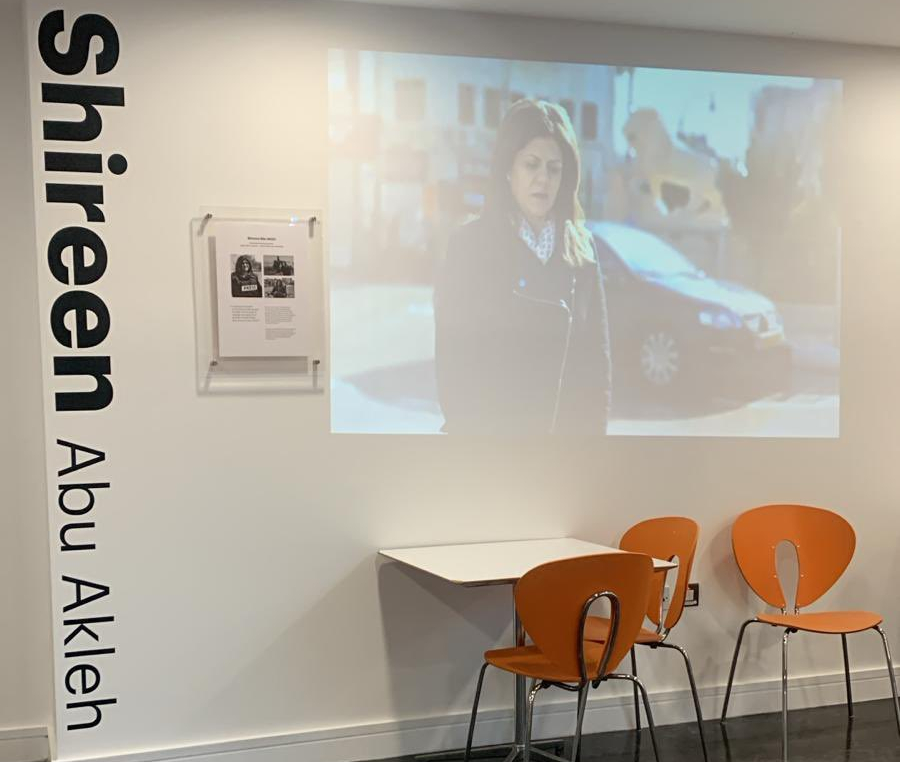
Speakers throughout the event drew connections to the present, pointing to the number of journalists killed in Gaza over the past two years, describing it as one of the deadliest periods for media workers in recent history.
“We say this after more than two years of a genocide in Gaza where Israel has systematically targeted those whose job it is to report the facts… International press organisations put the death toll at around 250 media workers,” the opening remarks continued.
The event itself was presented as a direct outcome of the earlier student campaign.
“In 2024, the building you are in was occupied by students… One of your demands was that the university name this lecture theatre after Shireen. This is why we are here,” Khiabany said.
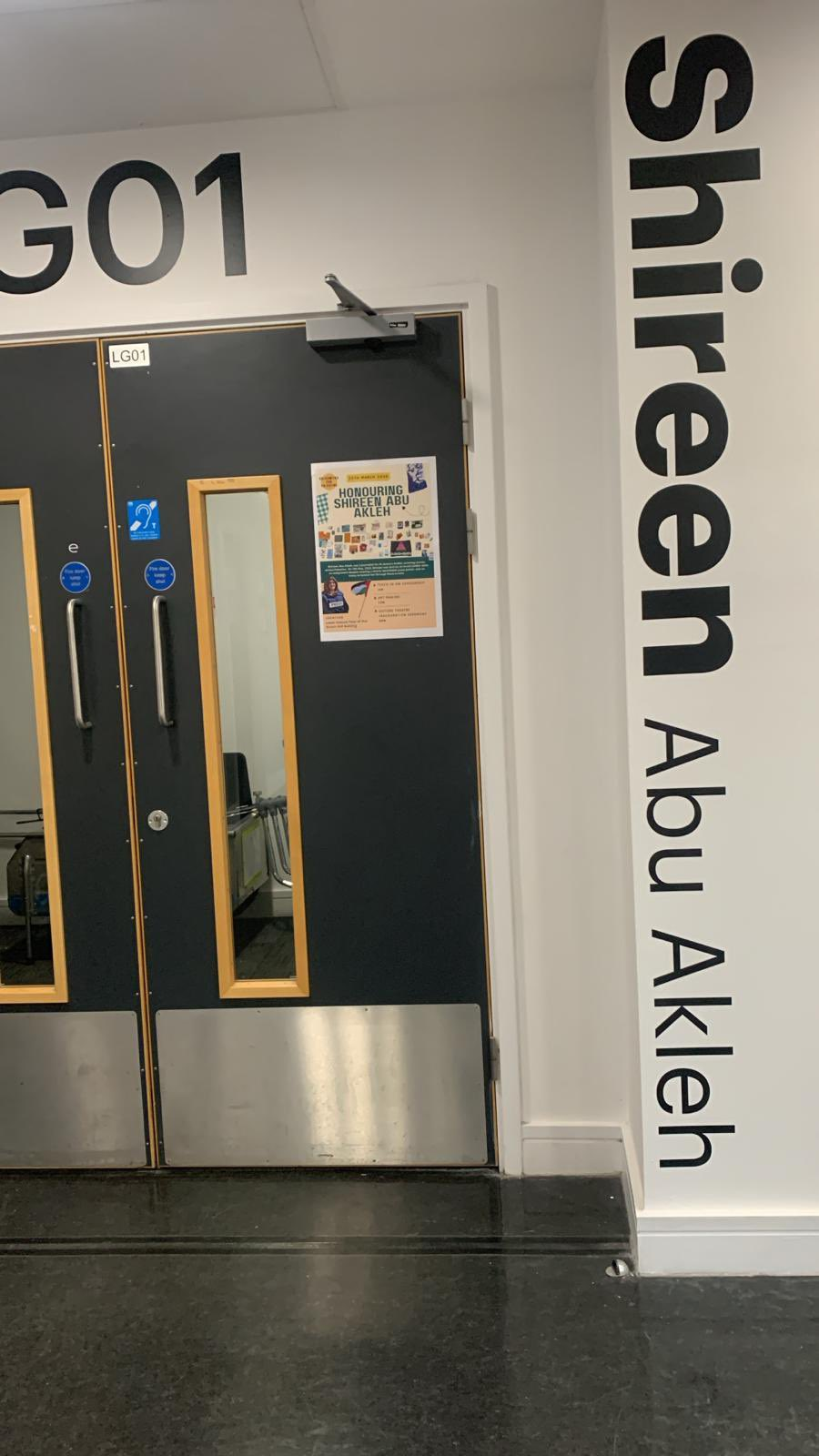
Family members and colleagues also took part. Lina Abu Akleh, her niece, addressed the audience alongside her cameraman, Nabil Mazzawi, who spoke about their years working together.
The programme revisited the circumstances of her killing, with researchers from Forensic Architecture presenting findings from an investigation carried out with Palestinian human rights organisation Al-Haq.
Students remained central to the event, returning to the demands that led to the theatre being named, while Palestinian students shared poetry reflecting their experiences of war and displacement.
One reading, I am you by Refaat Alareer, carried particular resonance after the writer and academic was killed in an Israeli airstrike in 2024.
Other speakers, including Tareq Baconi and Peter Oborne, reflected on the political and media impact of Abu Akleh’s work, while Palestinian Ambassador to the UK Husam Zomlot closed the event.
The lecture theatre now bears Abu Akleh’s name, placing her legacy within a space dedicated to teaching journalism at a time when the risks she reported on remain unresolved.
Editor’s note: Some quotes were misattributed to Marcela Pizarro instead of Gholam Khiabany; the article has been corrected to reflect correct attributions.