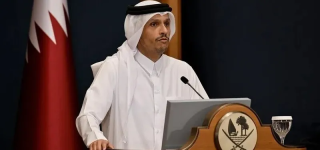
This year’s edition of the Earthna Summit, held over two days from 22 to 23 April in Msheireb Downtown Doha, focuses on advancing sustainability in hot and arid environments by blending traditional knowledge with modern innovation.
The second edition of the Earthna Summit officially opened on Tuesday in Msheireb Downtown Doha, bringing together global leaders, environmental experts, policymakers, and community members for two days of focused discussions under the theme: “Building Our Legacy: Sustainability, Innovation and Traditional Knowledge”.
Organised by Earthna, a non-profit policy research centre under Qatar Foundation, the summit highlights sustainability solutions tailored for hot and arid climates, such as those found in Qatar and the wider region.
The event was inaugurated in the presence of Sheikha Moza bint Nasser, Chairperson of Qatar Foundation, and Sheikha Hind bint Hamad Al Thani, Vice Chairperson and CEO of Qatar Foundation.
At the heart of the opening ceremony was the announcement of the four winning initiatives of the 2025 Earthna Prize, a prestigious recognition celebrating the integration of traditional knowledge and modern innovation to tackle pressing environmental challenges.
Celebrating knowledge rooted in culture
Speaking at the Summit’s opening, Sheikha Hind bint Hamad Al Thani highlighted the importance of aligning cultural identity with environmental responsibility.
“We are determined that the outcomes of this Summit grow from the ground beneath our own feet,” she said, “shaped by our culture, our land, our weather, and our ways. We want this gathering — and others like it — to be spaces where we come together in recognition of our ‘Fitrah’, the innate human nature within us all, that calls us to uphold what is just, what is generous, and what is in harmony with the world around us.”
Her message resonated strongly as the winners of the inaugural Earthna Prize were announced, following a rigorous evaluation of over 400 submissions from more than 100 countries.
Launched on Earth Day 2024, the prize awarded a total of US$1 million to four pioneering projects that embody community-driven solutions, seamlessly blending traditional knowledge with modern-day challenges:
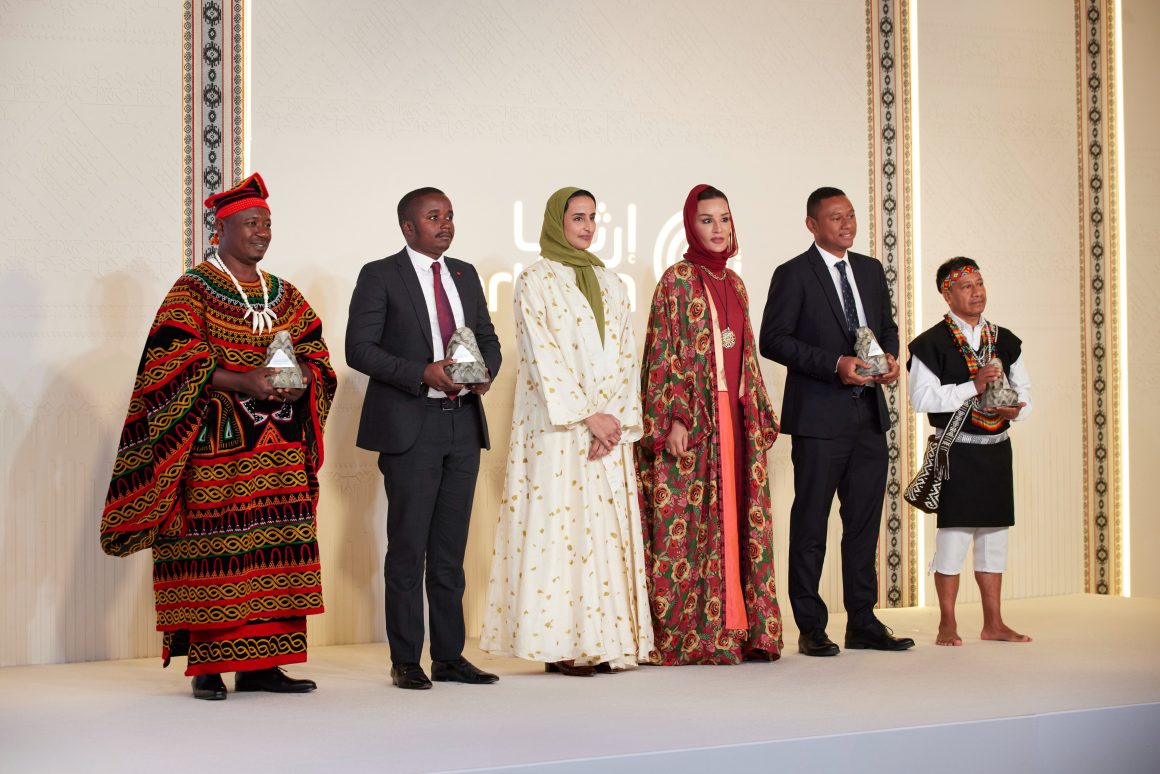
- The Farmer Tantoh Foundation (Cameroon) – Promoting water conservation through the protection of spring catchments and the application of indigenous purification methods.
- Wuasikamas Ëconeêrã by Fundación Suma Kausai (Colombia) – Preserving biodiversity and cultural harmony by integrating Indigenous knowledge from the Eperara Siapiadaara, Inga, Siona, and Cofán peoples.
- Seeds of Change Initiative by Blooming World International (Kenya) – Tackling food insecurity by reviving African indigenous farming practices and empowering women and youth.
- Thriving Fishers, Thriving Oceans by Blue Ventures (Kenya, Senegal, Indonesia, Madagascar, Belize) – Supporting small-scale Indigenous fishers in restoring tropical fisheries and building climate resilience.
Dr Gonzalo Castro de la Mata, Executive Director of Earthna, commended the prize winners for their meaningful and practical contributions: “The Earthna Prize celebrates solutions grounded in deep-rooted knowledge and collective experience. Our winners show that true innovation isn’t solely about new technologies—it’s also about reviving and adapting time-tested practices to meet today’s environmental challenges”.
Reflecting this philosophy, the prize trophy—titled Earthna Echo—was designed by local sustainability artist and VCUarts Qatar alumna Nada El Kharashi. The piece transforms the sound wave of the word “Earthna” into a visual symbol, capturing the enduring resonance of the initiative’s impact.
High-profile attendance and groundbreaking dialogue

Also in attendance was Nobel Peace Laureate and Chief Adviser of the Interim Government of Bangladesh, Professor Muhammad Yunus, who received a warm welcome from Qatari ministers and dignitaries.
Renowned for his pioneering work in microfinance and social business, Professor Yunus’s participation reflected the summit’s vision of inclusive and human-centred sustainability.
Running through 22–23 April, the Earthna Summit will feature high-level sessions, panel discussions, and community workshops addressing climate adaptation, water security, eco-architecture, and energy transition strategies.
The public-facing Earthna Village, set in the open-air Barahat Msheireb, offers interactive exhibitions, artisanal showcases, and community-led sustainability talks, bridging the gap between knowledge and lived experience.
The Earthna Summit 2025 is more than a platform for dialogue, it is a call to action. By elevating traditional knowledge and honouring culturally grounded innovation, the summit aims to shape resilient futures tailored to the unique needs of hot and arid regions while inspiring global action from the grassroots up.