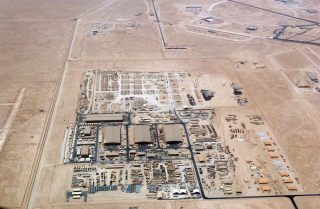
The ongoing dust storm has disrupted horizontal visibility as well as air quality across the country.
A dust storm is set to persist in Qatar until May 8, impacting air quality, visibility, and overall weather conditions, Qatar Meteorology Department (QMD) told Doha News on Tuesday.
“We are expecting similar conditions for the next two days,” said Fatima Mohammed Al-Khulaifi, a forecaster at QMD’s Mesaimeer branch.
Qatar’s sky was covered in dust from early Tuesday, worsened by strong winds sweeping both across the peninsula and along its shores.
Following the forecast of the impending storm, various government ministries issued public advisories to ensure safety.
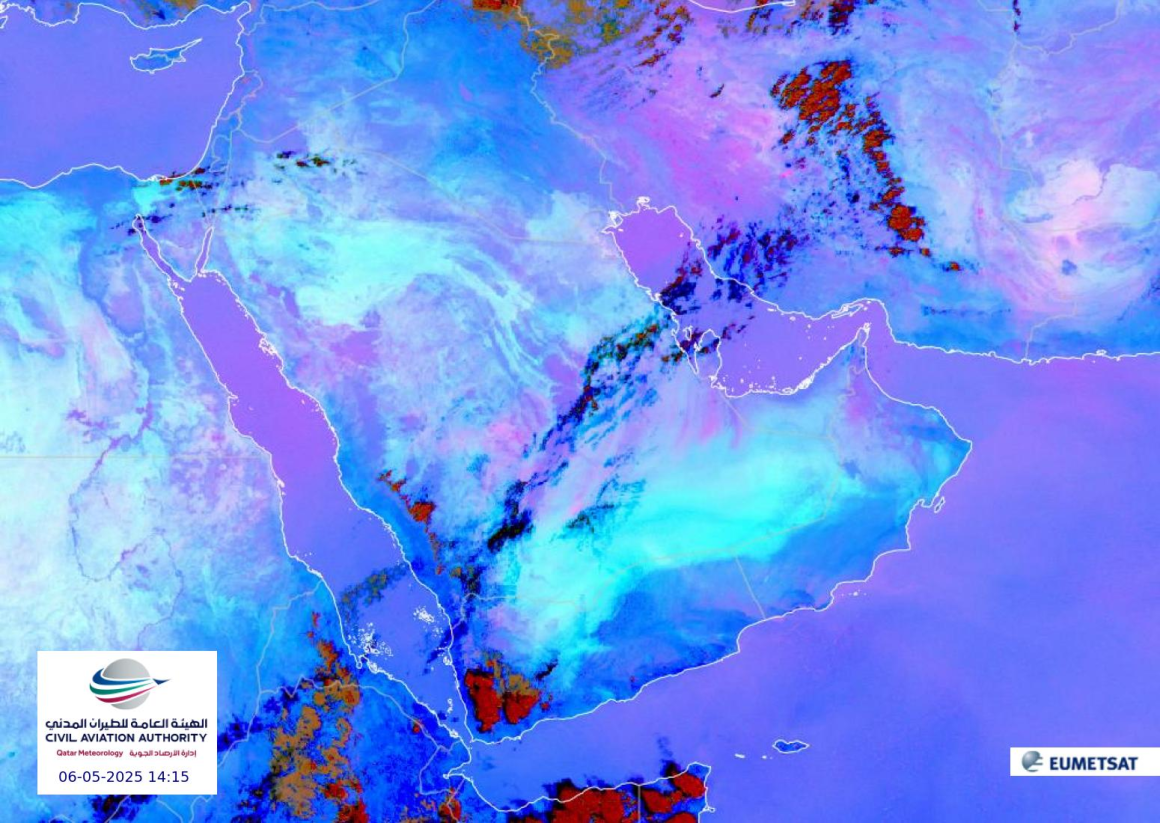
In its briefings, the weather department had repeatedly urged everyone to take “utmost caution and necessary safety precautions”.
The current condition could result in a slight drop in temperature as well as relatively less humid conditions compared to the last couple of days, according to Al-Khulaifi.
“The layer of dust in the air could remain as thick as today until Thursday,” she added, hinting that visibility and air quality is likely to improve by Friday.
What is causing dust storms in the Gulf?
Dust storm around this time of the year is often attributed to Al Sharayat, a name given to the period between late March to mid-May, characterised by dramatic and unpredictable atmospheric conditions.
Seasonal transitions, marked by intermittent cloud formations and pressure changes, lead to strong gusts of wind that can stir up dust and trigger massive sandstorms.
However, due to its arid condition, abundance of loose sand and the Shamal winds, Qatar may experience dust and sand storm throughout the year, according to the World Bank’s Climate Change Knowledge Portal.
“The current condition is caused by northwesterly winds,” she said, implying the situation in Qatar is similar to the ones being observed across the Arabian Peninsula.
Red alerts and warnings were issued across Saudi Arabia, Jordan and Kuwait since the beginning of the week as scatters of dust storms began sweeping across the Arabian Peninsula since the beginning of the week.
Various footage from across central Saudi Arabia showed a wall of dust — colloquially referred to as Haboob — engulfing everything on its way while reducing the visibility to almost zero.
Similarly, reports from Kuwait confirmed aviation and maritime disruptions caused by the storm.
Jordan experienced extreme weather conditions, resulting in flash floods in the low-lying areas of the country. Bridges, walls and roads of the affected areas were destroyed by the flood, Gulf News quoted Jordan’s Public Security Directorate as saying.
Parts of the ancient site of Petra were also affected, and a Belgian tourist and her son died in flooding while on an adventure tour in Wadi Al Nakhil, near the southern city of Ma’an.
While the conditions are unlikely to be as severe in Qatar, QMD has warned that the rising dust can result in “complete obscuration” of horizontal visibility in some cases.
Marine activities have also been urged to be stopped until further notice due to high tides and strong winds.