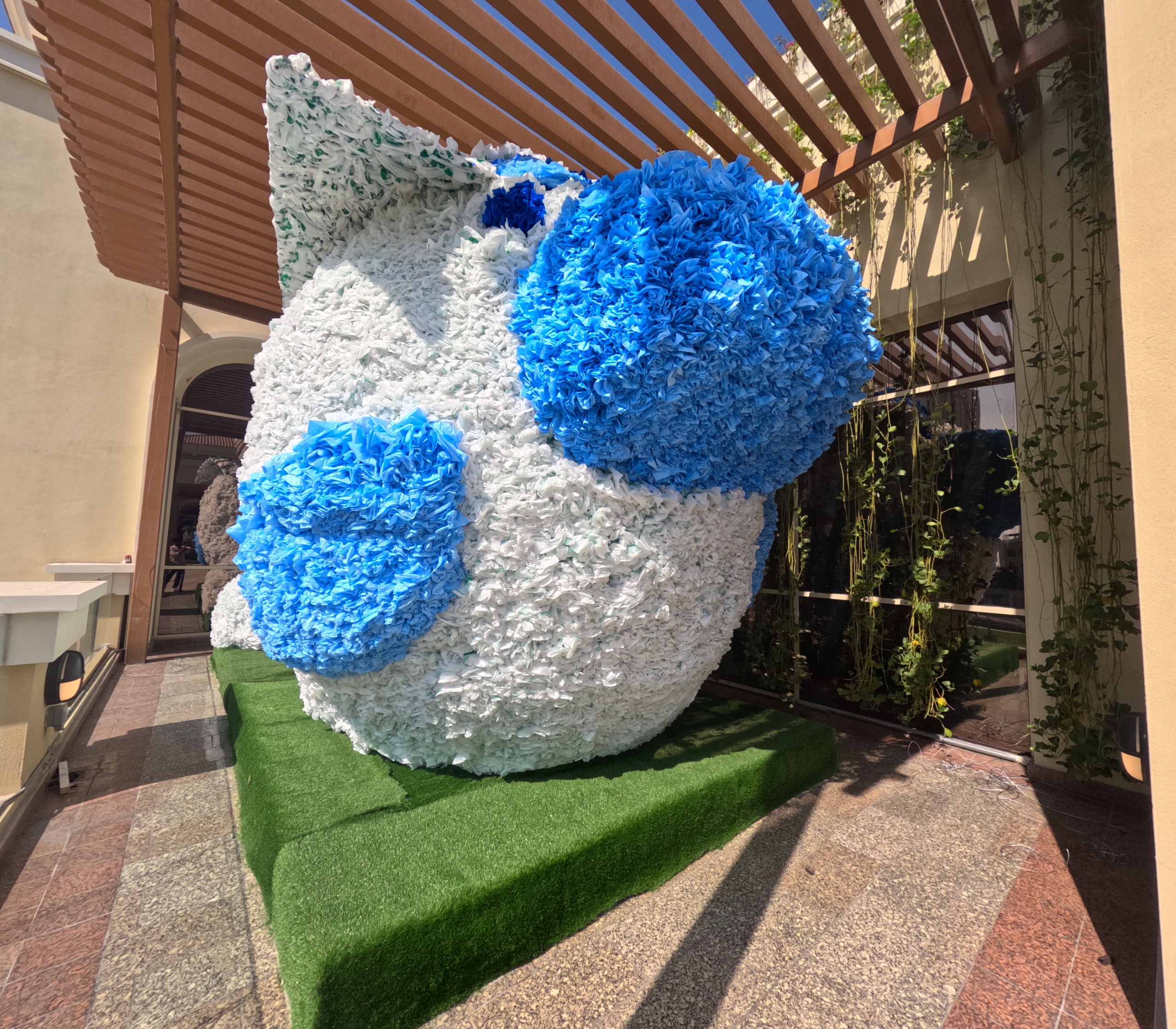
The latest sculpture has secured Qatar’s 12th Guinness World Record.
Interior solutions platform Gallery Five Home has unveiled an 8-metre long, 4-metre wide sculpture of a dugong, now on display at the Gallery Five Home showroom in The Pearl.
The sculpture is made entirely of plastic bags and has scored Qatar its 12th Guinness World Record for the Largest Plastic Bag Sculpture of a Mammal.
The dugong sculpture was the collective effort of 80 people from both the gallery and Lulu Middle East.
“We came up with this idea to create awareness about the importance of the Dugong in marine ecosystems,” Vivian Chen, Chairwoman of Gallery Five Home, said. “At Gallery Five, we believe that we have a role to play in promoting sustainability and protecting our environment for future generations.”
Qatar boasts the world’s second-largest population of dugongs after Australia, with herds of 600 to 700 recorded in its waters. Dugongs first appeared in the Arabian Gulf as early as 7,500 years ago.
Also known as sea cows, these mammals are a vital part of the country’s natural and cultural heritage, and serve as a symbol of marine conservation.
Dugongs are responsible for maintaining seagrass meadows, which can help support biodiversity, coastal protection, and carbon sequestration.
The sculpture also aims to raise awareness on plastic pollution and its affects on sea creatures.
Qatar’s marine protection efforts
Qatar’s Ministry of Environment and Climate Change [MoECC] and its Marine Protection Department is responsible for enforcing domestic laws and environmental treaties aimed at safeguarding marine and coastal environments in the Gulf state.
In September, the MoECC announced a strategic partnership with the International Atomic Energy Agency (IAEA) for the development of environmental monitoring programmes that can detect plastic particles in marine ecosystems.
The project will assess the marine environment and evaluate the harms of plastic pollution in regional waters.
Single-use plastics have been named the major reason for water pollution around the world.
Data from National Geographic and the Ellen MacArthur Foundation revealed that 91 percent of the world’s plastic is not recycled, while 70 percent of it finds it ways to landfills or the environment. By 2050, the world’s oceans will contain more plastic than fish.