More than 12 million women and girls in Sudan are now estimated to be at risk of sexual violence, underscoring the devastating scale of the country’s worsening crisis.
The ongoing war has created a nightmarish reality for women and girls, where rape, abduction, forced marriage, and sexual slavery have torn apart lives and communities.
As the conflict enters its third year, the international community is grappling with the horrifying extent of gender-based violence being used as a weapon of war.
According to the United Nations Population Fund (UNFPA), more than 12 million people, mostly women and girls, are at risk of gender-based violence in Sudan’s conflict-affected areas.
The paramilitary Rapid Support Forces (RSF) have carried out systematic sexual assaults across Darfur and other regions. In El-Fasher, the capital of North Darfur, reports have described scenes of mass atrocities.
The Office of the High Commissioner for Human Rights (OHCHR) has received alarming accounts from humanitarian partners on the ground.
“At least 25 women were gang raped when RSF forces entered a shelter for displaced people near El Fasher University. Witnesses confirm RSF personnel selected women and girls and raped them at gunpoint,” said Seif Magango, spokesperson for the UN human rights office.
According to Anadolu Agency, Sudan’s Minister of State for Social Welfare, Salma Ishaq, confirmed that “the RSF killed 300 women during the first two days of their entry into El-Fasher,” with dozens more subjected to rape, torture, and humiliation – showing how violence against women has become a defining feature of Sudan’s brutal war.
Humanitarian agencies warn that conditions are worsening as fighting continues to cut off access to essential services, leaving countless survivors without medical care or psychosocial support.
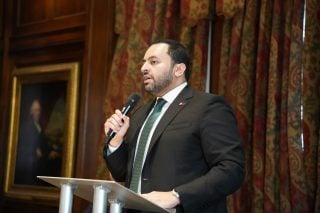
In an interview with Doha News on the sidelines of the Second World Summit for Social Development in 2025, Erin Kenny, Global Coordinator of the UN Spotlight Initiative, described the crisis in Sudan as “a sign of just how devastating the world can be for women and girls”.
“It is shocking and horrifying how frequently we hear about violent conflict resulting in the rape of women and girls. The international community absolutely has a responsibility to affected populations and especially to women and girls before, during, and following conflict,” Kenny said.
Kenny stressed that prevention must begin long before a crisis erupts.
“In advance of a conflict, we must ensure that we are investing in systems that can mitigate this kind of violence by ensuring we have gender-equitable programmes that put zero tolerance for any kind of violence against women and girls,” she explained.
She noted that such violence “doesn’t grow in a vacuum”, pointing to entrenched gender inequality and impunity that allow men to use violence as a tool of domination.
“It’s too readily acceptable for men to use violence as a means to enforce power as a vehicle for furthering conflict,” she added.
The UN and its partners have repeatedly warned that Sudan’s war has created one of the world’s worst humanitarian crises, with around 14 million people displaced out of a population of 51 million. Famine is widespread, and outbreaks of cholera and other deadly diseases are rising.
“When conflict hits, we must provide immediate care and support in a safe corridor for humanitarians to access survivors, ensuring they get immediate support and care so that they can recover,” Kenny said, highlighting the need for long-term recovery measures.
She also urged that women, especially survivors of violence, be included in peacebuilding processes.
“Women must be involved in all peace and security processes. They have to be at the table, and this includes survivors of violence,” she said.
As the war in Sudan drags on with limited global attention, the suffering of its women and girls remains largely unseen. Their ongoing ordeal calls for urgent and decisive international action to protect them from the violence that continues to define this conflict.