Nepali residents in Doha reflect on ten years since the massive earthquake that rocked the South Asian nation and caused widespread devastation.
It has been a decade, but Dinesh, 34, still remembers the moment he first learned of the 7.8-magnitude an earthquake that had struck Nepal. The earthquake triggered one of the worst disasters in the country’s history.
It would be hours after the initial shock before Dinesh (whose last name we are not using per his request) found out while still in his office in Qatar.
“It was quite busy at work that day,” said Dinesh, who had arrived to Doha three years prior in 2012. “The moment I got to use my phone, my Facebook was full of international media reporting about the earthquake.”
Little information came out of Nepal in the initial hours. Phones were unreachable and texts received no replies. The anxiety was tremendous.
“I remember having this uneasy feeling as the details started coming out. I just wanted to make sure my family and people back home were alright. It was hard to continue working and the night was no different,” he told Doha News.
Dinesh is from Sindhupalchok, some 70 kilometres north of the capital, one of the worst-hit areas by the aftershocks which continued to rattle the Himalayan country and eventually took more than 8,000 lives and left millions homeless.
Dinesh had to wait two more days since that moment before he finally heard that his family was alive. “It was utterly difficult to live in that uncertainty. I came here to earn for my family, to build our future. To realise that they could be unsafe was something else,” he said.
An aftershock just a couple of weeks later flattened his family’s already feeble house. No one was harmed.
“A wound we will carry forever”
Roshan (whose last name we are not using per his request), 30 and working at a real estate agency in Doha, can still feel the aftermath of the event.
He landed in Nepal six days after the earthquake, from Malaysia.
His home district of Sankhuwasabha was among the least-affected districts in the east of the country, but the scenes he saw in the capital of Kathmandu moved him: constant aftershocks; buildings reduced to rubbles; destroyed temples; and people living in tents out of fear.
“It was upsetting back then, but looking back, it seems more than just that,” he said in a phone call with Doha News.
“So many people perished, many were injured, and even more were left homeless. Some are still working to rebuild their homes and the damage that was done. Looking back, it feels like a wound that we will carry forever as a nation.”
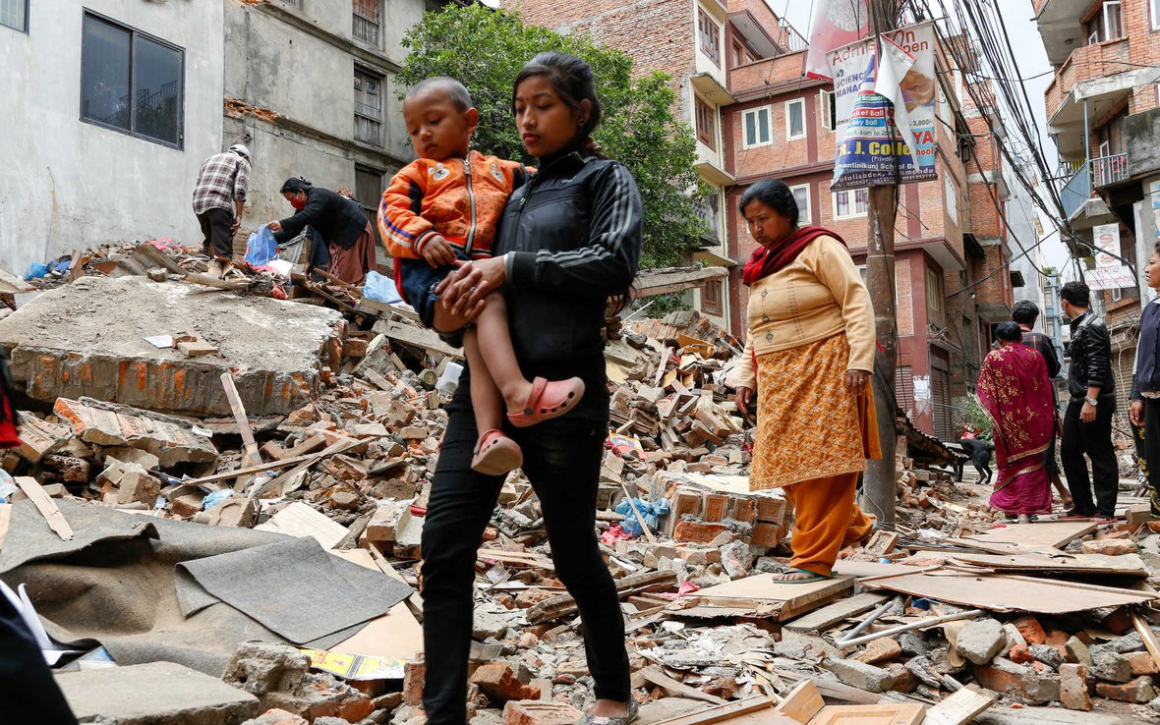
While the effects of the damage are still visible in the worst-hit areas ten years on, Roshan said the reconstruction has been satisfactory, which he credits to the “resilience” shown by the people.
“The way people came together to help each other, whether that is helping each other while living in tents or via donations from abroad, it was commendable,” he added.
Is Nepal prepared for another?
Significant progress has been made over the last decade, but the common problems still persist. Poor management of foreign aid, vulnerable reconstruction, and lack of preparedness are common concerns.
According to a 2023 Human Rights Watch report, only 16% of the total foreign aid that was pledged had actually reached the most-affected areas within the first three years of the earthquake. Media reports at the time blamed the uncoordinated efforts of local authorities.
Qatar started an airbridge to deliver aid one day after the disaster and in addition to initial relief materials. Qatar Red Crescent had issued an appeal to raise QAR 12 million, with a further one million for emergency relief operations.
Roshan blames corruption for interfering with the dissemination of aid. “It is sickening,” he said in a frustrated tone.
Nepal is ranked 11 in earthquake risk by the Global Report on Disaster Risk.
In an interview with Agence France-Presse, the World Bank’s country chief David Sislen admitted Nepal still remains “dangerously underprepared” for a major disaster like the 2015 one.
“Without stronger enforcement and implementation of risk reduction and mitigation measures, the physical footprint of vulnerability will continue to grow, putting people, services, and assets are risk,” he added.
Hassan (whose last name we are not using per his request), 28, another Nepali resident of Doha, shares the same worry. Originally from Parsa, a district in the southern plains of the country that is relatively less vulnerable to earthquake-induced tragedies, he said he cannot be assured.
“It can come anytime. We grew up listening to stories of the horrors of an earthquake that our grandparents suffered, then we lived through one,” he said, adding that another disaster would have a “devastating effect.”
“I feel we are not prepared to tackle, let alone handle, the consequences of such a disaster.”
Last names and employment details of the interviewees have been omitted upon their request.