HRW says Iranian strikes across the Gulf are endangering civilians and hitting residential and critical infrastructure, causing deaths and injuries, while Tehran insists it is targeting only U.S. military bases in the region.
Iran is risking the lives of civilians across the Gulf region through attacks targeting residential infrastructure amid its war with the United States and Israel, Human Rights Watch (HRW) said in a report on Tuesday.
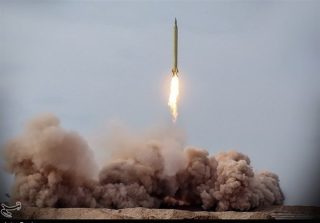
“Iranian forces responded with waves of drone and missile attacks against Gulf states, striking in Bahrain, Kuwait, Qatar, Oman, Saudi Arabia, and the United Arab Emirates,” HRW said, noting the largest attacks were reported in the UAE.
“Iran’s response appears to be striking civilians and civilian objects and devastating lives and livelihoods across the Gulf,” Joey Shea, senior Saudi Arabia and UAE researcher at HRW, said, calling on Iran to protect civilians in the region.
HRW analysed videos posted on social media that were taken during and in the immediate aftermath of the attacks on Gulf countries since the beginning of the war on Iran on February 28.
The organisation also spoke to 16 people, including witnesses, journalists, tourists, and residents of the targeted countries. It also spoke to family members of three migrant workers killed in Bahrain and the UAE.
“These videos show attacks on and damage to residential buildings, hotels, airports, embassies, ports, and energy facilities in Bahrain, Kuwait, Qatar, Saudi Arabia, and the UAE,” it said.
The attacks resulted in at least 11 civilian deaths, including foreign nationals, and at least 268 injuries across the region as of March 16, Gulf Cooperation Council government sources told HRW.
Qatar did not record any deaths, and its health sector has handled more than 26 injuries since the beginning of the attacks.
“Civilians, particularly migrant workers, across Gulf states are being threatened, killed, and injured by Iranian drones and missiles,” Shea said.
Some of the attacks highlighted by HRW included those on Fairmont The Palm Hotel in the UAE, Dubai International Financial Centre, Zayed International Airport, Dubai International Airport, and Kuwait International Airport, among others.
HRW said researchers were unable to confirm whether there were military targets present in any of the attacks.
“Human Rights Watch could not confirm whether these three airports, which are used for civilian purposes, were also being used for any military purposes or if there were military targets in the airport at the time of the attack,” it said.
Iranian President Masoud Pezeshkian apologised for the attacks on the region on 8 March but continued strikes on Gulf countries. The Islamic Revolutionary Guard Corps (IRGC) also repeatedly threatened to target U.S.-affiliated companies.
“International humanitarian law requires all parties to the conflict to distinguish between military objectives and civilians and civilian objects and to target only military objectives,” HRW noted.
Iranian authorities responded to HRW’s request for comment by maintaining that Iran has been targeting U.S. military bases and facilities in the region.
“Iran once again emphasises that its defensive operations- targeting United States military bases and facilities in the region – are in no way directed against the sovereignty or territorial integrity of any regional country,” Iranian authorities told HRW.
Qatar said Iran had been targeting some civilian sites while rejecting its justifications for the attacks.
Iran had targeted a water tank at a power plant in Mesaieed and an energy facility in Ras Laffan Industrial City owned by QatarEnergy, as well as areas in the vicinity of Hamad International Airport.
Qatar’s Foreign Ministry Spokesperson Majed Al-Ansari told a weekly press briefing in Doha on Monday that Iran is attacking the region “in an unprovoked way”.
“The very simple truth right now is that if they stop the attacks, then we can find a way out through diplomacy,” he said.
On Tuesday, Qatar’s Ministry of Defence announced that the Armed Forces intercepted two waves of missile attacks. The Civil Defence also dealt with a minor fire in the industrial area caused by falling debris following the interception of a missile, with no injuries reported.
Sheikh Khalifa bin Hamad Al Thani, Qatar’s Minister of Interior and Commander of the Internal Security Force (Lekhwiya), said last week that the country’s security situation has remained stable.
“Regarding the recent developments in the region, I would like to reassure everyone that the security situation in the country is stable. First thanks to God, then the protectors of the homeland in the skies of Qatar[…]under the directives of His Highness the Amir [Sheikh Tamim bin Hamad Al Thani],” Sheikh Khalifa told Qatar Television on Friday.