From Souq Waqif to Hamad International Airport, Doha News spoke to people navigating renewed regional uncertainty as the U.S.-Israel war on Iran escalates
Mobile phones across Qatar bleated with a series of emergency alerts throughout Saturday, advising all to shelter in place “until the danger has passed”.
Residents and visitors could then hear booming in the skies incrementally for hours, even late into the night, as the country’s Patriot missile system downed incoming Iranian projectiles and drones.
On Saturday morning, U.S. President Donald Trump announced the launch of “major combat operations in Iran”. In coordination with Israel, the U.S. launched missile strikes across 24 provinces in the Islamic Republic, killing the Supreme Leader, Ali Khamenei, Iranian state television confirmed early Sunday.
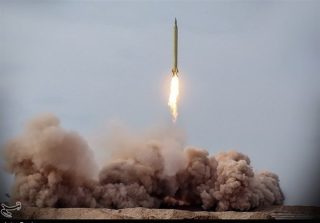
Tehran responded to the strikes by targeting U.S. bases in the Gulf — which are vital for Washington’s military operations in the region — with ballistic missiles. Qatar houses the Al Udeid airbase, which is the largest U.S. airbase in the region.
In Qatar, officials said Iran launched 65 missiles and 12 drones towards the Gulf state, most of which were intercepted, but eight people were injured in the salvos, with one of them in critical condition.
After Khamenei’s death, the Iran’s Revolutionary Guards said on Sunday they would launch the “most ferocious” operation in history against Israel and U.S. military bases.
Reporters heard blasts across the Gulf cities of Dubai, Doha and Manama on Sunday morning after a day of Iranian retaliatory strikes. Thick black smoke could be seen rising on the clear morning horizon in the south of Doha.
LIVE: Qatar officials: Missiles & drones from Iran intercepted, 8 injured as national sovereignty defended
‘Of course I’m not worried’
In Doha, during Ramadan, a time associated with laying down arms, the streets, normally bustling with cars whizzing to meet iftar gatherings, fell noticeably quiet.
The iconic Souq Waqif had only a few visitors. Yet, Doha News found tourists and a shop vendor trying to carry out their routines as normal, despite the warnings.
For Mehram Kamrava, Professor of Government at Georgetown University-Qatar, the latest round of strikes is unlikely to have any impact on the Gulf state’s unique positionality.
“If anything, Qatar has shown its close coordination with and collaboration with the United States in the recent conflict, and also its utility as a trusted American partner in negotiating tactics,” he told Doha News.
Amid the geopolitical developments, tourists in Souq Waqif were processing events in real time.
“We didn’t receive the alert on our phones, but we heard the loud sounds,” Tatiana told Doha News.
Visiting from Russia, Tatiana and her family were on the Pearl Island when the airstrikes began. Their holiday had taken them on a cruise through Bahrain and the United Arab Emirates, with Qatar as their final stop. Tatiana added that she was aware of previous regional tensions before her travels.
For instance, in January, Qatar quietly bolstered its defences by reportedly requesting that the Royal Air Force’s 12 Squadron, a joint Typhoon unit comprising Qatari and British forces, be relocated from Lincolnshire to the Gulf state.
Last June, Al Udeid was previously targeted by Iranian strikes in retaliation for the U.S. hitting the former’s nuclear facilities.
Also in 2025, Israeli forces struck a residential area of Qatar in a failed attempt to kill Hamas leadership. Six people, including a Qatari security officer, died.
“We heard about these things in the news, but that didn’t stop us from visiting,” Tatiana said, adding that her feeling was more disappointment than fear.
“This is such a beautiful country; it would be a shame if all this were to be destroyed.”
Saturday was supposed to be their final day in the Gulf state before returning home. “We feel uncertain about the ride back,” she added.
By contrast, a French couple did receive the national alert on their phones.
“However, we don’t read Arabic, so we didn’t know what was happening, not until we went to our hotel briefly and saw the headlines on the news,” Deshautels told Doha News while on her guided tour of the Souq.

Al Jazeera’s English channel, breaking the news of impending airstrikes in Qatar and the region, went viral as the alert could be heard loudly during the live broadcast.
Deshautels recounted her childhood in 1980s Baghdad. Her father had been part of a team tasked with building the airport and expressway. Iraq’s 1980 invasion of western Iran plunged the two countries into an eight-year war.
“Being used to the sound of airstrikes from that time, perhaps I was only a bit scared here in Doha — either way, I’m braving it and making the most of our holiday.”
Meanwhile, Abubakr, a tailor within the market grounds, was more vocal in his optimism. “Of course I’m not worried!” he said defiantly.
When asked whether the strikes might affect business during Ramadan, he added, “God is Kareem (The Generous) who controls everything, so why worry?”
Flights at a standstill
The drive to Hamad International Airport, like the trip to Souq Waqif, was sombre.
Last year, out of the 5.1 million international visitors to Qatar, 61% arrived by air.
However, amid the closure of Qatari airspace on Saturday, Qatar Airways announced that flight operations were temporarily suspended.
Gulf neighbours also announced the closure of their airspace.
“The rapid closure of Gulf airspaces tells us an awful lot about how regional governments are assessing the security risks,” Professor Kamrava said.
“Doha, Dubai and to a lesser extent, Abu Dhabi, consider themselves as critical air traffic hubs between the East and the West and host some of the biggest airlines in the world. As we know, Kuwait International Airport, along with areas of Bahrain and of course, Al Udeid, have been hit by Iranian missiles. There is tremendous apprehension and fear of the possibility of a spillover,” he added.
At the award-winning airport, departure and arrival boards were awash with delays and cancellations. Foot traffic was subdued, and passengers appeared tired, confused and uncertain as they tried to make sense of the unprecedented disruption.
Flavia, a Peruvian visitor, found herself in this mix.
“The regional conflict always seemed distant to me: not something that would impact Doha to this extent,” she said.
Flavia hadn’t had a holiday in six months, and now, what was supposed to be a three-country trip remained uncertain.
“Realistically, I’m not sure if I’ll make it for the Spanish part of my trip,” she sighed. Her journey began in Thailand and was meant to include just a two-day layover in Doha before ending in the Mediterranean.
In a statement, the national carrier said additional staff would be on the ground to assist passengers amid the delays. Despite the ordeal, Flavia told Doha News she would love to visit Doha again.
“This is a conflict between America, Israel and Iran,” the airport-Karwa taxi driver observed as the sun set, streaked with remnants of intercepted missiles. “So, why are we, civilians, caught in the crossfire?”
Fakhriya M. Suleiman is a Qatar-based multimedia journalist and voice-over professional, with experience across strategic communications, live panel moderation and event hosting. Her work has appeared in The New Arab, and she has voiced projects for cultural institutions, including Qatar Museums.