As U.S.-Iran rhetoric intensifies, Qatar is closely evaluating the risk of regional spillover, according to Mehran Kamrava, a political scientist specialising in Iran and Gulf security. The reassessment comes amid direct Iranian warnings about the consequences of any U.S. military action.
The latest spike in tensions coincides with sustained political unrest in Iran and increasingly forceful statements from Washington. U.S. President Donald Trump has repeatedly raised the possibility of military intervention should violence against protesters continue, announcing on January 22 that a U.S. “armada” was en route to Iran.
Speaking to Doha News, Mehran Kamrava, Professor of Government at Georgetown University in Qatar said these developments should be understood within the broader context of U.S.–Iran relations, noting that rhetoric from the Trump administration has at times gestured toward the prospect of regime change in Iran.
“The U.S. has actively worked to foster a crisis of currency collapse in Iran and to foment internal tensions,” he said—an assessment reflecting wider concerns about Washington’s reliance on economic pressure and the destabilising effects it can produce.
Kamrava argued that external intervention often complicates rather than resolves crises, raising the risk of miscalculation as tensions grow. “No state can absorb a blow without responding, particularly one that is highly ideological and deeply concerned with its image,” he said.
In this context, Iranian officials have issued unusually direct warnings to Qatar, cautioning that any U.S. military action would place American Central Command facilities at Al Udeid Air Base within range of retaliation.
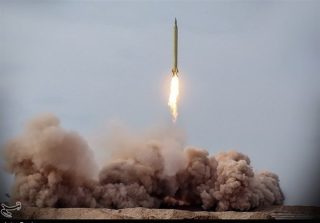
Qatar is taking the warnings seriously, particularly after Iran’s response during the Twelve-Day War in June 2025, which underscored Tehran’s readiness to respond directly. After Israeli strikes on Iranian military and nuclear sites, Iran launched massive missile and drone attacks and later struck the U.S. military base in Qatar.
Kamrava points to shifts in Iran’s security posture after years in which the government relied on regional allies as buffers against direct confrontation.
This strategy rested on what Tehran referred to as the Axis of Resistance, designed to “keep the U.S. and Israel at bay.” Kamrava said the depletion of Hezbollah and the collapse of Bashar al-Assad’s regime in Syria exposed the limits of this strategy.
“Iran needed another form of deterrence,” Kamrava said. “A more direct resort to retaliation.”
For Qatar and its Gulf neighbours, Iran’s recalibration has reinforced a preference for diplomacy and de-escalation. Kamrava said this helps explain why Qatar, Saudi Arabia and Oman have been increasingly active in lobbying Washington against pursuing military action in Iran.
He added that regional responses remain complicated by divergent interpretations of the same events. The June 2025 missile strike, he said, was viewed in Tehran as an attack on an American target, while in Doha it was viewed as a violation of Qatari sovereignty.
“Qatari–Iranian relations have always been cordial, and, at the same time, superficial. They have not been as close as some people assume,” Kamrava said.
For Qatar, the priority remains managing risk through diplomacy and regional coordination, even as U.S.–Iran tensions continue to shape the Gulf’s strategic environment.