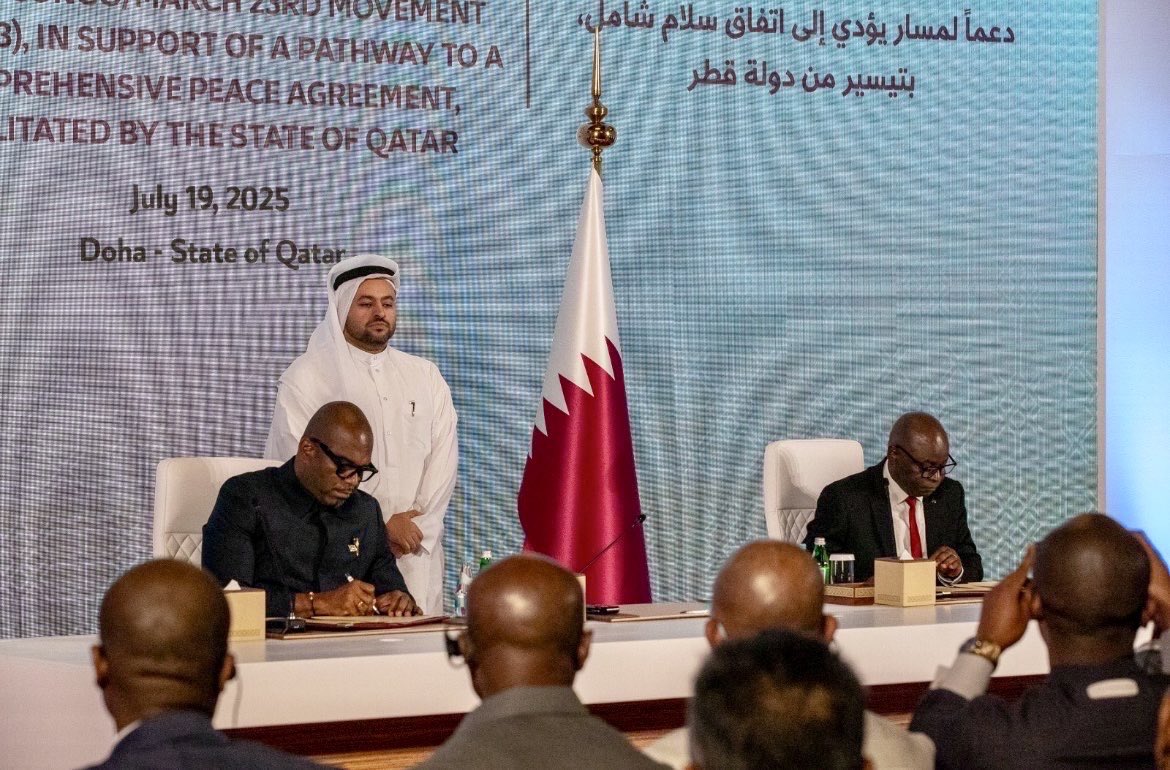
Congo and the M23 rebel group have signed a new Qatar-mediated framework in Doha that sets the path toward a comprehensive peace deal.
Qatar’s latest round of mediation has produced a new framework agreement between the Democratic Republic of Congo and the Rwanda-backed M23, marking a fresh step toward ending years of violence in eastern DRC.
The deal, signed in Doha on Saturday, follows months of shuttle diplomacy led by Qatar in coordination with the United States and the African Union. It builds on a ceasefire and an earlier framework signed in July, though both sides have since accused each other of violating the truce.
Qatar’s Minister of State and chief negotiator, Mohammed Al Khulaifi, called the new agreement “historic” and said mediators would keep working to ensure that commitments translate into change on the ground.
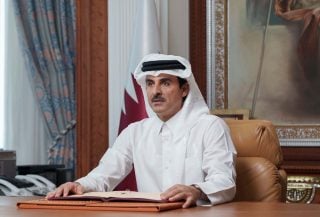
He noted that the process began in March, when Qatar’s Amir Sheikh Tamim bin Hamad Al Thani brought together DRC President Félix Tshisekedi and Rwanda’s President Paul Kagame in Doha for their first face-to-face meeting since M23 renewed its offensive.
“That meeting served as a launching point for this process, leading to positive developments, including the Washington Agreement between the DRC and Rwanda in June, which paved the way for today’s declaration,” Al Khulaifi said.
The framework agreement outlines protocols and timelines for the next stage of talks between the Congolese government and M23. It is not a final peace deal, but rather a roadmap for future negotiations.
According to M23’s delegation, the protocols address what they describe as the root causes of the conflict and include plans for joint management of rebel-held areas. No changes on the ground will take place until each protocol is negotiated in full and a final peace agreement is reached.
The DRC and M23 previously agreed to a ceasefire in April through Qatari mediation, after more than six failed attempts since 2021.
At the ceremony, Massad Boulos, the US Senior Advisor for Africa, welcomed the signing and described it as “a significant step toward a peaceful and lasting solution to the conflict in eastern DRC”.
He thanked Qatar for leading mediation efforts in what he called “a challenging conflict that has claimed millions of lives in Congo”.
Boulos also said the agreement’s six remaining protocols focus on a permanent ceasefire and the release and exchange of prisoners. He confirmed that both sides plan to finalise these points soon, and that an upcoming meeting with US President Donald Trump in Washington is expected to support the next phase of implementation.
Boulos also thanked Qatar for leading peace efforts in what he described as a “challenging conflict that has claimed millions of lives in Congo”.
The conflict in eastern Congo has intensified since late 2021, with M23 – backed by Rwanda – seizing large areas of territory, including Goma and Bukavu. The UN reported in July that M23 fighters killed at least 319 civilians in North Kivu between 9 and 21 July, the highest toll recorded since the group’s resurgence.
More than 7.8 million people are internally displaced, and at least 28 million face food insecurity. The UN describes the crisis as one of the world’s most protracted and severe humanitarian emergencies.
Qatar says its mediation aims to maintain direct dialogue between the DRC and M23 and to create what Al Khulaifi described as “a constructive and responsible atmosphere grounded in a shared belief in dialogue as the only path to resolving the conflict”.
He stressed that while the framework sets the principles, effective monitoring on the ground will be essential to ensure implementation.