Speaking on CBS News’ 60 Minutes, Witkoff and Kushner discussed the fallout from Israel’s September strike on Qatar, which targeted Hamas’s negotiating team and disrupted ongoing ceasefire efforts.
U.S. presidential envoy Steve Witkoff has said that he and Jared Kushner, son-in-law to President Donald Trump, felt “betrayed” after Israel carried out a strike on Qatar in September, targeting Hamas’ negotiating team.
Speaking on CBS News’ 60 Minutes, Witkoff described some of the fallout from the assassination attempt.
“I think both Jared and I felt, I just feel we felt a little bit betrayed,” Witkoff told journalist Lesley Stahl.
When asked about the president’s reaction, Kushner said: “I think he felt like the Israelis were getting a little bit out of control in what they were doing, and that it was time to be very strong and stop them from doing things that he felt were not in their long-term interests.”
Witkoff noted that the strike, which occurred while mediators were working to finalise a ceasefire agreement between Hamas and Israel, had disrupted the negotiation process.
“It had a metastasizing effect because the Qataris were critical to the negotiation, as were the Egyptians and the Turks,” the U.S. envoy said. “We had lost the confidence of the Qataris. And so Hamas went underground, and it was very, very difficult to get to them.”
The exclusive interview with Trump’s two lead negotiators for the ceasefire deal is set to air in full on Sunday. It will also offer more insight into the second phase of President Donald Trump’s Gaza ceasefire plan. Witkoff and Kushner highlight key components of the deal, including the “demilitarization, troop withdrawal, reconstruction, and post-war governance in Gaza”.
Israel’s strike on Qatar on September 9 sparked international condemnation, signaling to some that Israel is not interested in a ceasefire.
“The missiles were falling continuously without stopping”
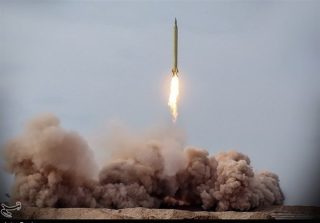
Israel dropped around 12 missiles on a residential neighbourhood in Qatar within less than a minute during its September attack, senior Hamas official Ghazi Hamad told Al Jazeera Arabic in his first public appearance since the attack.
“The missiles were falling continuously without stopping. I don’t know, there were around 12 missiles within a minute. So, the reality was difficult and harsh,” Hamad said.
The strike targeted a residential building housing members of Hamas’s political office, located in a densely populated area that includes homes, embassies, schools, and nurseries.
The bombing killed five Hamas members and 22-year-old Corporal Bader Al-Humaidi Al-Dosari, a member of Qatar’s Internal Security Force (Lekhwiya).
Israel struck the site while Hamas’s negotiators were engaged in discussions over a Gaza ceasefire proposal put forward by U.S. President Donald Trump.
The group had already accepted a proposal presented by the mediators on August 18, but Israel did not respond and continued its genocide in the Gaza Strip.
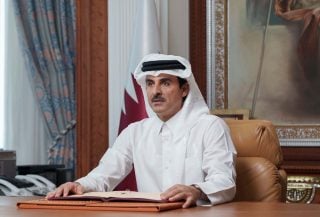
On September 15, Arab and Muslim leaders gathered in Doha for an emergency summit to discuss the Israeli strike. Qatar’s Amir Sheikh Tamim bin Hamad Al Thani delivered his first public remarks following the attack during the summit.
“This aggression is in reality blatant, treacherous, and cowardly. It is impossible to deal with such a degree of malice and treachery,” Sheikh Tamim said.
Attacks on Qatar will be treated as a “threat to the peace and security of the United States”
On 29 September, Trump signed an executive order pledging to guarantee Qatar’s security and territorial integrity — including through military action — if the country is attacked.
Trump said the U.S. and Qatar are “bound together by close cooperation, shared interests, and the close relationship between our armed forces”.
The U.S. president added that Qatar was “a steadfast ally in pursuit of peace, stability, and prosperity,” noting its role in supporting the U.S. in mediating regional and global conflicts.
“In recognition of this history, and in light of the continuing threats to the State of Qatar posed by foreign aggression, it is the policy of the United States to guarantee the security and territorial integrity of the State of Qatar against external attack,” the executive order states.
It further declares that any attack on Qatar will be treated as a “threat to the peace and security of the United States”.
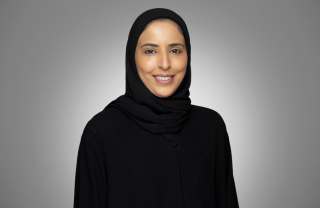
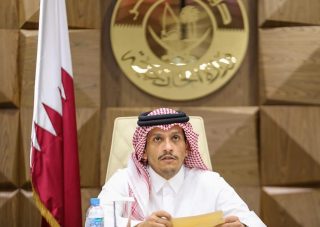
The announcement came just days after Israeli Prime Minister Benjamin Netanyahu issued a formal apology for the September 9 strike in a phone call with Qatari Prime Minister and Foreign Minister Sheikh Mohammed bin Abdulrahman Al Thani.