The Democratic Republic of the Congo and Rwanda have signed a US- and Qatar-brokered peace agreement to end decades of conflict, promote regional cooperation, and secure access to critical minerals.
The Democratic Republic of the Congo (DRC) and the Republic of Rwanda have signed a landmark peace agreement in Washington, D.C., bringing fresh hope to a region devastated by decades of conflict and instability.
The deal, mediated by the United States with support from Qatar and the African Union, aims to bring an end to one of Africa’s longest-running crises, which has displaced millions and claimed countless lives.
The agreement, signed by Congo’s Foreign Minister Thérèse Kayikwamba Wagner and her Rwandan counterpart Olivier Nduhungirehe, includes provisions on respecting territorial integrity, the prohibition of hostilities, and the disengagement, disarmament, and conditional integration of non-state armed groups.
It also sets out the creation of a joint security coordination mechanism and outlines plans to facilitate the return of refugees and internally displaced persons. Additionally, the deal reaffirms the mandate of the United Nations peacekeeping mission MONUSCO and commits both nations to enhanced regional economic cooperation.
US President Donald Trump, who played a central role in brokering the deal, described the conflict as “one of the worst wars anyone has ever seen”.
Speaking ahead of the signing, he said: “We’re getting, for the United States, a lot of the mineral rights from the Congo as part of it. They’re so honoured to be here. They never thought they’d be coming.”
Trump’s administration has prioritised securing critical mineral access in Africa, including cobalt, lithium, tantalum, and copper, all of which are vital for the global technology and energy sectors.
US Secretary of State Marco Rubio, who hosted the ceremony, hailed the deal as “an important moment after 30 years of war.”
He emphasised the broader significance of peace, stating: “It’s about allowing people to live. It’s about allowing people to now have dreams and hopes for a better life, for prosperity, for economic opportunity, for family reunification – for all the things that make life worth living. Those things become impossible when there’s war and when there’s conflict.”
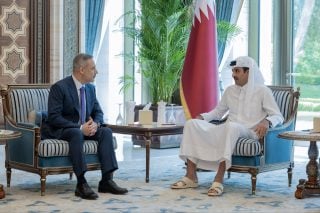
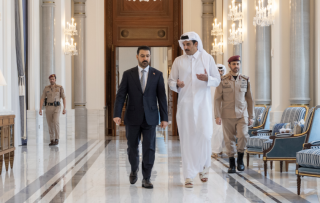
The peace process was supported by a range of international actors. Qatar played a key diplomatic role, with Minister of State Mohammed bin Abdulaziz Al Khulaifi confirming that several rounds of talks were hosted in Doha.
“Doha was a platform for these meetings, and we contributed with the US,” said Al Khulaifi in an interview with Aljazeera, adding that Qatar remains committed to resolving conflicts through peaceful dialogue and will continue mediating talks between the DRC government and the M23 rebel group.
“Qatar believes that mediation is a pillar of its foreign policy. That’s why, hopefully, you will find Qatar always racing to try to resolve issues between countries, even countries that are geographically far from Qatar,” he added.
The African Union and the Republic of Togo also facilitated discussions, anchoring the process in regional leadership and ownership.
Foreign Minister Wagner acknowledged the difficulty of the journey so far and the challenges that lie ahead.
“This moment has been long in coming. It will not erase the pain, but it can begin to restore what conflict has robbed many women, men, and children of: safety, dignity, and a sense of future,” she said.
Wagner paid tribute to those who had suffered the most, stressing: “Those who have suffered the most are watching. They are expecting this agreement to be respected, and we cannot fail them.”
Her Rwandan counterpart, Olivier Nduhungirehe, echoed her sentiments while emphasising Rwanda’s readiness to move forward.
“Shared growth and cross-border cooperation will unlock tangible dividends for both our countries,” he said.
He also stressed the importance of dismantling the Democratic Forces for the Liberation of Rwanda (FDLR), a militia formed by those involved in the 1994 genocide.
“FDLR is no ordinary militia. It is the remnant of the forces which committed the genocide against the Tutsi in 1994 in which a million people were killed,” he noted, underlining Rwanda’s demand for an “irreversible and verifiable end” to the DRC’s alleged support for the group.
The M23 rebel group, which has made significant advances in eastern Congo this year—including seizing major cities and lucrative mining zones—remains outside the scope of the current agreement. The group has indicated that the accord is not binding on them, and there is ambiguity regarding their future compliance.
While the agreement includes mechanisms to demobilise and integrate non-state actors, the absence of a firm commitment from M23 raises questions about the effectiveness of the deal on the ground.
International observers and analysts have welcomed the agreement as a significant step forward. The United Nations has described the situation in eastern Congo as “one of the most protracted, complex, serious humanitarian crises on Earth”.
Over 100 armed groups remain active in the region, and more than seven million people have been displaced by the conflict.
Senior Advisor for African Affairs, Massad Boulos, who was instrumental in facilitating the agreement, described the signing as a historic moment.
“With their signatures, the peace agreement will enter into force, bringing an end to a 30-year conflict and setting both countries and their people on a path towards peace and prosperity,” he said.
The agreement also sets out a clear timeline. Within 30 days, a joint security coordination mechanism will be established. Within 90 days, the two countries will launch a regional economic integration framework. Thousands of Rwandan soldiers currently in eastern DRC are expected to withdraw within three months.