Marking a significant milestone in bilateral diplomacy, Malta and Qatar celebrate 50 years of formal relations—an occasion that offers a moment to assess the steady development of their partnership.
As Malta and Qatar mark the 50th anniversary of diplomatic relations, the Maltese Ambassador to Qatar, Simon Pullicino, reflects on five decades of growing ties between the two nations.
In this exclusive interview with Doha News, he discusses the deepening political, economic and cultural links, the significance of recent high-level visits, and the reintroduction of direct flights between Doha and Malta.
He also shares Malta’s stance on key regional issues, including the ongoing war in Gaza, and outlines the potential for greater cooperation in tourism, education, and business.
How do you view bilateral relations between the two countries?
The 50th anniversary of the establishment of diplomatic relations between Malta and Qatar is a major milestone that celebrates five decades of strong, mutually beneficial cooperation. Over the years, our two countries have built an exceptional political and economic relationship, anchored in trust, respect, and shared values. This anniversary underscores our collaboration across various sectors, including trade, culture, education, and tourism. The celebration provides an ideal opportunity to reflect on the enduring partnership that has shaped our bilateral ties, which have deepened in recent years thanks to the opening of the Maltese Embassy in Doha in 2021 and the ensuing political engagement at the highest levels, the most recent being the visit of Malta’s Deputy Prime Minister and Minister for Foreign Affairs and Tourism Dr Ian Borg. It also provides us with the opportunity to plan ahead for the coming years to try to consolidate our relations even further.
How significant was the recent visit of Dr Ian Borg to Doha in January 2025 for the relationship between Malta and the State of Qatar?
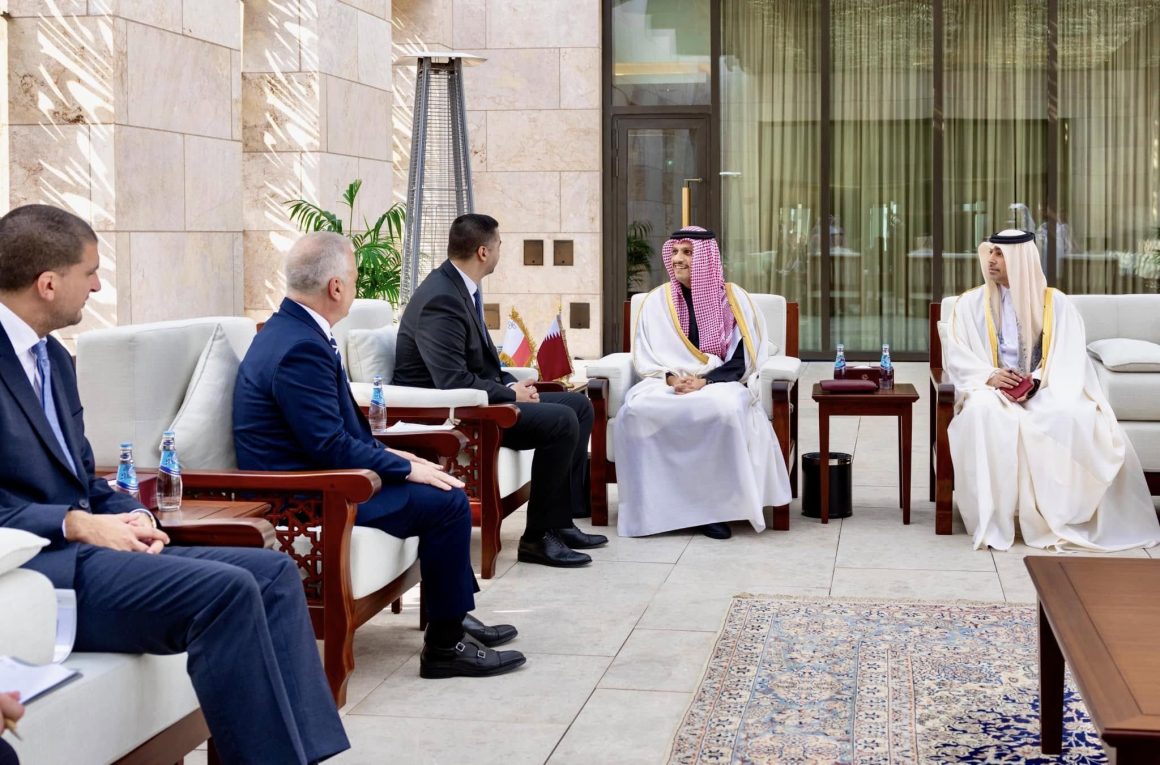
The visit of Dr Ian Borg, Malta’s Deputy Prime Minister and Minister for Foreign Affairs and Tourism to Doha in January 2025 was another step in strengthening Malta-Qatar relations. During his visit, he held very cordial meetings with key leaders, including the Prime Minister and Minister of Foreign Affairs of Qatar Sheikh Mohammed bin Abdulrahman Al Thani, as well as the CEOs of Qatar Tourism and Qatar Airways. These discussions allowed for very frank and open interactions on regional developments while paving the way for even closer collaboration in various areas, including tourism and connectivity. The outcome of these talks, particularly in relation to enhancing flight connectivity and boosting tourism between the two countries, is a clear reflection of the strong political and economic ties that have developed over the past 50 years. This visit was a pivotal moment in ensuring the success of initiatives like the re-introduction of direct flights between Doha and Malta as of 2 July 2025, marking another chapter of our ever-strengthening partnership.
What, in your opinion, characterises Malta-Qatar relations?
Malta and Qatar, although not close geographical neighbours, have much in common, including a joint commitment to foster peace, security and dialogue. This is clearly outlined in Malta’s second of its three strategic foreign policy pillars. Similarly, Qatar’s foreign policy is based on a set of principles outlined in its constitution, which include strengthening international peace and security by encouraging the peaceful resolution of international disputes.
Malta commends the unwavering efforts of the Qatari authorities, spearheaded by Sheikh Tamim bin Hamad Al Thani, The Amir of Qatar, to pursue mediation efforts, at times, against many odds, to seek closure on a number of regional conflicts. Mediation and peaceful conflict resolution are an integral parts of the State of Qatar’s political identity. Qatar’s unstinting efforts are lauded by the international community at a time when the world continues to face a growing number of uncertainties and challenges. Besides, Qatar’s humanitarian assistance is second to none.
The Palestinian cause is critical in the Middle East, and Malta said it will consider recognising a Palestinian state. What’s Malta’s position on Gaza and are there any efforts that you would like to share with us?
Malta remains firmly committed to a lasting and sustainable peace based on the two-state solution. This was the message conveyed by Malta’s Deputy Prime Minister and Minister of Foreign Affairs and Tourism the Dr Ian Borg in his meeting with the Prime Minister of Palestine Mohammad Mustafa in Luxembourg on 14 April 2025. At European Union level, Malta has supported the recently announced new three-year financial support package for the Palestinians worth up to €1.6 billion.
Malta has condemned the resumption of attacks on Gaza, including the recent attack on the Al-Ahli Hospital, and called on Israel to exercise restraint. It continues to underscore the necessity for a permanent ceasefire and continues to urge Hamas to honour their commitment on the release of hostages, while stressing the need for all parties to ensure the protection of civilians and humanitarian aid workers and the unhindered access of humanitarian aid.
As part of its efforts, Malta continues to support the Palestinian people through humanitarian aid, medical assistance of Palestinians from Gaza in Malta, scholarships and other initiatives. It continues to advocate for a diplomatic resolution to the conflict in international fora and commends all efforts, including those of the Qatari Government, aimed at de-escalating the situation and reaching a sustainable political resolution.
You mentioned the re-introduction of direct flights. What makes Malta a unique destination for Qatari travellers?
Malta offers a truly unique experience for Qatari travellers. As an island rich in history and culture, it combines stunning Mediterranean landscapes with a fascinating array of ancient temples, UNESCO World Heritage sites, and charming cities like Valletta, which has been a European Capital of Culture. The island’s warm climate and welcoming people create a perfect escape for those looking to explore both the outdoors and vibrant cultural life. Qataris would most certainly be enchanted by hearing the Maltese language, with its Arabic roots, as well as the remnants of Arab heritage in Malta. Likewise, we hope that more Maltese will opt to discover Qatar and its kind and hospitable people.
Given the history and heritage between Malta and the Arab world and the many similarities in languages, as travellers seek new destinations, how is Malta a different travel destination?
Malta is a captivating travel destination, offering a unique blend of history, culture, and natural beauty. With its deep historical ties to the Arab world, dating back to the period of Arab rule (870–1091), the island showcases a fascinating mix of Arabic, Mediterranean, and European influences. This is evident in Maltese, a Semitic language derived from Arabic, the only standardised Semitic language written exclusively in the Latin script. Visitors can explore a rich tapestry of architectural marvels, from ancient fortresses and medieval cities like Mdina to the stunning Baroque masterpieces in Valletta. The island’s UNESCO World Heritage sites, including prehistoric temples and the intricate fortifications built by the Knights of St. John, tell stories of centuries-old civilisations. With its Mediterranean climate, crystal-clear waters, and unique blend of traditions, Malta offers an unparalleled experience for those seeking a destination where history and modernity intertwine.
How do you see enhanced connectivity impacting people-to-people relations between Qatar and Malta?
Enhanced connectivity between Qatar and Malta through direct flights will significantly boost people-to-people relations. Strong political ties between the two countries, coupled with growing cultural and educational exchanges, have already laid a solid foundation for closer collaboration. With easier travel options, we expect to see an increase in tourism as well as business, and cultural interactions, leading to greater understanding and friendship. Above all, this direct air link embodies the vision of both countries to foster stronger diplomatic, political, and social ties and exemplifies our shared vision for a future of even closer collaboration.
One final question. What are your views on cultural and business opportunities between Malta and Qatar given the latest developments?
Recent developments have significantly strengthened the cultural and business ties between Malta and Qatar. The Embassy’s cultural initiatives over the last two years, with support from Katara Cultural Village, Heritage Malta, Malta Arts Council and the EU Delegation in Qatar, have been pivotal in raising Malta’s profile as a prime destination for both tourism and business. These efforts have not only highlighted Malta’s rich cultural heritage but also underscored its strategic position in the EU, offering a unique opportunity for Qatari businesses to engage with European markets.
Cultural diplomacy, combined with Malta’s growing presence in Qatar’s business ecosystem, is positioning the two nations for long-term, mutually beneficial partnerships. As these initiatives continue to unfold, the opportunities for deeper collaboration are becoming even more promising. The Embassy of Malta is ready to continue supporting this collaboration to ensure that the relationship between the two countries reaches new heights.