The three presidents held a virtual ceremony on Monday to unveil the Friendship monument at the border intersection of the three Central Asian nations.
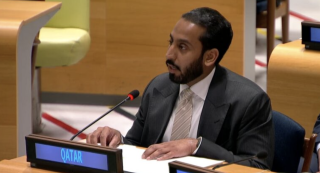
Qatar has welcomed the historic trilateral agreement signed last week between Tajikistan, Kyrgyzstan, and Uzbekistan at the junction of their borders.
Qatar’s Ministry of Foreign Affairs affirmed Doha’s hopes that the recent agreement would “contribute to strengthening cooperation and achieving integration among the three countries, as well as enhancing security and stability in the region.”
It added that Qatar was in support of all efforts “aimed at resolving disputes and conflicts through peaceful means, in order to strengthen peace and security at both regional and international levels”.
The deal was signed during a trilateral summit between Kyrgyz President Sadyr Japarov, Tajik President Emomali Rahmon, and Uzbek President Shavkat Mirziyoyev in Khujand, Tajikistan’s second largest city.
‘Eternal friendship’
During the Monday summit, the central Asian leaders discussed regional cooperation. They emphasised the importance of enhancing relations between neighbouring countries, advancing shared infrastructure and economic initiatives, and boosting the region’s tourism potential.
The three central Asian countries also inked the Khujand Declaration, an agreement that aims to “enhance the paths of eternal friendship” between them.
The three presidents then held a virtual ceremony to unveil the Friendship monument at the border intersection of the three nations.
Two border checkpoints on the Tajik-Kyrgyz border, closed since 2021, have reopened, and flights from Bishkek to Dushanbe and Khujand were launched.
According to the Uzbek president’s office, the agreement will “serve to ensure the goals of stability and sustainable development, increasing the international authority of the entire region”.
The leaders of Tajikistan and Uzbekistan also held a private meeting, where they signed a protocol to exchange the instruments of ratification for the treaty on allied relations between their countries.
Kyrgyzstan’s Japarov also reaffirmed his suggestion to implement a regional visa for foreign visitors to the area, akin to the European Union’s Schengen visa.