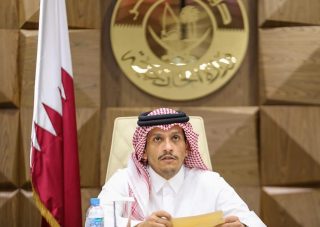
The announcement was made on Monday between Syria’s interim leader and head of the Kurdish-led forces.
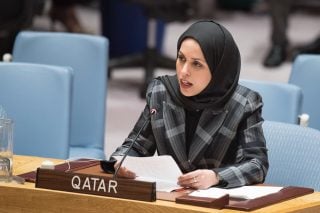
Qatar has welcomed the integration of the Kurdish-led Syrian Democratic Forces (SDF) into the Syrian government, calling it a “critical step” towards fostering civil peace, security, and stability.
On Monday, Doha emphasised that Syria’s stability requires exclusive state control over weapons through a unified army that represents all Syrian factions, in order to ensure “the preservation of the country’s sovereignty, independence, and territorial integrity”.
The integration agreement was made between Syria’s interim leader Ahmed Al-Sharaa and SDF chief Mazloum Abdi. It outlined civil and military institutions in northeastern Syria to be merged into the Syrian state’s administration, including border crossings, the airport, and oil and gas fields.
For the past decade, the SDF has held a semi-autonomous region in northeastern Syria, which will now be controlled by the Syrian government under the latest agreement.
The Kurdish-led group, backed by the United States, has been described as a coalition of left-wing ethnic militias.
Fragmentation of Syrian factions: an Israeli project?
Dr. Marwan Kabalan, the director of the Political Studies Unit at the Arab Center for Research and Policy Studies, believes the agreement between the Syrian central government and the SDF is key to fighting fragmentation within Syria.
“The agreement blocked attempts to divide or fragment the country, because there are calls for fragmentation and division inside and outside Syria,” he told Doha News.
External factors have preyed on internal divide within the country for their own benefit, Kabalan stated.
This includes Israel, which intensified its military activity in Syria and seized land near the occupied Golan Heights following the fall of Bashar al-Assad’s government last December.
According to Kabalan, Israeli Foreign Minister Gideon Saar has adopted the issue of territorial division.
“He is the one supervising every project to fragment Syria or divide it into sectarian cantons. This was his project originally when he was a researcher in the Israeli National Security Agency, before he became Foreign Minister,” the political studies director said.
Mass killings on Syria’s coast
Over the weekend, the Syrian government launched an operation in the coastal cities of Latakia and Tartous following days of infighting between government forces and pro-Assad militias, resulting in mass killings.
Syrian government forces have been accused of carrying out “revenge” attacks after ambushes by apparent pro-Assad forces.
Al-Sharaa said he would punish “even among those closest” to him for taking part in the massacre that killed hundreds on Syria’s coast.
A report by the Syrian Observatory for Human Rights (SOHR) said that some 973 civilians were killed in 39 massacres and individual executions, with Latakia suffering the highest death toll.
The deaths included members of the Alawite minority, which Assad and his family belong to.
Kabalan pointed out that the coastal killings has weakened the image of Al-Sharaa, forcing him to make concessions that paved the way for the agreement with the SDF.
He explained that the killings “undermined the image Syria tried to build over the past three months [regarding its stance on] minorities, and it cannot allow for sectarian violations.”
“The events created a kind of pressure that pushed him to restore his image in front of the world and to mitigate the damage that occurred as a result of the sectarian events,” Kabalan said.
“All of this pushed him to agree to a draft agreement that he had previously rejected,” he added.