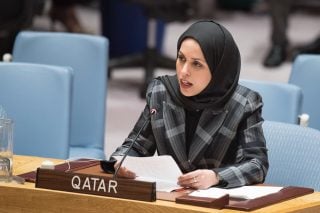
Qatar expressed its strong rejection of using “food as a weapon of war and the deliberate starvation of civilians”.
Qatar’s Ministry of Foreign Affairs (MoFA) has condemned Israel’s decision to block humanitarian aid from entering the besieged enclave, deeming it “a blatant violation of the ceasefire agreement, international humanitarian law, the Fourth Geneva Convention, and fundamental religious principles.”
Israel blocked the entry of aid, food, and other supplies into the Gaza Strip on Sunday, a move that mediators Qatar and Egypt have condemned as a “violation of the ceasefire agreement.”
Israel has faced widespread condemnation for weaponising starvation as a tool of war in Gaza. This includes blocking aid and using the distribution of humanitarian supplies as targets for mass killings in the besieged enclave.
Israeli Prime Minister Benjamin Netanyahu’s government has warned of “additional consequences” for Hamas if the group does not agree to extend the first phase of the three-tiered ceasefire deal. However, the deal remains fragile, with talks on the second phase experiencing significant delays.
Israel has expressed support for a new U.S. proposal to extend the ceasefire through Ramadan and the Jewish holiday Passover, which ends on April 20. The proposal, put forward by U.S. Special Envoy to the Middle East Steve Witkoff, suggests more time is needed for discussions.
Under the proposal, Netanyahu has stated that Hamas would need to release half of the 59 remaining captives, with the rest to be freed when a permanent ceasefire is reached. The majority of these captives are men, and half are believed to be dead.
Meanwhile, Arab leaders are scheduled to meet in Cairo on Tuesday for an “urgent” session to discuss the future of the Gaza Strip.
Mediated by Qatar, Egypt, and the United States, the ceasefire between Hamas and Israel was announced on January 15 after more than a year of stalled talks.
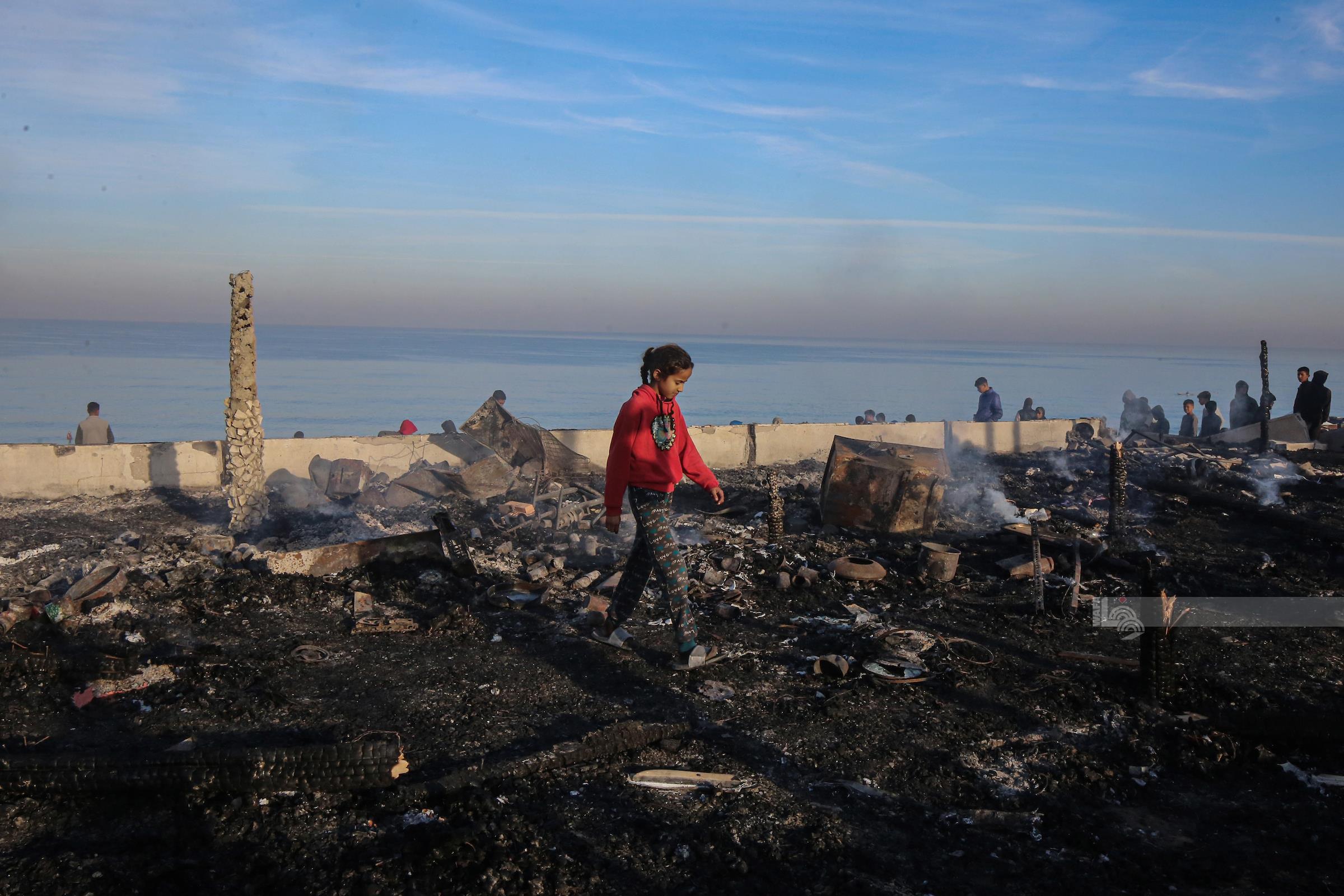
Phase one began on January 19, permitting the entry of vital humanitarian aid as the Gaza Strip grappled with a severe food crisis amid Israel’s 16-month-long genocide on the enclave.
Qatar expressed its strong rejection of using “food as a weapon of war and the deliberate starvation of civilians”.
The Gulf state urged the international community to hold “Israel accountable and ensure the safe, continuous, and unhindered delivery of humanitarian aid to all areas of the Gaza Strip.”
The second phase of the deal involves the release of the remaining captives held by Hamas in Gaza in exchange for a full withdrawal of Israeli forces from the territory and a permanent ceasefire. Each of the three phases of the deal is designed to last 42 days.
Hamas accused Israel of attempting to sabotage the already fragile deal on Sunday, calling Israel’s aid cut-off “a war crime and a blatant attack” on the agreement.
Israel’s 16-month-long genocidal onslaught has claimed the lives of over 61,709 Palestinians, with thousands still trapped under the rubble.
During the first phase of the ceasefire deal, Hamas released 33 Israeli captives and five Thai workers in nine separate handovers to the International Red Cross. However, eight of the captives were killed due to Israel’s ongoing bombardment of the Gaza Strip.
In return, Israel released 1,755 Palestinian prisoners, including many women and children, from its jails and detention centres after several delays.