Beyond the relations with the United States, Sheikh Tamim’s visit to Iran also carried a strategic dimension concerning regional security.
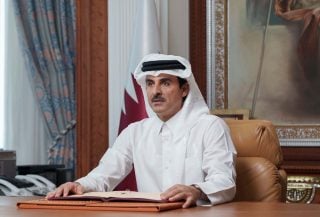
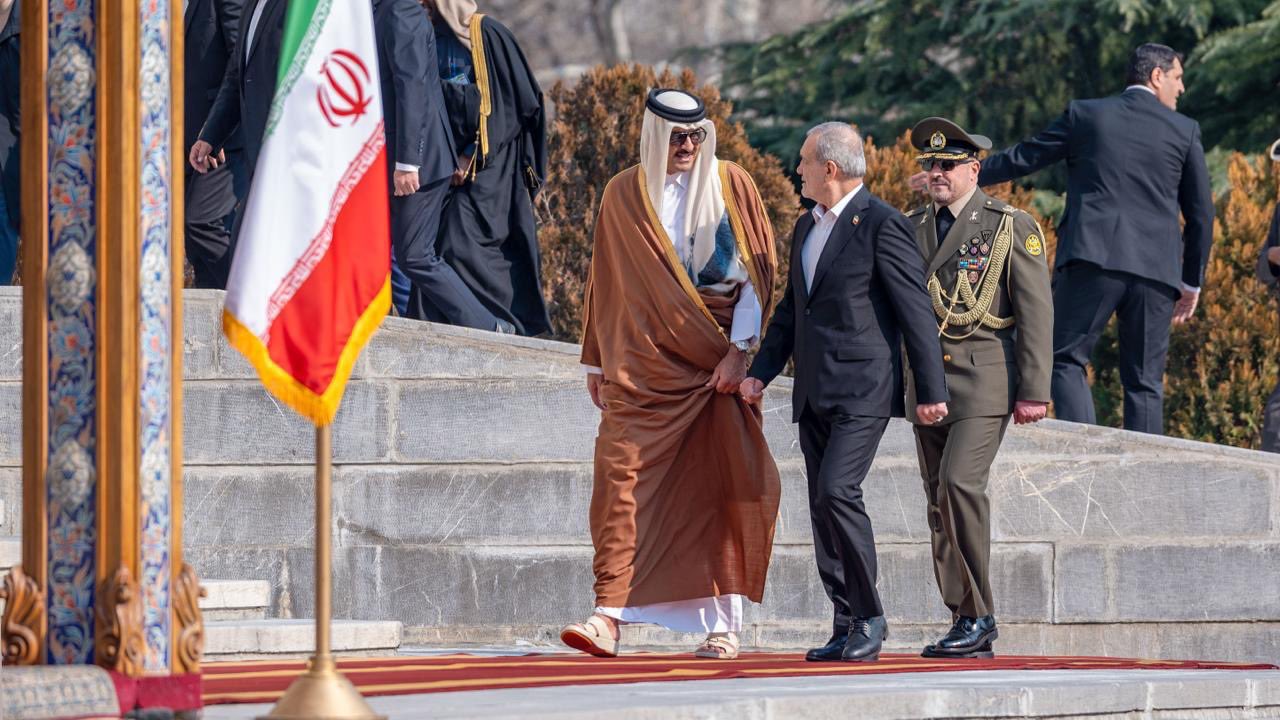
The visit of Qatar’s Amir Sheikh Tamim bin Hamad Al Thani to Iran comes at a time of significant geopolitical turbulence, coinciding with the tumultuous start of Donald Trump’s second term as the President of United States.
His foreign policy initiatives have been, at the very least, surprising in some aspects, while others—such as the reimposition of the “maximum pressure” campaign against Iran—were widely anticipated.
The first phase of this strategy had already driven Iran into considerable isolation, both regionally and globally. This isolation was exacerbated by its severed diplomatic ties with Saudi Arabia, the UAE, and Bahrain following the 2016 attack on the Saudi Embassy in Tehran.
Further compounding Iran’s struggles was the Covid-19 pandemic, which severely disrupted its bilateral trade and curtailed its ability to secure international support.
Today, while the situation is not entirely reversed, it is significantly different from the one Iran faced eight years ago. Iran has since joined the BRICS group, an influential economic bloc that now also includes the UAE and is likely to welcome Saudi Arabia in the near future.
Diplomatic relations between Iran and Saudi Arabia were officially restored in 2023, followed by a similar rapprochement with the UAE in 2022. Despite escalating tensions since the onset of the war in Gaza, these renewed ties appear resilient enough to withstand external pressure—particularly from the Trump administration.
On the very day of President Masoud Pezeshkian’s visit to Qatar in October 2024, not yet under Trump administration, the United States announced that Iran would not regain access to the $6b in frozen Iranian funds held in Qatari banks—funds that had initially been transferred from South Korea following approval by then-President Joe Biden.
This move further solidified Iran’s skepticism regarding negotiations with the U.S. after four years of stalemate in the bilateral relations and despite the interest Biden initially demonstrated.
Khamenei statement was coupled with a broader critique of American leadership, as he remarked, “There is no difference between the presidents of the United States,” signaling Iran’s continued distrust toward Washington regardless of who occupies the White House, but moreover now, when Trump resumed his aggressive stands against Iran.
Khamenei’s reluctance to resume nuclear negotiations have been clearly expressed, despite Trump’s occasional suggestions that he might prefer diplomatic engagement over a military confrontation—an approach contrary to the expectations of Israeli Prime Minister Benjamin Netanyahu, who has consistently advocated for a more aggressive stance against Iran.
Beyond the relations with the United States, Sheikh Tamim’s visit to Iran also carried a strategic dimension concerning regional security.
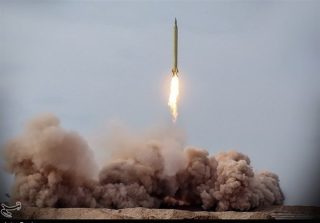
Pezeshkian statements in the joint press conference reflected Iran’s commitment to preserving Syria’s territorial integrity, with the explicit goal of preventing the emergence of new security threats similar to the rise of ISIS in 2014.
Iran views such threats as potentially destabilizing not only for Syria but also for its key regional allies, particularly Hezbollah in Lebanon and the Popular Mobilization Forces (PMF) in Iraq.
By emphasising the importance of Syria’s unity, Pezeshkian signaled Iran’s continued determination to counter any developments that could undermine its regional influence, despite the departure of Iran’s former ally.
This visit, finally, represents the historical and everlasting understanding and bilateral relations that Iran and Qatar always had, despite the different alliances and interests that both actors have at regional and international level.
Luciano Zaccara is a Research Associate Professor in Gulf Politics at Qatar University’s College of Arts and Sciences.
This article is an opinion piece and does not necessarily reflect the views of Doha News, its editorial board, or staff.