Israeli violations of the Gaza ceasefire include the killing of Palestinians, military incursions, air strikes, and aid obstruction.
Hamas has announced it will halt the release of Israeli captives, citing repeated violations of the ceasefire agreement by Israeli forces.
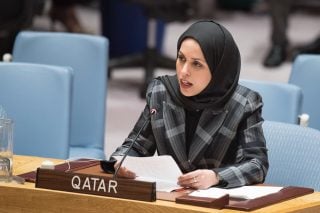
The decision, which comes amid escalating tensions, has jeopardised the fragile truce – which was brokered by Qatar – and sparked concerns over the potential return to full-scale war in the Gaza Strip.
Hamas has accused the Israel occupation forces of failing to meet its obligations under the deal, including allowing sufficient humanitarian aid into the besieged enclave and facilitating the return of displaced Palestinians to their homes. Furthermore, at least 103 Palestinians have been killed since the ceasefire came into effect on January 19.
On February 15, Hamas was supposed to release three more Israeli captives, as part of the sixth captives-prisoners exchange.
But last Monday, the spokesman for Hamas’s armed wing, Abu Obeida, stated that the movement had “monitored the enemy’s violations and their non-compliance with the terms of the agreement,” as reported by Al Jazeera.
The spokesman for the Qassam Brigades asserted that Hamas on its part had fulfilled all its obligations.
The group has emphasised that it remains open to resuming the captive exchange deal if Israel adheres to the terms of the ceasefire.
The ceasefire was designed to unfold in three phases, each lasting six weeks.
The first phase was intended to facilitate the release of 33 Israeli captives in exchange for hundreds of Palestinian prisoners, the withdrawal of Israeli troops from parts of Gaza, and the delivery of critical humanitarian aid.
However, reports from Gaza indicate that Israel has fallen short of its commitments.
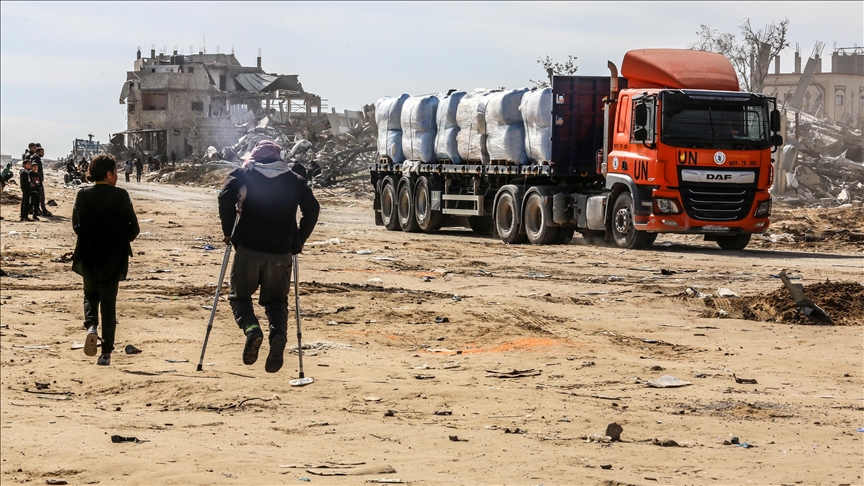
According to the Gaza Health Ministry, only 8,500 trucks of food and basic aid have entered the enclave, far fewer than the 12,000 stipulated in the agreement.
Similarly, just 10 percent of the promised 200,000 tents were delivered, and none of the 60,000 mobile homes, leaving hundreds of thousands of displaced Palestinians without adequate shelter.
‘Israel not interested in peace’
Noureddine Miladi, a political analyst and professor of media and communication at Qatar University, said that Israel’s violations are part of a broader strategy.
“The Israeli government has been compelled to go through this ceasefire agreement to save its credibility with its people and international public opinion,” he told Doha News. “But in my view, they are not convinced to have any form of ceasefire. Their strategic plan is to continue their genocide and the obliteration of Gaza and its people.”
Miladi pointed to recent meetings between Israeli Prime Minister Benjamin Netanyahu and U.S. President Donald Trump as evidence of this strategy, noting that the latter’s comments about turning Gaza into a “property development” reflect a blatant colonial vision for the Strip.
Mohamad Hamas Elmasry, a political analyst and associate professor at the Doha Institute for Graduate Studies, offered a similarly stark assessment of Israel’s intentions.
“Israel isn’t particularly interested in peace or a permanent ceasefire, nor does the Israeli government care very much about its captives,” he told Doha News.
Elmasry argued that Israel’s primary objective has been to depopulate Gaza, a goal underscored by its scorched-earth military strategy and efforts to lobby neighbouring countries to accept Palestinian refugees.
“If they wanted a permanent ceasefire, they would have accepted a ceasefire in October 2023, when a deal was first put on the table,” he added.
Ceasefire ‘long-term solution’ for Gaza
Miladi suggests that Hamas’s decision to pause the release of captives is a strategic move to pressure Israel into fulfilling its obligations.
“Hamas used this as a form of pressure and a warning signal,” he explained.
“The promised aid—caravans, tents, and other humanitarian supplies—has not been delivered as agreed. This is why Hamas made this warning signal.”
However, he downplayed the likelihood of an immediate escalation, noting that Israel may delay a full-scale resumption of hostilities due to internal pressures and international scrutiny.
“I would rather exclude the possibility of a war escalating immediately now,” Miladi said. “But there is a big chance of escalation later, given the pressure from conservative settlers and others in the Israeli government pushing for the total colonisation of Gaza.”
The international community has also weighed in, with Trump suggesting that Israel should cancel the ceasefire unless all captives are returned by Saturday.
Trump’s comments, which have been criticised as erratic and inconsistent with the terms of the agreement, have further complicated the situation.
The US president has previously floated controversial proposals for the future of Gaza, including the mass expulsion of its Palestinian population, a plan rejected by Arab states and condemned by human rights organisations as a potential catalyst for ethnic cleansing.
Miladi emphasised that from the Palestinian perspective, the ceasefire was meant to be the start of a long-term solution.
“It’s meant to be the beginning of rebuilding infrastructure, hospitals, schools, and services that sustain the lives of children and women,” he said.
However, he cautioned that Israel views the ceasefire as nothing more than a temporary pause.
“For the Israeli government, it is a little pause to gather their breath, remedy their tarnished image, and secure the release of their hostages,” he added.
Path forward full of challenges
As the deadline for the next phase of the ceasefire approaches, the stakes could not be higher.
Analysts warn that a resumption of hostilities would have devastating consequences for Gaza, where more than 61,700 people have been killed, according to government officials. This figure includes thousands previously reported as missing in the rubble, as reclassified by authorities.
However, the number is expected to be much higher, with tens of thousands still missing or buried under the rubble.
Elmasry emphasied that Israel’s military fatigue and dwindling public support for the war could limit its ability to sustain a prolonged war.
However, he also noted that the Israeli government’s commitment to its long-term objectives in Gaza remains unwavering.
“Israel was hoping to have its cake and eat it, too,” he said. “But its actions suggest a willingness to risk everything to achieve its goals.”
For now, mediators from Qatar, Egypt, and the United States are working to salvage the agreement, but the path forward remains fraught with challenges.
And with Ramadan approaching and the harsh winter conditions, the situation is deteriorating, especially for those forced to live in tents with no access to basic sanitation.
Miladi urged the international community to act swiftly, emphasising that Palestinians cannot continue to endure such dire conditions, and called on neighbouring Arab countries and the international community to provide urgent support by all possible means.
“Everyone should be helping, not only to support them in living as humans but also to ensure they remain on their land, resist displacement, and not be forced to move elsewhere,” he said. “This is what the people of Gaza want.”